Thursday, February 27, 2014

Summer Theology Program in Norcia, Italy

You may have noticed the new sidebar ad to the right. Our long-time friends at the Albertus Magnus Center for Scholastic Studies asked that we post some information about the summer program that they will be holding in Norcia, Italy from June 16th-29th.

For two weeks room and board in Italy, you can't beat the price! And Norcia, the birthplace of Sts. Benedict and Scholastica, is an absolutely beautiful town. For anyone who has an interest in studying the Faith of the Church, I would wholeheartedly recommend attending the program.

From their website:

Contemplating the Faith in Umbria

From June 16-29th, the St. Albert the Great Center for Scholastic Studies will hold a summer session in Norcia, Italy. In partnership with the Monasterro San Benedetto, this will be the third year they have held the Summer Institute.

The St. Albert the Great Center is dedicated to the revival of higher studies in theology undertaken according to the mind and method of the great scholastics, and in particular the work of St. Thomas Aquinas.

This summer's program is focussing on St. Paul's Epistle to the Romans. With the sacred text as our primary source, we will also follow along the interpretive tradition of the Church by reading commentaries of the Fathers and in particular St. Thomas's commentary on the epistle.

In many ways, the epistle is already an early synthesis of the Faith that the Evangelists witness to, and it offers us the opportunity to explore in depth many theological questions such as grace, justification, the relationship between the Old Covenant and the New, and the salvation of the Jews, to name a few.

Besides the daily seminars, there will be a guest lecture by Fr. Cassian Folsom, OSB, the founder and prior of the monastery. The two-week program reaches its climax in an authentic scholastic disputation, moderated by one of the monks.

In addition to the academic program, we will, of course, be participating in the daily life of worship (High Mass, Divine Office) of the Benedictine monks who live and pray at the birthplace of SS. Benedict & Scholastica. There will be excursions to Assisi and to Cascia, as well as attendance at the Papal Mass in Rome for the Feast of SS. Peter & Paul at the conclusion of the program.

For more information, visit their website: http://www.albertusmagnuscss.org

Tuesday, February 25, 2014

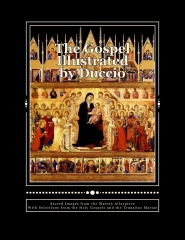
New Book: The Gospel Illustrated by Duccio


The Gospel Illustrated by Duccio
For our second book review in recent weeks, I would like to introduce you to The Gospel Illustrated by Duccio: Sacred Images from the Maesta Altarpiece with Selections from the Holy Gospels and the Transitus Mariae compiled and edited by John Joy, a long-time friend of Unam Sanctam Catholicam:

The Gospel Illustrated by Duccio is a unique creation designed to celebrate one of the greatest artistic masterpieces of the high medieval period while also bringing to life the Gospel story with over fifty images of scenes from the lives of Jesus Christ and the Blessed Virgin Mary. 

The book includes the complete extant cycle of images from the Maesta Altarpiece, which Duccio di Buoninsegna completed in 1311 for the Cathedral of Siena, Italy. 

The Maesta begins with the Annunciation, Nativity, and other mysteries from the childhood of Christ and continues with scenes from His public ministry, such as the Wedding at Cana, the Healing of the Blind Man, the Transfiguration, the Raising of Lazarus, and many more. It glories in depicting over twenty scenes from the passion of Christ, continues with seven separate resurrection appearances and the descent of the Holy Spirit at Pentecost, before concluding with six extra-Biblical scenes depicting the final days of the Blessed Virgin Mary's life on earth. 

Each large, full-color image is paired with the text, most of which are drawn directly from the Canonical Gospels, which tells the story illustrated by the painting. 

One of the extraordinary features of the book is found in the texts corresponding to the final six paintings, which tell the story of the last days of the Blessed Virgin Mary. These are drawn from the non-canonical text of the Transitus Mariae, dating from the fifth century. Although not the inspired Word of God, these texts do reflect ancient Christian traditions concerning the end of Mary's life on earth. Not as well known now as they were in Duccio's time, their discovery will be a delight for modern readers.

Here is a snapshot to give you an idea of the contents and layout of the book. On one side, the large, full color image painted by Duccio; on the other, the unabridged Gospel text based on the Challoner revision of the Douay-Rheims.


The crucifixion scene is particularly masterful:


I purchased a copy for my children and they have been fascinated by the pictures - which are far superior to the illustrations generally found in "Children's Bibles". And so they ask me repeatedly to read to them the associated stories. This exposes them at the same time to the life of Christ in the inspired words of the Holy Scriptures and to some of the greatest sacred art in the Catholic tradition.

The list price is $15.49, but it is currently available on Amazon for only $10.76.

I believe that it will also be available soon in the Unam Sanctam Catholicam Bookstore. And stay tuned for the forthcoming companion volume entitled The History of the Saviour Illustrated by Giotto.

Friday, February 21, 2014

What the Rise of Paganism says about the State of Christanity

“But we by the mention of Christ crucified put all demons to flight, whom you fear as if they were gods. Where the sign of the Cross is , magic is weak and witchcraft has no strength.


Tell us therefore where your oracles are now? Where are the charms of the Egyptians? Where the delusions of the magicians? When did all these things cease and grow weak except when the Cross of Christ arose? Is It then a fit subject for mockery, and not rather the things brought to nought by it, and convicted of weakness?”  St Anthony of the Desert, Against Proud Philosphers


It is a very important thing for Christians not to forget that we do not have a monopoly on the spiritual world.  People do not pray to idols, perform strange rituals or offer direct worship to false gods because they do not get anything out of it; they just don’t get anything good out of it.  

Illusions, false consolation, spirits of lust, pride, worldly power or any of the thing that the prince of the world can offer is often times enough for people to sign up their name on the dotted line to become a full blown practicing pagan or devil worshiper.

It appears that many people are signing up. The US Air force academy built a Pagan worship circle somewhat recently   The “Church of England” wants to paganize things up a little bit and not convert the pagans, but allow the pagans to convert the "church of England" .

And I could provide examples from my own life of the growth of paganism.  Next to the University of Riverside, CA there is a large witchcraft store that not only sells wares for all your pagan needs, but teaches both in-store and online classes on how to practice magic. On Meetup.com there are 3 (2 relatively large) groups for pagan meetups within 5 minutes of riverside and only 2 for the Bible (and of those two one is for singles and the other is for homeschoolers and they are much smaller than the 2 largest pagan groups).

According to some Poll numbers there are now over 1 million pagans in the US  Based on the most recent survey by the Pew Forum on religion, there are over one million Pagans estimated to be living in the United States.  Step back for a minute and consider how many devout Catholics there are in America?

Yet we know that wherever the Kingdom of God  is idols lose their strength, demons are cast out, sorcery is confounded and the such like and the weakness of demons is truly revealed, so how can their be this growth and what does the spread of paganism say about the state of Christianity?

For one it says that there is a lack of saints.  Luke 17:20 tells us that the Kingdom of Heaven is within us. The incarnation of God as Man and us becoming adopted children of God has made even our very breath a means of expelling demons.  The very mention of the Holy Name of our Lord Jesus Christ, (which can only be done by the Spirit) demands immediate reverence and respect from every being.  There is more to the anti-Christianity of the pagan world than an irritation with the superficiality of  so much that is presented as Christian.

“We however make our proof  not in the persuasive words of Greek wisdom as our teacher has it, but we persuade by the faith which manifestly precedes argumentative proof” St Anthony of the Desert

Our Holy Religion is the most consistent, reasonable and logical religion but yet, without a living faith preceding its manifestation throughout society it will fail to win converts through persuasion. It will fail to break through the strangle holds of the works of the flesh made manifest.

Before becoming distraught though over the idea that to confound pagan worship we would need to be the greatest Saints, I wish to assure you that common but faithful Christians are enough to confound demons and put them to flight.  However, it is a faith that must be visible so that God have Glory through his mocking of demons

“But when, as my fine fellow proceeded in the rites, the frightful things assailed him, unearthly noises, as they say, and unpleasant odors, and fiery apparitions, and other fables and nonsense of the sort, being terror-struck at the novelty (for he was yet a novice in these matters), he flies for help to the Cross, his old remedy, and makes the sign thereof against his terrors, and makes an ally of Him whom he persecuted. And what follows is yet more horrible.
The Seal prevailed: the demons are worsted, the terrors are allayed. And then what follows? The wickedness revives, he takes courage again; the attempt is repeated, the same terrors return; again the sign of the Cross, and the vanishing demons; the neophyte in despair.”  St Gregory Nazianzens Section 55-56 First Invective against Julian the Apostate.

Notice here that Julian the Apostate who is being initiated into diabolic rites having already turned his back on his Christian faith, makes a sign of the Cross out of habit when in fear at the manifestation of a demon, and the demon is immediately put to flight.

There is very little doubt that Julian at this stage is not in friendship with God, and yet a little sign of the cross still confounds the demons.  Imagine the power that the Sign of the Cross has from a faithful Christian!

My friends, there is a reason why certain policies wish to forbid the wearing of Catholic sacramentals at work, ban the mentioning of the Holy Name of Jesus, strip crucifixes out of every building and why the devil assails weak Christians to not make visible signs of the cross when among other companions.

God, through these Holy gifts confounds the demons and confuses their plots and wickedness.  Consider the great promises just to families who enthrone the Sacred Heart of Jesus?  Be assured that when God allows himself to become dethroned visibly by the taking down of Signs of Faith, by the passing of obscene and evil laws, or the persecution of the faithful that he is making manifest that protections and blessings are being removed.

So what is the state of Christianity with the rise of paganism?  My dear friends, it is better already if you resolve today to live an authentic Catholic life and do all that you can within your authority to honor God. Enthrone the Sacred Heart in your house, wear a crucifix in public, make bold signs of the Cross everywhere and constantly say the Holy Name of Jesus with great reverence.  The Pagan world did not stand a chance against the power of God that was with the 12 apostles, so let God arise and let his enemies be scattered!

Saturday, February 15, 2014

"A saint in Heaven"

Today is the 50th anniversary of the death of Fr. Reginald Garrigou-LaGrange, OP, who was perhaps the greatest theologian of the 20th century.

While he is known for many things, the least of which includes directing the doctoral work of Karol Wojtyla, two of his lasting contributions to 20th century theology are his synthesis of systematic theology with spiritual theology and also his vehement defense of the scholastic tradition against modernity.

Regarding the first, Fr. Garrigou-LaGrange undertook the synthesis of Thomistic theology with the spiritual works of St. John of the Cross, showing how the two were in fact complementary. His most well-known spiritual work is entitled The Three Ages of the Interior Life, and can be found online in its entirety.

He is perhaps more well-known for the second of the two, his defense of the scholastic tradition against modernity. He is alleged to have ghost-written Pope Pius XII's great encyclical Humani generis, "Concerning Some False Opinions Threatening to Undermine the Foundations of Catholic Doctrine". Fr. Garrigou-LaGrange also gives a clear, concise, and very readable treatise against the Nouvelle Theologie in his famous essay, "Where is the New Theology Leading Us?"

His book, Reality: A Synthesis of Thomistic Thought, is perhaps one of the best introductions to theology in existence, apart from the Summa itself.

While his intellectual merit is beyond dispute, Fr. Garrigou-LaGrange also lived what he taught. Asceticism was not merely an intellectual pursuit, but a way of life, the way of holiness for a humble Dominican friar. Perhaps today, then, we can ask for the intercession of Sts. Dominic and Thomas for the raising of this holy man to the altar of our Lord.

For more information on Fr. Reginald Garrigou-LaGrange, please see the biography written by Fr. Thomas Crean, O.P. to be found here.

Thursday, February 13, 2014

New Book: "Hermits & Anchorites of England"


Often when we think of the hermits, we think of the very first centuries of Christendom, of men like St. Anthony of Egypt or St. Simeon Stylites who spent decades in solitude seeking God's face in the empty places of the earth. But usually our thought of the hermits ends there, for with the organization of monastic communities around Rules, such as those of St. Benedict and St. Basil, does not the age of the hermits end and the age of the monasteries begin?

In fact it did not. While monasticism became the dominant manner of asceticism, at least in the west, there always remained an eremetic strain, albeit a minority. Medieval Europe never lacked for hermits, dwelling in the caves of France or on the rocky isles of the Irish Sea, sanctifying the world by their presence and offering unceasing prayer to God.

Medieval England had a particularly rich eremitic tradition, one that began with the great hermits of the Anglo-Saxon and Irish tradition and continued right up until the eve of the Anglican revolution. This long tradition is documented in the newest addition to the Unam Sanctam Catholicam bookstore, a new edition of the classic 1914 work Hermits and Anchorites of England by English medievalist Rotha Mary Clay.

Biographies of medieval hermits are not easy to pin down. We know of them mainly through anecdotes in other historical works, occasional hagiographies of the exceptionally saintly, depictions in manuscripts, and finally through the dark caves and desolate peaks they inhabited that still survive. The lives of evangelical monks such as St. Columba or St. Dominic are well attested, while the annual events of the monasteries are preserved in the various monastic annals that still survive. But the hermits did not go out into the highways and byways seeking converts, nor did they have disciples to record their deeds. Their lives are cloaked in obscurity. The very hiddeness of the eremitic life means it is difficult to document. A hermit, by definition, is one who tries to avoid the attention of the world, and this includes historians.

This difficulty is especially acute in the case of England where, besides the typical difficulties faced by historians, we are also confronted with the rupture occasioned by the Protestant Reformation. The 14th and 15th centuries were particularly fruitful eras in the history of English Catholic spirituality; on the eve of the Reformation the English wilderness was dotted with men and women seeking holiness through the eremitic life. But beginning in 1536, the now-Protestant English crown pursued a policy of suppression of monasticism throughout the kingdom; the tragic history of the dissolution of the monasteries is well known. What is less well known is that the hermits of England were subject to similar attacks during the same period, being forced out of their solitary abodes and onto public pensions. Not content to suppress and plunder the monasteries, Henry VIII and his successors could not tolerate that even one solitary hermit remained in the fens and rocks of the kingdom praising God alone in his cell. Thus, a rich English tradition was destroyed and the English eremitic age seems like a distant dream.

It is here that Mary Rotha Clay’s book is so valuable. Drawing on land titles, legal records, primary sources such as the 13th century Ancrene Riwle (“Guide for Anchoresses”), and even archaeological remains, Ms. Clay is able to reconstruct a vivid picture of the eremitical life in Merrie Old England. We are introduced to characters such as Kenyth of Glanmorgan, a Welsh hermit who lived exposed to the rain and wind on a promontory jutting into the Irish Sea; David Welkes, a 15th century hermit of Dover who won the esteem of King Henry V; Celestria, an enclosed anchoress of Gloucester, and many more men and women who served God in solitude from the days of Hengist and Horsa right up until the eve of the Reformation, when the agents of Cromwell drove them out of hiding and made them pensioners of the Crown.

Hermits and Anchorites of England is particularly noteworthy for its abundance of illustrations depicting the caves and dwellings of these hermit folk. Most of these descriptions were collected by Ms. Clay herself during her extensive travels throughout England researching the work. Rotha Mary Clay was born on 17 August 1878. She was of the minor nobility, a sort of hermit herself, remaining unmarried her entire life and devoting herself to scholarly pursuits . She was attained the honorary degree of Master of Arts (M.A.) by Bristol University and soon after published exhaustive study of England’s medieval hospitals (1909) that is still valued by historians today.

Hermits and Anchorites of England (1914) gives us an example of Ms. Clay’s work in her prime. Reading her voluminous compendium of land titles, pensions and archaeological sketches, one is astounded by the level of research that went into this book – and in an era when the only way to see a ruin or examine a parchment was to take a horse drawn carriage out to inspect them in person! It is indeed unfortunate that Ms. Clay did not publish more, though we are thankful for what she did. 

This new edition of Ms. Clay’s work preserves the original text in its entirety, with only minor changes in punctuation to make it more palatable to modern American readers. Differences in formatting between this edition and the 1914 original made it impossible to retain every illustration on the same page as Clay had them arranged, but we have attempted to get as close as possible. The book contains over fifty illustrations; no illustrations from the original are omitted

It is our hope that this reprint of Ms. Clay’s classic work will inspire in the reader a greater love for England’s medieval Catholic heritage, enkindle a deeper understanding of the eremitic vocation, and hasten the return of the day when our culture is again seasoned with the presence of Catholic hermits offering their prayers and their very lives to God in the solitary places of the earth.

Many reproductions of older books are done using optical character recognition software (OCR), which works by simply scanning pages and attempting to use artificial intelligence to translate the characters on the page into a particular font. It is a sloppy method which often leaves pages missing, pictures omitted, and other characters in the text blurred, mixed up or missing. This is not an OCR reproduction; it is an actual new edition of Ms. Clay's work, fourteen months in the making, edited by hand with a new introduction. As far as we know, this is the only print edition of Ms. Clay's work that is not a digitized OCR reproduction.

Hermits and Anchorites of England, by Rotha Mary Clay
Paperback, 261 pages
$16.95 USD + shipping


Or, you can purchase it, along with other original , independent Catholic books, from the Unam Sanctam Catholicam web store, here


Tuesday, February 11, 2014

Study Onto Salvation

Praying, fasting and almsgiving, the three eminent good works. Blessed is the man that studies to perfect these three parts of his Christian life. Those 10 and strict commandments, blessed is the man who keeps these perfectly and who has the love of the Father and the company of our Lord constantly.  John 14:23  

It is interesting to note how many great Saints were illiterate and yet so perfect in virtue and full of wisdom.  For example, St Anthony of the Desert never learned how to read or write, and yet he came to a great understanding of virtue through its constant practice and imitation of those around him who exceeded him in virtue. (To hear more on the life of St Anthony of the Desert, check out our new Audiobook on his struggles with demons!)

It seems to have become like an echo that continues to reverberate throughout the Catholic world in recent times “Know your faith” or “We have to study our faith”.  In my limited experience of going about to Catholic gatherings or listening to recordings  of various conferences and homilies, it is normally one of the primary solutions presented to the crisis in the Church proposed to the faithful.

The exhortation to come to know one’s faith is a good one. Faith most certainly comes from hearing Romans 10:17 and all scripture is useful for teaching 2 Tim 3:16:17. But just like prayers can be said out of self love or out of a desire to be seen, fasting for vanity, and almsgiving for human respect, study of the faith can become an occasion for curiosity, a source of pride, a distraction from duty, a departure from the cross.  Like any good thing, it must be subjected to reason, and it must have some specific end in mind.

 “Leave curious questions.  Study such matters as bring thee sorrow for sin rather than amusement.” The Imitation of Christ, Chapter 20 Of the love of solitude and silence.

It is fair to say that it does a man no good to memorize all the scriptures, or have an encyclopedic knowledge of the Catechism when he offends God by his life by breaking the commandments.  We shall know if our study is motivated from the desire to please God if it is done with the mind of conquering sin, growing in virtue, the defense of His honor, or the perfecting of a good work.

If you feel irritation at me because you believe such a thing is obvious, let me explain why I mentioned it.  Ever know a Catholic apologist who could not guard his tongue from bad speech?  How about Catholic bloggers who cannot help themselves at slandering and attacking others?  Or  knowing a person who, after studying theology, feels more comfortable in committing sins because they better understand the distinctions between mortal and venial sins? (This is explicitly mentioned as a problem in Outlines for Asceticism for Seminarians by FJ Remeler, a pre-Vatican II textbook)

I’m sure you could think of your own examples.  The truth is that the world, the flesh and the devil will do anything to interfere with the keeping and perfecting of the commandments and of our own prayer, fasting and almsgiving. God, in order to confound His enemy, allows us to be tested (like He did with St Anthony) but He is present during the struggle of his faithful. “The Lord is as a man of war, Almighty is His Name.” Exodus 15:3

“Let this especially be the common aim of all, neither to give way having once begun, nor to faint in trouble, nor to say: We have lived in the discipline a long time: but rather as though making a beginning daily let us increase our earnestness”  St Anthony of the Desert

Whenever we pick a work to study, hear a homily, or observe virtuous actions let us strive to make practical resolutions to become more pleasing to God, especially by more strictly keeping the commandments and perfecting good works.  By doing this, God Himself will teach you “And as for you, let the unction, which you have received from Him, abide in you. And you have no need that any man teach you; but as His unction teacheth you of all things, and is truth, and is no lie. And as it hath taught you, abide in Him.” 1 John 2:27

No matter what one does - apologetics, teaching catechism, instructing home-schooled children, or just being a good neighbor - this is the means of study that gives glory to God's kingdom and draws others to Christ our King.

“And it is [the interior life] important to us not only as individuals, but also in our social relations; for it is evident that we can exert no real or profound influence upon our fellow-men unless we live a truly interior life ourselves” The Three Conversions of the Spiritual Life, Fr Reginald Garrigou-Lagrange OP

So let us not run to study to find excuses to break commandments, avoiding dry prayer, enduring hunger and or suffering deprivation. “So let us daily abide firm in our discipline, knowing that if we are careless for a single day the Lord will not pardon us, for the sake of the past, but will be wrath against us for our neglect.” St Anthony of the Desert.

Wednesday, February 05, 2014

"Return, O' ye revolting children!"


It is a principle of Sacred Scripture that people get the leaders they deserve, in spheres both political and spiritual. The rulers that people end up with usually reflect in themselves both the virtues and the vices of the age they live in. In the book of the prophet Hosea, God laments how Israel has gone astray in setting up rulers apart from those whom God has sanctioned:

"They have set up kings, but not by me; they have made princes, but without my knowledge" (Hos. 8:4).

What a terrible thought for the omniscient God to say a prince has been set up without His knowledge, as when our Lord says to the unrighteous, "I never knew you." This is an indication that these kings and princes are self-seeking and wicked; but then again, so was Israel. Only two verses earlier, God says,

"They have broken my covenant and transgressed my law...Israel has spurned the good; the enemy shall pursue him" (Hos. 8:1,3).

Because they have rejected God, they have bad rulers. These two things go together. The people get the ruler's they deserve, and if they get bad rulers, it is part of God's just punishments. There is a certain justice in this, as well. Since in rebelling against God, a person casts off spiritual authority, one punishment for this sin is to be oppressed by temporal authority. This is why historically, the most anti-Christian regimes have also been the most corrupt and oppressive to their populations. "Israel has spurned the good; the enemy shall pursue him."

Without the wisdom which comes from God, authority will always be oppressive:

"A ruler who lacks understanding is a cruel oppressor;
but one who hates unjust gain will enjoy a long life." (Prov. 28:16)

Knowing all this, when we examine the quality of our rulers both spiritual and temporal, what other conclusion can we come to other than that we are under God's judgment? God Himself says that he brings calamity upon a people in proportion to their rejection of Him, and that this judgment is reflected in the impotence of political rulers to better their situation, as well as of spiritual rulers to console their flock:

"Disaster comes upon disaster, rumor upon rumor; they seek a vision from the prophet, but the law perishes from the priest, and counsel from the elders. The king mourns, the prince is wrapped in despair, and the hands of the people of the land are palsied by terror. According to their way I will do to them, and according to their own judgments I will judge them; and they shall know that I am the Lord" (Ezk. 7:26-27). 

God's judgments are given to that "they shall know that I am the Lord"; what else can be inferred other than that the reason for the judgments are precisely because we do not know that He is the Lord? Because we have not acknowledged Him in our ways, because, in the words of Pius XI, we have neglected the "public duty of reverence and obedience to the rule of Christ" (Quas Primas, 18). Our society has rejected God, and therefore God rejects our society.

Nor is the Church free from this judgment; in fact, the Church, she who ought to have turned the hearts of the people backs towards righteousness, has at times been complicit in allowing the spirit of the world into the Household of God. The priests who ought to have been the leaders have been the followers, leading their flock to the slaughter. This is why priests who have been so complicit bear a greater degree of guilt:

"Let no one contend, and let no one accuse; for with you is my contention, O' priest. You shall stumble by day, and the prophet shall also stumble by night...My people perish for lack of knowledge; because you have rejected knowledge, therefore I reject you from being a priest to me. And since you have forgotten God, I also will forget your children" (Hos. 4:4-6).

Again, God warns that the blessings of the priests will be turned to curses if ecclesiastics persist in ignoring God's commandments:

"And now O' priests, this command is for you. If you will not listen, if you will not lay it to heart to give glory to my name, says the Lord of Hosts, then I will send the curse upon you, and I will curse your blessings. Indeed, I have already cursed them, because you do not lay it to heart" (Mal. 2:1-2). 

The prayed-for blessings turned to cursings? Anticipated springtimes become winters? A hoped-for new Pentecost that has resulted in a spiritual vacuum? It all sounds familiar, and in light of these passages, it makes perfect sense. Yes, this thing is from God. That God has us under judgment is clear, but because we are His Bride, His judgments are purificatory, not solely penal. It serves to call us back to Him, to refine us, to refine His priests:

"For he is like a refiner's fire and like fuller's soap; he will sit as a refiner and purifier of silver, and he will purify the sons of Levi [the priesthood] and refine them like gold and silver, till they present right offerings to the Lord." (Mal. 3:2-3).

The judgment begins here, with us, "For it is time that judgment begins at the household of God" (1 Pet. 4:17). The principles that were true in the Old Testament are still true today. If the priests of the Old Covenant were guilty of not reverencing the glory of God, how much more guilty are today's priests, who spurn the grace of a greater dispensation? St. John Eudes famously noted that the most evident mark of God's anger with His people was the affliction of bad clerics in the Church. His words are worth citing in full; notice how he, too, grounds this principle in the Old Testament:

"The most evident mark of God's anger and the most terrible castigation He can inflict upon the world are manifested when He permits His people to fall into the hands of clerics who are priests more in name than in deed, priests who practice the cruelty of ravening wolves rather than the charity and affection of devoted shepherds. Instead of nourishing those committed to their care, they rend and devour them brutally. Instead of leading their people to God, they drag Christian souls into hell in their train. Instead of being the salt of the earth and the light of the world, they are its innocuous poison and its murky darkness.

...When God permits such things, it is a very positive proof that He is thoroughly angry with His people, and is visiting His most dreadful anger upon them. That is why He cries unceasingly to Christians, "Return, O' ye revolting children . . . and I will give you pastors according to my own heart" (Jer. 3:14-15). Thus, irregularities in the lives of priests constitute a scourge visited upon the people in consequence of sin." [Chapter 11: Qualities of a Holy Priest, in The Priest: His Dignity and Obligations by St. John Eudes]

Yes, we get the rulers we deserve. But thankfully, that is not the end of the story. "'Return to me,' declares the LORD Almighty, 'and I will return to you," (Zec. 1:3). Let us return to Him with all our hearts, praying for our priests, praying fervently for godly vocations, for rulers, spiritual and temporal, who will acknowledge God in all their ways and be men after God's own heart. Let us remember that God's glory must be sought and honored first, above all else - above the opinions of men, above the fads of the age, above one's own desires. Only when this is the conviction at the heart of the priesthood will this judgment be lifted from us.

Saturday, February 01, 2014

Think of Vengeance Find Forgiveness

Dear reader, if you have ever been victim to a heinous crime such as theft, adultery, slander or another deliberate cruelty perhaps you have struggled in your heart to forgive such an act.  The injury feels fresh, our enemy who would harm us almost seems to gloat in their evil.  But what factors play into our inability to forgive, when the Saints suffered so much and forgave so readily?

In my opinion, one of the chief roots of the problem is that we are convinced that we ourselves would never commit an evil act like that.  Who would steal from a friend or commit adultery with another person's spouse?  It is what gives us confidence when we say with passion that the most heinously wicked (like pedophiles) should be shot or hanged.  Perhaps our indignation only really gets going when we see liturgical abuse, and our feelings of piety and righteous zeal become inflamed as we condemn the other and proclaim that we would never perform such and such an irreverent act in the house of God?

So I place before you the following considerations for either dealing with forgiving others now or to remember the next time you are grievously offended.

Remember always human weaknesses, passions and our disordered appetites.  Many people (probably most) do not think that they will commit the sins that they later wind up committing. If you have ever had the misfortune to commit a mortal sin then you are capable of turning your back completely on God; if you have not, then consider the Saints of the Church who at some point lost grace through sin (like King David). You should have pity on fellow men who fall as many times they fall from weakness and not malice. We must identify the real enemy and apply our hatred there. Sin oftentimes is instigated from the suggestion of the author of lies, the serpent, the devil. Do not hesitate to increase your hatred against him.

The next thing to consider is that only the grace of God preserves us from falling into sin, whether they be big or small.   Grace that inclines a person to do a good act or resist a temptation  is called preventive grace, when he is performing a good act it is called concomitant grace and when he has completed it subsequent grace.  It is true that our free will must choose to cooperate with His grace, but without His grace we could never choose good, because we would neither feel inclined nor be able to resist evil.  We are all capable of falling into the most grievous and outrageous sins.

Finally, and most importantly, realize that those who have greatly injured us - barring they repent - will burn in Hell for all eternity. No matter how much you dislike them or how greatly they had hurt you, could you imagine them being shoved into an oven set to 800 degrees, followed by the burning of flesh, terrible screams and complete pain?  Perhaps you are very mad or greatly hurt? How many minutes would you extract your vengeance on them in it? One minute, one hour, one day?  I say it would take a matter of minutes, perhaps seconds, of suffering before even an angry heart would be filled with pity. This is a very poor comparison to the very fires of Hell that burn the damned day and night.   (To learn more about what Hell is like, check out The Torments of Hell on audiobook, free)

In order for our enemies to be forgiven by God they will have to feel remorse (including for their offenses against you), confess their sin (or be baptized if they have not yet been) and resolve - with the help of God's grace - to never commit those sins again.

Repentance from those coming from sin can be quite bitter, and real sorrow is like a sword through the heart; that is the medicine God will demand if they are to be forgiven. Without this, they will surly go to Hell.

When we considerable the most holy and terrible vengeance of God, it not only become easy to forgive but also to pray for our enemies, lest they perish in the eternal fires of Hell.

Tuesday, January 28, 2014

Feast of St. Thomas Aquinas

Today is the Feast of the Angelic Doctor, the "Dumb Ox", in the Ordinary Form. In the usus antiquior, we do not celebrate the feast until March 7th, which is more proper since that is the day of his death and entrance into Heaven.

However, today is still an important day because it commemorates the translation of his remains to Toulouse, which is the home of the Order of Preachers, and so we should not allow the day to go unobserved.

St. Thomas should hold a special place in our hearts as Catholics, not only for his immense intellect, but  also for his profound holiness and witness to the Faith. Lest we forget, the great Eucharistic hymns, the Tantum Ergo, the Adoro Te Devote, the Pange Lingua , and the Sacris Solemniis, were composed by St. Thomas, and perhaps in their own way rival the depth of truth contained within his Summa Theologiae.

Of all things, however, Pope Leo XIII said,
this is the greatest glory of Thomas, altogether his own and shared with no other Catholic Doctor, that the Fathers of Trent, in order to proceed in an orderly fashion during the conclave, desired to have opened upon the altar together with the Scriptures and the decrees of the Supreme Pontiffs, the Summa of St. Thomas Aquinas whence they could draw counsel, reasons and answers.
Finally, St. Thomas is unique in that of all of the Saints, he is the only one of whom in the liturgy we ask that we might "understand what he taught and imitate what he accomplished".

And so, today, perhaps let us ask for his intercession in our lives that our devotion to Our Lord, especially in his Eucharistic presence, might increase, and also that our knowledge of the Faith might be enlightened so as to gain the true path to holiness.

Collect:

O God, who made Saint Thomas Aquinas
outstanding in his zeal for holiness
and his study of sacred doctrine,
grant us, we pray,
that we may understand what he taught
and imitate what he accomplished.
Through our Lord Jesus Christ, your Son,
who lives and reigns with you in the unity of the Holy Spirit,
one God, for ever and ever.

Saturday, January 25, 2014

Profile of a Theological Liberal


One areas where traditional minded Catholics and other Catholics get caught up is in the question of what it means to be a "liberal." During the conclave of 2013, some Weigelian "evangelical" Catholics were rejoicing at the mention of conservative Cardinal Timothy Dolan as a papabile; traditionalists, on the other hand, were worried that such a liberal prelate as Dolan was being seriously considered. Cardinal Schönborn is extolled as an example of a solidly orthodox prelate by some, whilst others find frightful compromises with liberalism in the Cardinal's behavior. Hans urs Von Balthasar is praised by John Paul II and Benedict XVI as an exemplar of Catholic scholarship; others, such as myself, see him as one of the foremost liberals of the modern Church. Similar discussions have occurred regarding Fr. Barron.

Clearly, different people have different definitions of what it means to be a "liberal" Catholic.

This confusion, I think, is due to the fact that Catholics have appropriated secular-political definitions of what it means to be "liberal" or "conservative", essentially equating indicators of political liberalism with theological liberalism. In the political realm, for example, a liberal is likely to be in favor of same sex marriage, abortion, and at least an indifferentist on religious matters, if not an outright agnostic or atheist. These are what are adopted as the indicators of liberalism. Thus, when it comes to a Catholic prelate or theologian, it is the presence or lack of these indicators that determine whether that individual is "liberal" or not. Understood this way, Cardinal Timothy Dolan cannot be liberal because he is fiercely Pro-Life; Cardinal Schönborn is not liberal because he writes beautiful things about the need for society to turn to God; Cardinal Bergoglio could not be a liberal because he had defended traditional marriage in strong language during his time in Argentina. It is not my purpose to suggest that the aforementioned prelates are liberals, only point out that the indicators for who is and is not a 'liberal' are usually social-moral questions lifted from the political spectrum.

But is this what it means to be 'liberal' in the traditional, Catholic sense? When Bl. Pius IX or Leo XIII or St. Pius X wrote scathingly against "liberalism", what were they condemning? Were they condemning homosexual marriage, or abortion, or agnosticism?

Those moral issues certainly are part of liberalism, but anyone who has really studied the thought of the pre-Conciliar popes on this question knows that these moral issues are fundamentally not what the popes of the 19th century were worried about. Fr. Salvany, in his classic work Liberalism is a Sin, devotes an entire book to demolishing the errors of liberalism and never mentioned abortion or homosexuality. This is because for Salvany, as well as Bl. Pius IX and the other pre-Conciliar popes, liberalism is primarily a troubling theological trend within Catholicism, not a position on hot-button moral issues. It has to do with holding certain theological opinions, most of which are not relatable to any corresponding positions on the political spectrum, because they are problems internal to Catholic theological thought. This is why Fr. Salvany can write a whole book against liberalism and not mention these moral indicators; he simply does not see them as the essence of liberalism.

Once we understand this, we will begin to see why there is a divergence here; why where one sees a conservative prelate, another sees a liberal or modernist. If you are still thinking inside the liberal-conservative political paradigm, you may be surprised to see what the Church's definition of a liberal-progressive actually is. It is certainly not the same thing as a political liberal in the American sense. If not, then what is the profile of a theological liberal, according to the Church's tradition? It is hard to nail down every point, but here a few indicators of liberalism we have culled from some of the more famous documents of the pre-Conciliar Church:

A liberal believes that every man is free to embrace and publicly profess whatever religion he deems true, and that good hope may be entertained for the salvation of these people outside the Church. (Syllabus, 15-17)
A liberal believes that it is no longer expedient for Catholicism to be the formal religion of the State; liberals thus profess an American style separation of Church and State and deny that religious liberty will lead to indifferentism (ibid., 77-78).
A liberal dismisses the injunction of Pope Agatho, affirmed by Gregory XVI in Mirari Vos, that neither the content of the faith nor its expression ought to be changed. (Mirari Vos, 7)
A liberal believes that so long as members of non-Christian religions follow certain moral standards, salvation can be obtained. (ibid., 13). A liberal asserts the "liberty of conscience" (ibid., 14).
A liberal believes in an absolute right to freedom of speech, especially the freedom to publish and spread falsehoods in print and online. Note, even if the content of this speech is disagreed with, the liberal still asserts that there is a right for it to be promulgated. This belief in unfettered freedom of publishing is a tenet of liberalism (ibid., 15).
Liberals assert that the Church cannot pass judgment on the content and methodology of human science. (Lamentabile Sane, 5).
A liberal believes that the Gospel of John was not composed by the beloved Apostle, but by a "Johannine community" (ibid., 18).
A liberal believes that Christianity must be adapted to fit the needs of different times and places (ibid., 59).
A liberal believes that the Church's traditional understanding of creation of the world be reevaluated in light of modern scientific knowledge (ibid., 64). 
A liberal believes the fundamentally center of all religion is the religious experience, the heeding of the religious sense of man (Pascendi, 6, 10).
A liberal cannot distinguish between the natural and the supernatural; he is ever naturalizing what is supernatural, whilst simultaneously affirming a supernatural or soteriological importance to things that are merely natural (ibid., 7; see also Humani generis, 26). Mere natural virtue is treated as meritorious as supernatural virtue, and the whole uniqueness of supernatural faith is implicitly denied since natural faith is considered equally salvific (i.e., the "faith" of the non-Christian being treated as meritorious).
Liberals believe that dogma should evolve with the changing sensibilities of man (ibid., 13).
Liberals believe that non-Christians, such as Muslims and pagans, can have authentic, and valuable religious experiences that must be affirmed (ibid., 14).
A liberal believes that the Sacred Scriptures are primarily understood as the record of the "experience" of God's pilgrim people on their journey of faith. Sacred history is a narrative of various experiential encounters with God - a chronicle of experiences (ibid., 21-22).
A liberal believes it is wrong for the Church to meddle in any political affairs; for the Church to trace out and prescribe for the citizen any line of action, on any pretext whatsoever, is to be guilty of an abuse of authority (ibid., 24).
The liberal believes that everything in the Church ought to be updated - to change and evolve with the times. Liturgy, discipline, Church structure all ought to be modified to fit the spiritual needs of an ever changing society (ibid., 26).
A liberal believes that the Bible may contain historical or scientific errors, butsince the subject of these books is not science or history, but only religion and morals, it is not a 'real' error, since the fundamental nature of the Bible is to teach about faith, not history (ibid., 36).
A liberal prefers modern philosophical systems to Scholastic philosophy (ibid., 38).
A liberal believes that the entire structure of the Church ought to be reformed in order to reflect the more democratic sensibilities of the modern world (ibid.) - how about replacing the papal coronation with an inaugural Mass?
A liberal believes that authority in the Church is much too concentrated should be decentralized (ibid.).
Liberals believe that, while the Church Fathers are worthy of veneration, their absence of critical textual erudition and knowledge of ancient history make their interpretations of Scripture suspect (ibid., 42).
A liberal believes that Catholics ought to ignore the differences that divide us from Protestants, Muslims, and other people of faith, and focusing on what unites us, join forces to combat secularism and atheism (Humani generis, 11).
A liberal believes that the needs of the times justify altering terminology long established in the Church and freeing our theology from philosophical concepts held by Catholic teachers (ibid., 14).
A liberal denies that the Church of Jesus Christ and the Holy Roman Catholic Church are one and the same, but prefers to waffle and equivocate on this point (ibid., 27).
Liberals believe that it is a foregone conclusion, already scientifically proven, that the human body was the result of evolution (ibid., 36).
A liberal denies that it falls to the teaching authority of the Church to decide whether evolution can be held as a viable position for a Catholic (ibid.).
Liberals deny the existence of a literal Adam and Eve (ibid., 37).
Liberals believe that instead of two first parents, we had multiple first parents (ibid.).
A liberal denies that the first eleven chapters of Genesis are historical in nature (ibid., 38).
A liberal priest, bishop or theologian falsely believes that he can still maintain a clear conscience without insisting that his pupils and those under his authority religiously accept the teaching authority of the Church, including the condemnation of all of the above propositions (ibid., 42).

As you can see, one need not profess same-sex marriage, abortion, favoring national health insurance or any of the current hot-button indicators of political liberalism have anything to do with theological liberalism. Forget whether a prelate is Pro-Life or not; does he believe separation of Church and State is ideal? If so, then he is a liberal.

Is he clamoring for decentralization of the Church, more power for the national bishops' conferences, or an internationalization of the Roman Curia? Liberal.

Does he speak about Genesis in terms of "the Bible doesn't teach scientific truth because it is not primarily a scientific book"? Liberal.

Does he believe in absolute freedom of speech and freedom of the press? Liberal.

Is he praising the religious experiences of non-Christian cultures, affirming that they have some sort of value in God's eyes and suggesting that all people are somehow communing with God through their own religious traditions? Liberal.

Does he state that the Church needs to figure out how to spread its message with new vocabulary to suit the temperament of modern man? Liberal.

Does he believe in a loose alliance of all moral, religious people against secularism? Liberal.

Does he confuse natural with supernatural virtue, praising the natural virtues of pagans of anyone else as if these are supernaturally pleasing to God? Liberal.

Does he deny, on national television, that there were a historic Adam and Eve and then look like a fool when asked to explain original sin (which Pius XII specifically said would be problematic when the historical Adam and Eve are denied)? If so, then he is a liberal.

Once you understand what the profile of a theological liberal looks like, you begin to realize there are many more around than you first thought.

Thursday, January 16, 2014

Those Magical Sacraments


Going back to our initial Catholic theological formation, we recall the distinction between the grace attained through the sacraments ex opere operato and the grace available ex opere operantis. The former refers to the reality of the sacraments as means of grace objectively (i.e., not dependent upon the faith or consent of the person receiving them); the latter, ex opere operantis, refers to the grace received through the sacrament that is relative to the disposition of the receiver. This distinction explains why, for example, even though in each Holy Communion enough grace is objectively present to sanctify the entire universe, the actual amount of grace received by each individual will vary based on their disposition, preparedness, etc. For the saints, a single Holy Communion is immeasurably profitable; for the hardened sinner, a hundred Holy Communions per year may not profit him at all if his heart remains obstinate.

The ex opere operato aspect distinguishes the Catholic view from the teachings of the Protestants, while the ex opere operantis distinction means that the sacraments do not work in a "magical" or automatic fashion. There is thus a perfect balance, a meeting of grace and will. 

Unfortunately, in the modern Catholic Church, this harmonious balance of Tradition is thrown off. While Catholic apologists continue to (rightfully) teach that the sacraments are not "magical" means of grace as the Protestants often accuse, it is a fact that the modern Church has discarded the teaching of the ex opere operantis character of sacramental grace, that is, the grace that is relative to the disposition of the receiver. In the modern Church, the sacraments are magical.

How has the post-Conciliar Church abandoned ex opere operantis and promoted a "magical" approach to the sacraments? Let us examine what it means to be properly disposed to receive a sacrament.

Proper disposition means approaching the sacrament with pious sentiment. Our intention should be motivated by love of God, we should have a keen understanding of what we are about to receive, should have prepared for reception by prayer, and should proceed with an attitude of humility and thanksgiving. Of course, if Holy Communion, one needs to be in a state of grace and have observed the Eucharistic fast.

So how do we cultivate these dispositions? This is the pietistical reason behind sacred art, sacred music, and sacred architecture. By hearing Gregorian Chant, one's own prayer is lifted and mingles with the prayer of the angels, who always sing before the throne of God. In looking at sacred art, the mind is called to the mysteries of the faith, which the Church celebrates. Sacred architecture calls to mind the Incarnation, that God has entered time and space and that what is being celebrated in the liturgy is utterly unique. All of these things come together to cultivate a pious disposition in the hearts of the faithful that aid them in preparing their heart for the sacraments.

But...

If we strip out all our sacred art or replace it with ugly modern art... 
If we replace our sacred music with banal modern "pop" music... 
If we pitch sacred architecture for ugly, utilitarian models... 
If we do not allow moments of silence during the Mass for private prayer, filling every available moment with hymns, responses, and gestures... 
If we do not sufficiently preach on the need for confession and penance... 

Then are we not removing from the Catholic liturgical experience anything that would help create the dispositions necessary to obtain the ex opere operantis graces? We tell the faithful that the sacraments are not magical, but then we remove from them external aid to devotion that would assist them in cultivating the disposition necessary to reap the graces ex opere operantis. We expect that the simple reception of Holy Communion alone, without any other external aid to devotion, is sufficient to secure the necessary grace. 

My friends, I'm sorry, but this is treating the sacraments like magic charms, since the faithful are expected to approach them and merit from them in isolation of any other relative factors.

In the Novus Ordo as experienced in most parishes, a parishioner has to be a saint or a mystic to truly reap the graces available in the Eucharist because they must have the requisite spiritual strength to manifest all these dispositions out of their own spiritual life with out any external aids. Not that holiness is dependent upon external aids; St. Anthony of Egypt was eminently holy and had nothing external to aid him but the desert sands. But he was a saint, and that's the point. The Church's pedagogy for centuries has understood that common people who are not saints need external aids to devotion to help focus on the Sacred Mysteries. And even the saints have reaped tremendous benefits from sacred art. How would the Church's history have changed if there was no crucifix for St. Francis to gaze upon at San Damiano?

It is foolish and unjust to tell the Catholic that the sacraments are not magical while simultaneously disassociating their celebration from any aesthetical-pietistical context, thus viewing them as things that just kind of work of their own accord. Let us return to the harmony and balance of doctrine and practice that characterized Catholic Tradition and cultivated real holiness.

Thursday, January 09, 2014

Welcoming Two New Contributors

As we begin this new year, I want to formally welcome two new contributors to this blog and website.

Our first new contributor is Maximus. Maximus has been guest blogging around at many different sites - you may have read a guest post of his now and then on Rorate Caeli (where, like Aslan on earth, he is known by another name) or Corpus Christi Watershed, and many of his posts have been syndicated on New Advent or bigpulpit.com. He is happy to have found a more permanent home here at Unam Sanctam Catholicam. He will contributing to this blog as well as the website.

Maximus' interests include St. Thomas and  the work of Fr. Reginald Garrigou-LaGrange. From a liturgical perspective, Maximus brings an experience as an MC for the usus antiquior, and so is very knowledgeable about liturgical studies and liturgical theology.

Maximus resides in Austria with his wife and two kids. He is finishing up his pontifical masters degree in theology, before continuing with the licentiate. He enjoys hunting and brewing beer in his free time.

Our second contributor may be new to you but is very familiar to me. Noah Moerbeek is the founder and webmaster of the great site Alleluia Audio Books and an administrator of the Facebook page "1,000,000 Strong for the Traditional Latin Mass" (like the page here). Noah's work is part of his apostolate with the Christi Pauperum Militum Ordo (Poor Knights of Christ), of which he is a member and an admirable representative. Noah has already been part of the USC team for two years, working on the back end. It was Noah who did the leg work getting the USC site up and running and got a lot of the glitches ironed out. A lot of the articles I publish here have their origins in phone conversations I have with Noah. His wife has also contributed articles on the site (here and here). Noah will be posting on the blog occasionally as part of a closer collaboration between USC and Alleluia Audio Books. Noah and his wife currently reside in California where they recently welcomed their fourth child.

We are happy to have Noah and Maximus on board as we move into the seventh year of this weblog.

Sunday, January 05, 2014

The Bethlehem Prophecy of Micah

The Feast of the Epiphany is meant to commemorate two things, one particular, one general. In particular, this Feast is about the coming of the Magi to adore the Christ child in Bethlehem. But in general, the Feast reminds us of the manifestation of the Messiah to the Gentiles - that God had come for all people, not just the children of Israel. This universal mission of the Messiah had been prophesied centuries earlier (see here), and in the adoration of the Magi, we see the first fulfillment of this prophesy as Gentiles from afar acknowledge our Lord Jesus as the King of Kings.

Of course, the Magi, being pagans and presumably not having access to the sacred writings, were guided to Bethlehem by the miraculous appearance of a star. But as today's readings remind us, King Herod also sought out the Christ child in Bethlehem, but he was guided to the City of David by the Sacred Scriptures themselves.

The famous Bethlehem prophecy comes to us from the fifth chapter of the prophet Micah (c. 737-696 BC), one of the Minor Prophets of the Old Testament. The prophecy begins in chapter 5:1 with an address to Jerusalem, which at the time was threatened by the Assyrians. He tells the Israelites to take heart, because though they are hemmed in by their adversaries, God is preparing a ruler who will trample down all the kings of the earth. The famous Bethlehem prophecy follows immediately in verses 2-4:

1. Now you are walled about with a wall; siege is laid against us; with a rod they strike upon the cheek the ruler of Israel.
2. But you, O Bethlehem Ephrathah, who are little to be among the clans of Judah, from you shall come forth for me one who is to be ruler in Israel, whose origin is from of old, from ancient days.
3 Therefore he shall give them up until the time when she who is in travail has brought forth; then the rest of his brethren shall return to the people of Israel.
4 And he shall stand and feed his flock in the strength of the LORD, in the majesty of the name of the LORD his God. And they shall dwell secure, for now he shall be great to the ends of the earth.

The Lord says here that a ruler will come forth from Bethlehem, but that between that time and the time of the prophet, God will "give them up"; i.e., Israel and Jerusalem will be scattered and oppressed until she who is in travail has "brought forth"; i.e., till the ruler spoken of above is born. This prophecy is one reason why the Jews associated the coming of the Christ with the restoration of the Kingdom; even the Apostles interpreted this in light of a physical restoration, as evidenced by their urgent questioning of the Resurrected Christ in Acts 1:6 ("Lord, will you at this time restore the kingdom to Israel?").

But this is not the sort of restoration God had in mind. After telling Israel that they will be delivered from the Assyrian threat, the Lord goes on to say that at the time the ruler comes forth, rather than a restoration of the physical kingdom, the Israelites and their message will spread to the ends of the earth:

7 Then the remnant of Jacob shall be in the midst of many peoples like dew from the LORD, like showers upon the grass, which tarry not for men nor wait for the sons of men.
8 And the remnant of Jacob shall be among the nations, in the midst of many peoples, like a lion among the beasts of the forest, like a young lion among the flocks of sheep, which, when it goes through, treads down and tears in pieces, and there is none to deliver.


These two verse are extraordinarily important. As part of the Bethlehem prophecy, they reveal that part of the coming of the Messiah is the saturating of the nations with the people of the Lord. The remnant of Jacob "shall be in the midst of many peoples", and "among the nations, in the midst of many peoples." The peoples of the earth will receive the word of the Lord through the remnant of Jacob.

This is very closely united with the meaning of Epiphany, God's manifestation to the nations. In fact, this "leavening" of the nations with the remnant of Jacob is precisely how God is manifest to the nations. First, we must understand that this "remnant" refers to the Church, who is faithful Israel, "children of the promise." This is very clear from the New Testament (see Rom. 11:5, Gal. 4:26, 28). Therefore, when Micah speaks of a "remnant" that abides among the nations and in the midst of the peoples, this refers to the Church going out into the world to bring all nations into the one sheepfold, as commanded by Christ in Matt. 28:19.

But this "going out" into the midst only occurs after the coming of the Messiah, which is why so many Messianic prophecies relating to Epiphany concern the Gentiles coming to the knowledge of the true God. Note the references to the Gentiles coming to the knowledge of God in the following passages:

"In the latter days, the mountain of the Lord's house shall be exalted high above all other mountains and shall be raised above the hills; and all nations shall flow into it, and many peoples shall come and say, "Let us go up to the mountain of the Lord, to the house of the God of Jacob; that He may teach us His ways and that we may walk in His paths, for out of Zion shall go forth the law, and the word of the Lord from Jerusalem" (Isa. 2:2-3)

"I will have pity on Not Pitied, and I will say to Not My People, "You are my people', and he shall say, "Thou art my God" (Hos. 2:23).

"Land of Zebulun, land of Naphtali, beyond the Jordan, Galilee of the Gentiles...the people who walked in darkness have seen a great light" (Isa. 9:1-2).

"Sing and rejoice, O daughter of Zion; for lo, I come and I will dwell in the midst of you, says the Lord. And many nations shall join themselves to the Lord in that day and shall be My people" (Zech. 2:10-11).

"The earth will be filled with the knowledge of the glory of the Lord as the waters cover the seas" (Hab. 2:14).

"For from the rising of the sun even to the going down, my name is great among the Gentiles, and in every place there is sacrifice, and there is offered to my name a clean oblation: for my name is great among the Gentiles, saith the Lord of hosts" (Mal. 1:11).

This is all inaugurated with Bethlehem, and is indeed part and parcel of the same prophecy. The mentioning of the Gentiles coming to God in the same passage with the birth of the Messiah reminds us that the inclusion of the Gentiles is not just something superfluous to the mission of Christ, but is a fundamental part of the Gospel that was inaugurated with the establishment of the Church, which St. Paul echoes in Ephesians 3, the reading for today's Feast: "It has now been revealed to his holy apostles and prophets by the Spirit: that the Gentiles are coheirs, members of the same body, and co-partners in the promise in Christ Jesus through the gospel" (Eph. 3:5-6).

Very profound. But the Bethlehem prophecy does not stop there; it speaks of the Lord's birth, of the knowledge of God spreading to the Gentiles via the remnant of Jacob dwelling "in their midst" - and then, in conclusion, it prophesies the simultaneous triumph of God and His Ruler as well as the judgment on Jerusalem :

9 Your hand shall be lifted up over your adversaries, and all your enemies shall be cut off.
10 And in that day, says the LORD, I will cut off your horses from among you and will destroy your chariots;
11 and I will cut off the cities of your land and throw down all your strongholds;
12 and I will cut off sorceries from your hand, and you shall have no more soothsayers;
13 and I will cut off your images and your pillars from among you, and you shall bow down no more to the work of your hands;
14 and I will root out your Ashe'rim from among you and destroy your cities.
15 And in anger and wrath I will execute vengeance upon the nations that did not obey.


These verses, with the exception of v. 15, are referring to Jerusalem and Judea. Thus, the birth of the Messiah in Bethlehem is a portent of joy, but also of judgment. His coming means the final judgment of Jerusalem is at hand. This is why Simeon, when blessing Joseph and Mary in his famous Nunc dimittis prayer in Luke 2, mentions the birth of the Christ as an "appointment" for the "fall and rising" of many in Israel. Notice how Simeon's prayer connects all three themes: the birth of the Saviour, the revelation tot he Gentiles, and the judgment of Israel:

Lord, now you are letting your servant depart in peace, according to your word; for my eyes have seen your salvation that you have prepared in the presence of all peoples, a light for revelation to the Gentiles, and for glory to your people Israel.” And his father and his mother marveled at what was said about him.  And Simeon blessed them and said to Mary his mother, “Behold, this child is appointed for the fall and rising of many in Israel, and for a sign that is opposed (and a sword will pierce through your own soul also), so that thoughts from many hearts may be revealed.” (2:29-35).

So the coming of the Messiah is at once a sign of rejoicing and of doom. For the remnant of Jacob chosen by grace, the Church, "the Israel of God" (Gal 6:16), rejoicing, for this is the sign that the nations will come to the knowledge of God, just as prophesied in the writings of the holy prophets; but for those nations who would not obey, whether Jew or Gentile, a message of doom, for the coming of the Messiah means that "all the proud, and all that do wickedly shall be stubble: and the day that cometh shall set them on fire, saith the Lord of hosts, it shall not leave them root, nor branch" (Mal. 4:1), and as warned by John the Baptist: "For now the axe is laid to the root of the trees. Every tree therefore that doth not yield good fruit, shall be cut down, and cast into the fire" (Matt. 3:10).

Like many other prophecies about our Lord, the Bethlehem prophecy is one of hope for the righteous and doom for the wicked. And it's all right there in Micah 5.

Tuesday, December 31, 2013

Best Posts of 2013


Another year has gone by on Unam Sanctam Catholicam! I can't believe that it has already been six and a half years...we have come a long way. This year saw the addition of our editor, John from Edinburgh, to the team. John performs the thankless task of going through my site articles and cleaning up the slurry of typos and grammar mistakes my off the cuff composition style leaves behind. We also had some major articles that got picked up on some very important sites: the article on Kasper, the Devil's Advocate, "Stop Shooting the Messenger" and Biblical Contributions were all viewed tens of thousands of times. Te Deum! I am happy to say that after the New Year, we will have another exciting announcement about this blog and site.

As always, here is my year-end run down of my favorite posts of 2013. Most of these are from the blog, but I have included a few of my favorites from the website as well.

Athanasius Schneider: Clarification of Vatican II Needed: Archbishop Athanasius Schneider goes on record about some problematic texts of the Second Vatican Council that stand in need of clarification.

St. Malachy: Case for Authenticity: Arguments in favor of the Malachy prophecies being composed in the 12th century.

In Praise of Virginity. Anybody? Instead of making excuses and justifications for consecrated virginity, why not actually laud it and celebrate it without excuse or apology?

Pastoral Applications in Concrete Circumstances: How the modern "pastoral" approach can consistently undermine Catholic dogma without the Church's teaching ever changing.

Roman Frescoes and English Martyrs: Excellent article on how the causes of some of the Englisg martyrs were saved by the discovery of some frescoes in Rome.

Kasper Admits Intentional Ambiguity: Cardinal Kasper's bombshell comments admitting that many of the Conciliar texts were not only compromises, but left intentionally ambiguous to grant elbow room to progressive interpretations of Vatican II.

The Benedict Narrative Emerges: How conservatives spun the historic resignation of Benedict XVI to make it "no big deal" even though it contradicted the narrative they contrived about John Paul II.

Stop Shooting the Messenger, Please. The highest viewed article of 2013, this piece entreats our conservative brethren to stop accusing Trads of being "negative" for simply telling the truth. The problem is not Trads complaining about the chaos in the Church; the problem is the chaos in the Church.

Contradictions in the Bible: Exposing dozens of the alleged 'contradictions' in the New Testament. Part of a series.

The Spirit of Lent: Keeping the ancient fast of the Church in spirit as well as letter.

The Belshazzar Problem: Solving the difficult problem of the existence of "King Belshazzar" in the Book of Daniel.

Spe Salvi and Universal Salvation: Dissecting some ambiguous statements in Spe Salvi which some have asserted teach universal salvation; part of a four part series on Balthasar, Fr. Barron and Hell.

What is the Hermeneutic of Continuity? The hermeneutic of continuity can mean two radically different things depending on how one views the historical event of Vatican II.

Gluttony and Lust: The relationship between the sins of gluttony and lust and how they mutually reinforce each other.

Divine Origin of Political Authority: Introduction to the classical Catholic view of the origins of the State and its powers.

Saints Aren't Perfect. Of course not...but we expect them to be pretty close to it. We certainly don't expect major derelictions of office from them. 

The Greatest Schism: The biggest problem in the modern Church is not progressivism, but the divorce of theology from asceticism.

Communal Orientation of Priestly Life: We are told that so few choose the priesthood because the life is so hard; but would it be so "hard" if priests still lived in community?

History of the Devil's Advocate: A very thorough treatment of the development of the canonization procedure with a focus on the institution of the devil's advocate.

Please share these links with others if you have enjoyed them. And, if moved in your heart, consider making a small contribution to this site to help keep these very high quality articles coming.


Pax Tibi.