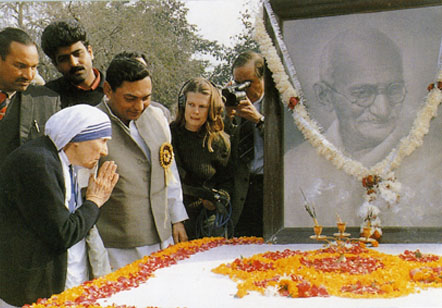
The big news this week is the Vatican approval of what is being referred to as the "Mayan rite" of the Mass. Traditionalists reacted with dismay, while the usual suspects were quick to leap into action with their "nothing to see here" takes. Where Peter Is, for example, published a piece entitled "Traditionalist Lies: Addressing Malicious 'Mayan Rite' Rumors" (Nov. 17, 2024) fawning over the new adaptations and accusing Traditionalists of "lying" about the new rite.
Showing posts with label Interreligious Dialogue. Show all posts
Friday, November 22, 2024
Sunday, December 13, 2015
The Holocaust and Its Shaping of Catholic Ecclesiology
You may have never heard of Enzo Bianchi. He is the lay "prior" of the so-called "interconfessional monastery" of Bose in Biella, Italy. The Bose community contains over eighty "brothers" and "sisters" from various Christian denominations. In 2012 Mr. Bianchi was named as a peritus to the General Assembly of the Synod of Bishops on the New Evangelization; in 2014 the pontificate of Pope Francis elevated Mr. Bianchi to be Consultor of the Pontifical Council for Promoting Christian Unity.
Bianchi has gone of record in the past with his belief that the 1917 Fatima apparitions are a "swindle." The reason? Because Fatima does not specifically predict the Holocaust. "A God who thinks in 1917 that there will be a persecution of Christians, but does not speak of the Holocaust and the six million Jews annihilated, is not a credible God", said Bianchi, the quote coming from La Repubblica."
The French leftist dissident Dominican Jean Cardonnel, a friend and supporter of Bianchi, expanded on this theme, stating that, "A credible God, I repeat Bianchi, the God of Catholic racism who cares only for his family, for his Catholic race, while the kin of Jesus may fall prey to oblivion."
Vittorio Messori, author of the famous Ratzinger Report, summed up the positions of Cardonnel and Bianchi: "Even God must - if he wants to speak to us through Mary - recognize the Shoah and especially curse it, otherwise he is not a credible God."
The blog Eponymous Flower has an excellent refutation of this absurd line of thinking - as if God cannot speak on whatever subject matter He wants at any time! I highly recommend the article, where you can also find all the sources for the above citations.
The phenomenon I want to comment on is this fixation on the Holocaust in contemporary Catholic discourse. The Holocaust was undoubtedly one of the most horrendous events in human history - not the first genocide, and not even the biggest, but certainly horrendous nonetheless. Still, the Holocaust - like the Norman Conquest, Reformation, or Civil War - is ultimately only a historical event. While the will of God unfolds throughout history, and while grace can be found in any event, the Holocaust possessed no special eschatological or salvific significance. The Holocaust is not an article of faith that must be continually referenced and paid special tribute to.
It is fascinating to see how the Holocaust has slipped from the realm of history into a theological context. In fact, as we shall see, the obligation of memorializing the Holocaust has become a theological linchpin in the contemporary Church's approach to Judaism.
The blog Eponymous Flower has an excellent refutation of this absurd line of thinking - as if God cannot speak on whatever subject matter He wants at any time! I highly recommend the article, where you can also find all the sources for the above citations.
The phenomenon I want to comment on is this fixation on the Holocaust in contemporary Catholic discourse. The Holocaust was undoubtedly one of the most horrendous events in human history - not the first genocide, and not even the biggest, but certainly horrendous nonetheless. Still, the Holocaust - like the Norman Conquest, Reformation, or Civil War - is ultimately only a historical event. While the will of God unfolds throughout history, and while grace can be found in any event, the Holocaust possessed no special eschatological or salvific significance. The Holocaust is not an article of faith that must be continually referenced and paid special tribute to.
It is fascinating to see how the Holocaust has slipped from the realm of history into a theological context. In fact, as we shall see, the obligation of memorializing the Holocaust has become a theological linchpin in the contemporary Church's approach to Judaism.
* * * * *
Let us begin with the document "We Remember: A Reflection on the Shoah", the 1998 letter issued by the Commission for Religious Relations with the Jews under John Paul II. This letter establishes the principle that the Holocaust cannot be considered as a mere historical event, but deserves a kind of "religious memory":
"The very magnitude of the crime raises many questions. Historians, sociologists, political philosophers, psychologists and theologians are all trying to learn more about the reality of the Shoah and its causes. Much scholarly study still remains to be done. But such an event cannot be fully measured by the ordinary criteria of historical research alone. It calls for a "moral and religious memory" and, particularly among Christians, a very serious reflection on what gave rise to it."
Certainly moral lessons can be drawn from any historical episode; but not every historical episode calls for a special "moral and religious memory." In taking this approach, the Magisterium of John Paul II seemed to be saying that the Holocaust must be elevated beyond other historical events, not in terms of its importance, but in terms of what sort of phenomenon it was. It makes sense to say that Civil War was a more important historic event than the War of Jenkins' Ear in terms of its magnitude and consequences; but here we are just moving along a spectrum of magnitude on the axis of historical events. What We Remember is saying is something different; it says not that the Holocaust is a more important historical event than other historical events, but rather that it should not be understood as merely a historical event at all - rather, it merits "moral and religious memory." It is a difference of quality, not just magnitude.
By allowing the Holocaust to bleed over from the historical into the religious, this historic event can now be considered as a kind of theological criterion for understanding Church teaching. The introductory letter by Cardinal Edward Idris Cassidy in the above mentioned document demonstrates the attempt to move the Holocaust from the historical into the theological. He wrote:
* * * * *
By allowing the Holocaust to bleed over from the historical into the religious, this historic event can now be considered as a kind of theological criterion for understanding Church teaching. The introductory letter by Cardinal Edward Idris Cassidy in the above mentioned document demonstrates the attempt to move the Holocaust from the historical into the theological. He wrote:
"In the Guidelines and Suggestions for Implementing the Conciliar Declaration Nostra Aetate,n. 4, published on 1 December 1974, the Holy See's Commission recalled that "the step taken by the Council finds its historical setting in circumstances deeply affected by the memory of the persecution and massacre of Jews which took place in Europe just before and during the Second World War". Yet, as the Guidelines pointed out, "the problem of Jewish-Christian relations concerns the Church as such, since it is when "pondering her own mystery" (Nostra Aetate, n. 4) that she encounters the mystery of Israel."
This needs a bit of parsing. The memory of the Holocaust provides the "historical setting" for the Council's discussion of the Church's relation with non-Christian religions, specifically the Jews. The relationship is bound up with the Church's own self-understanding, since in "pondering her own mystery" the Church inevitably confronts the "mystery of Israel." In other words, the question of Jewish-Christian relations is central to the mystery of the Church, and the "historical setting" by which this question must be framed is the Holocaust. The Holocaust thus becomes a point of departure for theological considerations relating to the Church's own identity.
The modern context for Catholic ecclesiology is the memory of the Holocaust, at least in considering relations with Jews. This one historic event is thus elevated to the level of a meta-historical act whose import is religious, similar to the destruction of the Temple in 70 A.D. It is the theologizing of the Holocaust.
* * * * *
It is well-known that the enemies of the Church are fond of blaming Christian civilization for creating the atmosphere of European anti-Semitism that made the Holocaust possible. Pop-Catholic apologists have spent a great deal of effort refuting this position. What these pop-apologists might not be aware of is the modern Magisterium itself is in agreement with these claims. In We Remember, the Magisterium of John Paul II unambiguously endorses the view that centuries of negative Christian attitudes towards Jews bear some responsibility for the Holocaust. The relevant points are worth citing at length:
"The fact that the Shoah took place in Europe, that is, in countries of long-standing Christian civilization, raises the question of the relation between the Nazi persecution and the attitudes down the centuries of Christians towards the Jews. The history of relations between Jews and Christians is a tormented one. His Holiness Pope John Paul II has recognized this fact in his repeated appeals to Catholics to see where we stand with regard to our relations with the Jewish people. In effect, the balance of these relations over two thousand years has been quite negative.
Despite the Christian preaching of love for all, even for one's enemies, the prevailing mentality down the centuries penalized minorities and those who were in any way "different". Sentiments of anti-Judaism in some Christian quarters, and the gap which existed between the Church and the Jewish people, led to a generalized discrimination, which ended at times in expulsions or attempts at forced conversions. In a large part of the "Christian" world, until the end of the 18th century, those who were not Christian did not always enjoy a fully guaranteed juridical status."
The letter goes on to make a distinction between "anti-Judaism" and nationalist "anti-Semitism", convicting Christians of the former but not the latter. It points to Naziism as a neo-pagan ideology that was also anti-Christian as well as anti-Jewish, in attempting to draw a historical separation between the two types of anti-Jewish hostility. But the document goes on to ask:
"But it may be asked whether the Nazi persecution of the Jews was not made easier by the anti-Jewish prejudices imbedded in some Christian minds and hearts. Did anti-Jewish sentiment among Christians make them less sensitive, or even indifferent, to the persecutions launched against the Jews by National Socialism when it reached power?"
While making mention of Christians who helped persecuted Jews, the document goes on to condemn the attitudes of the majority of Christians who "were not strong enough" in their opposition to National Socialism:
"Nevertheless, as Pope John Paul II has recognized, alongside such courageous men and women, the spiritual resistance and concrete action of other Christians was not that which might have been expected from Christ's followers. We cannot know how many Christians in countries occupied or ruled by the Nazi powers or their allies were horrified at the disappearance of their Jewish neighbours and yet were not strong enough to raise their voices in protest. For Christians, this heavy burden of conscience of their brothers and sisters during the Second World War must be a call to penitence. We deeply regret the errors and failures of these sons and daughters of the Church."
Thus, while anti-Judaism is logically and historically distinct from "pagan anti-Semitism", the earlier Christian anti-Judaism aided anti-Semitism in a fashion by deadening the responses of Christians to the horrors of the Holocaust.
* * * * *
We Remember references John Paul II. The reference in questions is from John Paul II's 1997 Address to the Symposium on the Roots of Anti-Judaism, in which the pope specifically says that alleged Christian indifference to the Holocaust proceeded directly from the pre-modern Christian hostility towards the Jews:
"In fact, in the Christian world — I do not say on the part of the Church as such — erroneous and unjust interpretations of the New Testament regarding the Jewish people and their alleged culpability have circulated for too long, engendering feelings of hostility towards this people. They contributed to the lulling of consciences, so that when the wave of persecutions inspired by a pagan anti-Semitism, which in essence is equivalent to an anti-Christianity, swept across Europe, alongside Christians who did everything to save the persecuted even at the risk of their lives, the spiritual resistance of many was not what humanity rightfully expected from the disciples of Christ."
Among the "erroneous and unjust interpretations of the New Testament" that John Paul II references is presumably the belief that the Church has replaced the Jews as the true Israel, as well as the perennially held Christian assertion that the Old Covenant, on its own, is no longer salvific. He does not suggest this explicitly, but it is easily inferred by the fact that the pope cites Romans 11:29 ("the gifts and calling of God are irrevocable") in the conclusion of his address, a verse consistently but erroneously invoked by those who argue that the Jews have "their own covenant" with God outside of Jesus Christ.
It is baffling how John Paul II could say these teachings were never taught "on the part of the Church as such", since the Council of Florence Cantate Domino specifically and unambiguously taught the very thing John Paul II seems to consider "erroneous and unjust":
“[The Holy Roman Church] firmly believes, professes and teaches that the legal prescriptions of the Old Testament or the Mosaic law, which are divided into ceremonies, holy sacrifices and sacraments, because they were instituted to signify something in the future, although they were adequate for the divine cult of that age, once our Lord Jesus Christ who was signified by them had come, came to an end and the sacraments of the new Testament had their beginning. Whoever, after the Passion, places his hope in the legal prescriptions and submits himself to them as necessary for salvation and as if faith in Christ without them could not save, sins mortally. It does not deny that from Christ's passion until the promulgation of the Gospel they could have been retained, provided they were in no way believed to be necessary for salvation. But it asserts that after the promulgation of the gospel they cannot be observed without loss of eternal salvation.”
Thus, John Paul II seemed to think that the traditional ecclesiology of the Church vis-a-vis the Jews was in fact responsible for a deadening of feeling and an indifference among Christians that helped facilitate the Holocaust.
* * * * *
We Remember states that the religious import of the Holocaust is understood in terms of a binding commitment of future generations to let the Holocaust serve as the starting point for a new beginning with the Jewish people. In the following extraordinary statement, notice the admission of Catholic guilt and repentance for Christian failings in facilitating the Holocaust, coupled by the assertion that this repentance calls for a "binding commitment" to develop a "new relationship" with the Jewish people for the purpose of eliminating "anti-Judaism":
"At the end of this Millennium the Catholic Church desires to express her deep sorrow for the failures of her sons and daughters in every age. This is an act of repentance (teshuva), since, as members of the Church, we are linked to the sins as well as the merits of all her children. The Church approaches with deep respect and great compassion the experience of extermination, the Shoah, suffered by the Jewish people during World War II. It is not a matter of mere words, but indeed of binding commitment....
We pray that our sorrow for the tragedy which the Jewish people has suffered in our century will lead to a new relationship with the Jewish people. We wish to turn awareness of past sins into a firm resolve to build a new future in which there will be no more anti-Judaism among Christians or anti-Christian sentiment among Jews, but rather a shared mutual respect, as befits those who adore the one Creator and Lord and have a common father in faith, Abraham."
Notice the use of the term "anti-Judaism." Given that the document went to lengths earlier to distinguish between "anti-Judaism" and "anti-Semitism", we must presume an internal consistency in the term's usage. This would infer that the elimination of "anti-Judaism" is referring to, not nationalist anti-Semitism, but rather "the erroneous and unjust interpretations of the New Testament" that John Paul II referred to - in other words, the teaching that the Jewish covenant taken on its own is not salvific and that Jews need Christ. The traditional position suddenly becomes problematic because it infers that the Jews are not alright just where they are - that their condition is not enviable, that they need Jesus Christ. This position is untenable to the modern Magisterium.
* * * * *
It all begins to come together. Because of the horror of the Holocaust - and guilt for perceived Christian numbness to Jewish suffering - the modern Magisterium has lost the fortitude to tell the Jews that they are in need of salvation through Christ. Any suggestion that the Jewish religion is not a complete and integral salvific system are taken as a type of "anti-Judaism", for such a position necessarily finds fault with the current status of the Jews. Never mind that the Nazi remedy to the Jewish question was extermination whilst the Christian remedy is conversion; if the Church is sufficiently to distance itself from the Holocaust, it must no longer insist that there is anything lacking or objectionable in Judaism. The Holocaust is the event - at once historical, religious, and moral - that has become the historical context for this change in direction. And the obligation to continue in this trajectory is a "binding commitment" on Christians. This is why we will only ever see more waffling from the Magisterium when it comes to the question of Jews and salvation.
A case in point is the horrible new document "The Gifts and Calling of God are Irrevocable" (2015). This document will go further than any other Magisterial statement in teaching the Jews do not need conversion to Christ and the Church for salvation. Note the title is taken from Romans 11:29, the same verse John Paul II cited against the "erroneous and unjust interpretations of the New Testament", as found in the Council of Florence. It is eminently schizophrenic, suggesting that "From the Christian confession that there can be only one path to salvation, however, it does not in any way follow that the Jews are excluded from God’s salvation because they do not believe in Jesus Christ as the Messiah of Israel and the Son of God." Apparently the principle of non-contradiction has been replaced with Folgers Crystals, as Steve Skojec so tartly put it.
But yes, the document repudiates the centuries old teaching that the Church is the true Israel, even though admitting that this teaching was "the standard theological foundation of the relationship with Judaism" from the patristic era and for the entirety of the Church's tradition, "only to be defused at the Second Vatican Council...with its Declaration Nostra aetate", which has replaced the 2,000 year tradition with a new "constructive dialogue relationship." What crass arrogance to so blatantly "defuse" what the document admits is the universal tradition!
But look at how evangelization to the Jews is said to be a no-no and the Shoah is invoked:
"In concrete terms this means that the Catholic Church neither conducts nor supports any specific institutional mission work directed towards Jews. While there is a principled rejection of an institutional Jewish mission, Christians are nonetheless called to bear witness to their faith in Jesus Christ also to Jews, although they should do so in a humble and sensitive manner, acknowledging that Jews are bearers of God’s Word, and particularly in view of the great tragedy of the Shoah."
It goes on about "the dark and terrible shadow of the Shoah", and encourages Christians to "reflect anew" upon this tragedy as a point of departure for Christian-Jewish relations. Following John Paul II, it speaks of a moral "duty of Christians" to remember the Shoah. This language is truly amazing; strictly speaking, the only historical events we have a moral duty to recall are those that are part of salvation history: the great stories of the Old Testament, the events surrounding the life, death and Resurrection of our Lord, the miraculous founding of the Church, Of course we commemorate many saints and other historical events, but nobody ever speaks of a grave "duty" to remember Lepanto or tells us we have a "binding commitment" to never forget the Investiture Controversy. The only historical events we have any binding commitment to remember and honor are those which are integral parts of salvation history.
And this is precisely the role many would like to assign to the Holocaust. The Church's "new relationship", her new "constructive dialogue" with Judaism exists as a kind of theological response to the Shoah, which is put forward as an event of such meta-historical importance that it justifies abandoning 2,000 years of Catholic Tradition.
* * * * *
I recall once when I was in college I was taking a philosophy course by a professor who was a fairly decent Catholic but who was unfortunately an ardent disciple of Von Balthasar. He was discussing changes in Catholic theology, art, architecture, and literature in the wake of World War I, and how all these changes were prompted by a desire of Catholic intellectuals to "respond" to the horrors of the war. I raised my hand and asked why Catholicism had to "respond" at all? Why could not the Church simply address the horrors of the modern world by continuing unperturbed on its ageless mission, without turning to the left nor to the right? Instead of "responding" to the modern world, why not call the modern world to respond to the timeless Gospel? The professor kind of hemmed and hawed; the thought had apparently never occurred to him.
I have often mentioned Alyssa Lyra Pitstick's book Light in the Darkness, which is mandatory reading for those interested in learning what an outrageously heterodox theologian Hans Urs Von Balthasar was. In the introduction to her book, Pitstick notes that modern theologians who put forward novel theories often are driven by the desire of these thinkers to "respond" to the horrors of the modern age; to allow their thinking to be "conditioned" by the times. She makes this point with reference to theories about Christ's death, but it is just as applicable to our discussion:
"In particular, the face of death in the twentieth century - conditioned by philosophical and social alienation, the great wars, and atheism - often figures noticeably in the new interpretations of Christ's death...However, as Vatican II suggests, such pastoral exigencies can only be adequately met with God's revealed truth, proclaimed anew to a changed audience, not by the molding of doctrinal content to the image of human horror in any age" (Pitstick, Light in the Darkness, pg. 3)
Is not the contemporary Church's refusal to say anything remotely challenging to the Jews an example of doctrinal content being molded in response to the Holocaust? Indeed, it is the elephant in the room; because of some kind of collective guilt over the Holocaust, the Catholic Church has lost the ability - or rather the will - to tell them they need to convert to Christ. Instead of proclaiming the timeless truth of Christ to a modern audience, we are allowing our "response" to the horrors of the 20th century to alter the truth.
Saturday, July 25, 2015
Great Moments in Interreligious Dialogue: St. Fernando III
July 25th is the feast of Santiago Matamoros, "St. James the Moor-Slayer", the patron saint of Spain. In honor of St. James - and calling to mind a former day and time when men of God had not yet started down the desolate path of "dialogue" with Islam - we bring you this marvelous little passage from the life of St. Fernando III.
Fernando III (r. 1217-1252), King of Castile and later of Leon and Galicia, won back more territory from the Moors than any other Spanish monarch of the Reconquista. In the passage quoted below, St. Fernando is speaking to his mother, Queen Berenguera, about his desire to make war on the Moors. This decision, which St. Fernando formulated around Pentecost, 1224, Fernando said was "revealed by almighty God." This inspiration would lead to the campaign that would almost entirely conquer Andalusia from the Moors. St. Fernando told his mother:
"Most beloved mother and sweet lady: Of what benefit to me is the kingdom of Castile, which, though due to you by right, your generosity abdicated and granted to me; of what benefit to me is the most noble consort [Princess Beatrice of Swabia] brought from distant lands through your solicitude and labor and joined to me in marriage with indescribable honor; of what benefit to me is it that you anticipate my desires with maternal sweetness, and before I have fully conceived them, you bring them to most brilliant effect: if I am dulled by laziness, if the flower of my youth is fading away without fruit, if the light of royal glory, which already had begun to shine like certain rays, is being extinguished and annihilated? Behold, the time is revealed by almighty God, in which, unless I want to pretend otherwise like a weak and deficient man, I am able to serve the Lord Jesus Christ, by whom kings reign, against the enemies of the Christian faith, to the honor and glory of His name. The door is open indeed and the way is clear. Peace has been restored to us in our kingdom; discord and deadly enmities exist among the Moors; factions and quarrels have broken out anew. Christ, God and Man, is on our side; on that of the Moors , the infidel and damned apostate Muhammad. What more is there to say? Most kind mother, from whom, after God, I hold whatever I have, I beg that it may please you that I wage war against the Moors" [1].
A great moment in interreligious dialogue indeed! St. Fernando was under no illusion of how to deal with the threat of Islam. And he had greater success against the Moors than any modern democratic nation-builder. Were another great leader to arise who, like St. Fernando, was zealous for the glory of God and the kingdom of Christ, who knows what future victories God might grant?
For more on St. Fernando III, we recommend St. Fernando III: A Kingdom for Christ by James Fitzhenry, available for purchase here.
Also related: Our very non-PC Santiago Matamoros T-Shirt, available in the Cruachan Hill webstore.
Santiago Matamoros, ora pro nobis!
Sancte Fernando, ora pro nobis!
______________________________________________________________________________________
______________________________________________________________________________________
[1] Joseph F. O'Callaghan, The Latin Chronicle of the Kings of Castile (Arizona Center for Medieval and Renaissance Studies: Tempe, AZ, 2002), pg. 88
Thursday, August 23, 2012
Tolerance and the Two Kinds of Understanding
If
we were to take a look at the movement for interreligious dialogue within the
Catholic Church and question it as to the meaning of its existence, its
adherents would probably say that the movement was there to promote understanding
among members of different faiths. Many would stop there, accept this as an
acceptable answer and move on. But ought we to let it go that easily? What does
it mean when interfaith promoters talk about understanding? And, most
importantly, is “understanding” another religion an intrinsic good?
The
purpose of fostering understanding is to build tolerance between persons of
divergent religious traditions. I do not have anything against the concept of
tolerance, if we mean it in the sense that we ought not to be killing and
persecuting one another based on our religious beliefs. From the Catholic side,
it is Church dogma that baptism cannot be forced and that conversions must be
based in genuine love of God and desire to obey and know Christ. Tolerance is
good, in that sense.
However, tolerance is not the same as acceptance, and
the concept of tolerance in itself has a kind of resentful aspect to it. For example, if I say
to you that I can “tolerate” your presence at my home, have I paid you a
compliment or insulted you? What if I am at your house eating dinner, and your
wife asks me how her cooking is. I say, “It’s tolerable.” What I am saying with
these statements? Do you see the negative connotation?
I
approve of tolerance if we keep this negative understanding of it in mind: when
we say we “tolerate” another faith, it is because there is no means of positively getting rid of it (save by converting everyone), and therefore we have to learn to live with it. In a
perfect world, we would go out and have converted all of the Muslims and Hindus
and pagans and the rest of the motley nations of the earth. But, that has not
yet happened, and since we are still this side of Heaven, we must learn to
“tolerate” the existence of these other false religions. That’s all tolerance
means to me.
But
(say the proponents of interfaith dialogue), the more we dialogue, the more we need a
tolerance that is based not in simple acceptance of the existence of other
religions as an unchangeable fact, but a tolerance that is based on mutual
acceptance of religious traditions as valuable in themselves. Again, this word
“acceptance” can mean a variety of things. What do we mean by acceptance? I can
accept that people believe Buddhism is true. I can accept that there exist
people in the world called Buddhists who prefer to live and worship according
to a certain standard of belief. But, what I cannot do is accept that Buddhism
is correct, or that it is good, or that its adherents are better off sticking
with Buddhism rather than Christianity.
But unfortunately this is exactly what people means
when they say that we must learn to accept each other.
But
why should we accept? How does dialogue and understanding lead to acceptance?
Here lies the biggest logical error of the whole argument: proponents of
interreligious dialogue wrongly assume that just because we learn more about
something that we will therefore like it better.
The logical argument runs like this: we need to dialogue with people of other faiths so that we can learn about each other. Once we learn about each other and our beliefs, we will have an understanding of one another’s religions. Once we understand one another’s religions, we will see that they are not that different from us, and that we ought to admire the similarities and accept the differences. If we can learn to accept differences, then we can have true tolerance, and tolerance will lead to a more peaceful world and happy coexistence between religions.
This
line of thought is riddled with flaws. First of all, I would look at the end: a
peaceful world and happy coexistence between faiths. Since when is world peace
an absolute good? Since when is earthly, temporal peace something that we look
to as the goal of our interactions with other religions? What about conversion?
What about Jesus' warning that “I come not to bring peace, but a sword?”
Second, I would disagree
with the classic interfaith premise that all religions share so much in common
that we ought to just focus on the similarities. G.K. Chesterton said people
often say that all religions look different but in reality are the same, but
the truth is that all religions actually look the same and are different in
essence. All religions have altars, vestments, candles, prayers, holy days,
etc. It is the philosophical and doctrinal elements of religions that are truly
different, and it is these that can lead one astray. Why converge around
similarities in the accidentals if it is the essential that can destroy the
soul?
And finally, why ought we to care about bringing about world peace or
dialoguing with people of other faiths at all? World peace is not a good enough
incentive for me, because I am not interested in a pax mundi but only a pax Christi. As Jesus said,"Peace I leave with you; my peace I give you. I do not give to you as the world gives” (John 14:27). Christ specifically says that His peace is not the same kind as the peace of the world. But that is exactly the type of peace promulgated by the interreligious dialogue crowd.
I think the biggest error in this line of thinking is the idea that just because we understand something better means we will like it better. Since when does getting to know something better mean you like it more? Learning about something can also make you like something, sure, but it can also make you like something less.
To use a classic example: prior to World
War II, the Allies continued appeasing Hitler when he tried repeatedly to take
more land and get more aggressive, as the famous “Peace in Our Time” speech by
Neville Chamberlain in 1938 demonstrated. Post-war reflection has come to the
conclusion that the Allies appeased Hitler because they did not understand what
kind of a man he was and what Nazism was. In other words, tolerance and getting
along was the product of ignorance, not understanding (and in this case, it had
disastrous consequences). It was only when men came along who understood Nazism for what it was, that Europe found the courage to fight.
In this scenario, we could say that a greater understanding of Hitler and the
Nazis led to a greater loathing for them rather than tolerance.
A personal example: I
have to admit that until recently I knew nothing about Hinduism. Furthermore, I
was content to not know anything about Hinduism. Why? Because I know enough:
that it is a false religion and that India is a horrible place to live. But
recently I read a very exhaustive, 500-page work on India by a secular author.
It covered the religious aspects of India, the in’s and out’s of Hinduism, the
tradition of Indian philosophy, the social system of India, the doctrines and
practices of Buddhism and everything one could possible want to know about the
Indian subcontinent. I now feel very educated about India since reading this
book, but let me tell you something else: now that I know all about India, I
have never been so disgusted with Hinduism as I am now that I have studied it.
Understanding did not make me appreciate it. In fact, it was knowledge and understanding that facilitated this. Before, I disliked
Hinduism and knew little about it. Now, I have studied it, and find it utterly
repelling and loathsome.
So
then, is understanding a good thing or a bad thing? Again, it depends on our
definition. Too often “understand” is taken to mean sympathize, empathize or
even agree with, so that to “understand” Islam is to sympathize with it and feel
guilty about attempts to convert Muslims. This is a terrible way to use the
word. I will tell you how I think we ought to use the word “understanding”: in
a way that denotes complete and intricate knowledge of a thing, the way the
Scholastics used the word. In this sense, I hope Catholic come to understand
Hinduism. I hope we really “learn” about Islam and find ourselves
“understanding” it very well. Perhaps when we have studied Islam, Hinduism,
Buddhism and all the rest of the demon-worshipping religions out there, we will
truly “understand” how wretched they are and how bad the world needs Christ. I
could stand for some more of that kind of understanding.
If you like this post and want to read more like it, please Like our Facebook page or sign up as a Follower!
Friday, November 18, 2011
"No one who denies the Son has the Father"
It seems that much of the inter religious dialogue in the Catholic Church these days is built upon a very fundamental but faulty premise: that human beings can be in meaningful communion with God the Father outside of the unique mediation of Jesus Christ. This is the premise behind a lot of the interactions between the Church and other religions - when we ask a non-Christian to pray, we are in fact assuming that they have some sort of communion or access to God the Father apart from the covenant of Jesus Christ. Otherwise, why ask them to pray?
If we say to a Hindu, "Pray for world peace," to whom are we asking them to pray? There are only three options: First, we are asking them to pray to a god who does not exist, in which case such a prayer is fruitless. Second, perhaps it is the devil they are addressing? The Fathers did in fact believe this was the case. St. Cyprian teaches that the gods of the pagans are actually demons:
"They are impure and wandering spirits, who, after having been steeped in earthly vices, have departed from their celestial vigor by the contagion of earth, and do not cease, when ruined themselves, to seek the ruin of others; and when degraded themselves, to infuse into others the error of their own degradation" (On the Vanity of Idols, 6).
Whether or not be the case, let us presume that the Church would not knowingly ask pagans to pray to demons; at least this is certainly not the intention when some Church dignitary is asking pagans to pray; if this were the case, it would certainly be sinful. This leaves us with only the third option: They are presuming that the pagan already has a real, meaningful relationship with the true God, such that this pagan can petition God for worldly favors and expect to be heard and answered. And all this without the necessity of Jesus Christ. This must be the presumption behind asking pagans to pray - otherwise, we are either asking them to pray to the devil or to nothing, which wouldn't make any sense. The Church us behaving as if these non-Christians have the same access to God that we do.
If we look at Benedict's closing words at Assisi III, we see this statement: "Violence never again! War never again! Terrorism never again! In the name of God, may every religion bring upon the earth justice and peace, forgiveness and life, love!" He here abjures all the false religions, in the name of the one true God, to bring about those fruits of the spirit that only the true religion is capable of. "The fruit of the Spirit is love, joy, peace, forbearance, kindness, goodness, faithfulness, gentleness and self-control." (Gal 5:22-23) Are pagans now able to bring about these fruits on the earth without the necessity of the Spirit of Christ?
This came rushing home to me this evening during Holy Hour as I was reflecting on the first letter of John. He says:
If we look at Benedict's closing words at Assisi III, we see this statement: "Violence never again! War never again! Terrorism never again! In the name of God, may every religion bring upon the earth justice and peace, forgiveness and life, love!" He here abjures all the false religions, in the name of the one true God, to bring about those fruits of the spirit that only the true religion is capable of. "The fruit of the Spirit is love, joy, peace, forbearance, kindness, goodness, faithfulness, gentleness and self-control." (Gal 5:22-23) Are pagans now able to bring about these fruits on the earth without the necessity of the Spirit of Christ?
This came rushing home to me this evening during Holy Hour as I was reflecting on the first letter of John. He says:
"Who is a liar but he who denies Jesus is the Christ? This is the antichrist, he who denies the Father and the Son. No one who denies the Son has the Father. He who confesses the Father has the Son also" (1 John 2:22-23).
"Anyone who goes ahead and does not abide in the doctrine of Christ does not have God" (2 John 8)
And let us not forget our Lord's words in the Gospel of Luke: "He who rejects me rejects Him who sent me" (Luke 10:16). St. Paul tells us in Romans 5:1-2, "Therefore, since we are justified by faith, we have peace with God through our Lord Jesus Christ. Through him we have obtained access to this grace in which we stand, and we rejoice in our hope of sharing the glory of God."
Bottom line: Rejection of Christ as Lord and Messiahs means ipso facto rejection of God the Father. You cannot refuse to accept Christ and still claim to have access to the Father. The only reason we can "obtain access to this grace in which we stand" is because of the peace we have with God the Father through Christ our Lord. Without Christ, there is no peace with God and certainly no communion with Him in such a way that we can stand shoulder to shoulder with non-Christians and ask the non-Christian to pray to their god for worldly favors.
It is especially disheartening to read this sort of stuff in the works of Mother Teresa, who has recently been beatified. In her book Life in the Spirit: Reflections, Meditations and Prayers, she says:
“We never try to convert those who receive [aid from Missionaries of Charity] to Christianity but in our work we bear witness to the love of God’s presence and if Catholics, Protestants, Buddhists, or agnostics become for this better men — simply better — we will be satisfied. It matters to the individual what church he belongs to. If that individual thinks and believes that this is the only way to God for her or him, this is the way God comes into their life — his life. If he does not know any other way and if he has no doubt so that he does not need to search then this is his way to salvation.” (pp 81-82)
I have been unable to authenticate the following quote, so take it with a grain of salt, but in an interview with the publication Christian News, one of Mother Teresa's nuns was asked how the Missionaries of Charity how they prepare dying Hindus for death. The nun replied, "We tell them to pray to their Bhagwans - to their gods." Based on everything I have ever read about Mother Teresa, and what I know about missionaries in general, it would not surprise me if this were totally factual. I do know that Michael Zima in his book Mother Teresa: The Case for the Cause has documented some similar statements from Mother Teresa herself. There she explains how she treats dying persons with the appropriate rites from their respective faiths:“for Hindus, water from the Ganges on their lips; for Muslims reading from the Koran; for the rare Christian, the last rites” (p. 142).
Our inter religious dialogue, and certainly our missions, will not bear any fruit until we get rid of this unfounded assumption that access to God can be granted through all religions. Our missions and dialogue with the world's religions need to be founded on this one basic principle: "I am the way, the truth and the life; no one comes to the Father but through me" (John 14:6).
Let's return to St. Cyprian for our closing thought:
"For whereas in the Gospels, and in the epistles of the apostles, the name of Christ is alleged for the remission of sins; it is not in such a way as that the Son alone, without the Father, or against the Father, can be of advantage to anybody; but that it might be shown to the Jews, who boasted as to their having the Father, that the Father would profit them nothing, unless they believed on the Son whom He had sent. For they who know God the Father the Creator, ought also to know Christ the Son, lest they should flatter and applaud themselves about the Father alone, without the acknowledgment of His Son, who also said, "No man comes to the Father but by me." But He, the same, sets forth, that it is the knowledge of the two which saves, when He says, "And this is life eternal, that they might know You, the only true God, and Jesus Christ, whom you have sent." Since, therefore, from the preaching and testimony of Christ Himself, the Father who sent must be first known, then afterwards Christ, who was sent, and there cannot be a hope of salvation except by knowing the two together" (Letter 72:17).
Friday, October 28, 2011
Assisi III: Desolating Sacrilege
I am mad. More than mad, fuming. So, we were supposed to not get upset about Assisi III? We were supposed to trust that the indiscretions of Assisi I and Assisi II under John Paul "the Great" would not be repeated at Assisi III because Pope Benedict was more circumspect and would not go in for anything questionable? Well, we went ahead cautiously and extended Benedict the benefit of the doubt...and......then.......we get this ABOMINATION: prayer to the pagan deity Olokun inside the Basilica of St. Francis of Assisi!
This is WRONG. I shouldn't even have to explain why this is wrong. But sadly, some pop apologists will probably come trotting out explaining why this "really isn't problematic" if you just "understand" it the right way. I don't know what's more sad - the pagan worship, or some Catholics defense of it. This is just wrong, and if you can't see why this is wrong, then I don't know what to say to you. It makes me sick to even think of arguing about this. It is just plain wrong.
I just this week got done with a long study of the Old Testament prophets (just today I was going through Hosea and Joel); I've said this before and I'll say it a million times - nobody who has really read and dug into the Old Testament should in anyway be in the dark about how God feels about pagan worship - especially in His consecrated temples! Jerusalem was destroyed for this sort of thing. That's what the whole Book of Ezekiel is about, for crying out loud! It's just as I finished weeks of reading passages about how pagan worship is corruptive, how hateful it is to God, how when His people flirt around with other religions it is tantamount to spiritual adultery - how whole kingdoms and populations were striken by God and carried off into captivity in punishment for these sorts of sins. And then I come online and see THIS DESOLATING SACRILEGE!
It reminds me of this passage from Hosea:
"With you is my contention, O priest. You shall stumble by day, the prophet also shall stumble with you by night; and I will destroy your mother. My people are destroyed for lack of knowledge; because you have rejected knowledge, I reject you from being a priest to me. And since you have forgotten the law of your God, I also will forget your children...I will change their glory into shame...And it shall be like people, like priest; I will punish them for their ways, and requite them for their deeds. They shall eat, but not be satisfied; they shall play the harlot, but not multiply; because they have forsaken the LORD to cherish harlotry....My people inquire of a thing of wood, and their staff gives them oracles. For a spirit of harlotry has led them astray, and they have left their God to play the harlot. They sacrifice on the tops of the mountains, and make offerings upon the hills, under oak, poplar, and terebinth, because their shade is good" (Hos. 4:4-13).
How hateful is it to God when His priests lead people astray by providing for such scandalous behavior, such abomination as pagan worship in a Christian Church that is canonically for the celebration of the Mass! How hateful it is to God when our pastors lead us into a spirit of idolatry. It is certain that, if we forget the law of God, He will enter into judgment with us, and especially with His priests. I accuse no pastor or priest specifically; I don't know what Benedict knew or didn't, but somebody set this up, and whoever did should be canned permanently.
But here is what I really want to know: You Catholics who apologize for and defend the pope no matter what he does, who make excuse after excuse for these Vatican gaffes, will you make apology for this? Will you step forward and defend this abomination? What excuse will you offer? What twisted conciliar document or statement of Aquinas taken out of context will you bring forward in a feeble attempt to make pagan worship in a Christian Church look acceptable? What say you? Will anyone dare to defend this? Any Catholic who defends this has, in my opinion, simply lost touch with who God is, what God demands of us, and how offensive pagan worship truly is to Him, especially when it is done in His sacred precincts, defiling our altars and insulting the memory of St. Francis who was willing to undergo a trial by fire in order to prove the TRUTH of our religion and the FALSITY of others.
Pray. Do penance. Preach the truth. This nonsense has to stop. Every time I think I can reconcile myself with the post-conciliar state of the Church - every time I think "You know, I don't have to be a Traditionalist Catholic; just plain Catholic is good enough for me!" - every time I think that, something like this goes and happens and reminds me why I consider myself a Traditionalist.
This is not the Faith of our Fathers. I didn't go through a life of agnosticism and make the burdensome detour into and out of Pentecostal Protestantism and into the Catholic Church to be greeted with THIS. St. Francis, pray for us!
And Elijah said to them: "Take the prophets of Baal, and let not one of them escape." And when they had taken them, Elijah brought them down to the Brook Kidron and killed them there (1 Kings 18:40).
But wait, Elijah - they were sincere!
Saturday, December 04, 2010
Buffalo Dance in Santa Fe
A little tidbit from our friends at the Los Pequenos Pepper, a lay-run monthly periodical out of the Archdiocese of Santa Fe, where, due to the large population of Pueblo Indians, there has been an inordinate amount of "inculturation" going on liturgically for quite a long time. Here's a look at the latest nonsense going on in New Mexico.
Has the Buffalo Dance been Baptized?
By Stephanie Block
This past January, an interfaith gathering was hosted by Monsignor Jerome Martinez y Alire, in downtown Santa Fe’s Cathedral Basilica of St. Francis of Assisi where he is rector. The event celebrated the City of Santa Fe and the Basilica’s Quad Centennial Anniversary Year of founding (1610).
By Stephanie Block
This past January, an interfaith gathering was hosted by Monsignor Jerome Martinez y Alire, in downtown Santa Fe’s Cathedral Basilica of St. Francis of Assisi where he is rector. The event celebrated the City of Santa Fe and the Basilica’s Quad Centennial Anniversary Year of founding (1610).
The evening program began with a sacred blessing dance by the Native American Santa Clara Pueblo Buffalo Dancers [pictured above] and included music from a 3-faith choir, a Sikh Community Jatha (music group), and readings from Jewish, Buddhist, Sikh, Muslim, Orthodox, Protestant, and Roman Catholic sacred texts.
Did the native dancers at this interfaith event represent an ethnic Catholic variant, or were they one of the“other” religious traditions? Every August, in conjunction with the annual Santa Fe Indian Market, Archbishop Sheehan presided over the Annual Native American Mass, celebrated again at the Cathedral Basilica, featuring the Black Eagle Drummers from Jemez Pueblo. Last year, the Mass also “featured” Buffalo dancers.
Two questions rise from such cultural and liturgical mixtures. One is: do such mixtures draw people closer to the Christ and His Truth or are they merely an entertainment that does injustice to both native and Catholic spiritual practice? The other is: what can be “baptized” from another culture’s liturgical practices and what can’t?
Entertainment or Edification?
Obviously, people differ as to what edifies or entertains them but Leon Podles, author of Sacrilege, “an in- depth look at sexual abuse in the Catholic Church,” and The Church Impotent: The Feminization of the Catholic Church, gave an entertaining and edifying description of his experience at the “Indian Mass” when he was in Santa Fe attending Indian Market in 2003:
The Indians explained that they would be doing the beginning of the Buffalo Dance of Thanksgiving to the Great Spirit after communion, that this was a prayer, not entertainment, and that the congregation should not applaud. At the end of the mass … Archbishop Sheehan got up and asked everyone to give the dancers a big round of applause. The Indians were miffed, but Sheehan, like many Catholics, sees the new liturgy as being at least in part entertainment, to which the proper response in our culture is applause [www.touchstonemag.com/blogarchive/2003_09_28_editors.html]
Native Spirituality or Christian Spirituality?
Podles’ comments help to give us some insight into the second question, as well. The Buffalo Dancers in 2003 described their own actions – and we must take them at their word – as a prayer of thanksgiving “to the Great Spirit.” Whatever is to be said further, it must be assumed that the dancers themselves were sincere Catholics who understood deeper truths hidden within native “gestures’… thereby elevating those gestures much as St. Paul, preaching to the Athenians (Acts 17:22-32), recognized the natural piety behind an altar dedicated to “the unknown god.” Though it had been intended for pagan worship, that altar provided a means for introducing true worship.
However, since the dancers were, and will probably be again, in the sacred space of the God of Abraham, Isaac, and Jacob, both native and non-native Catholic worshipers must know for certain that it is in fact the Great Spirit who is invoked – the One Creator God – and no other, such as the spirit of the buffalo. One native website clearly believes the Buffalo Dance signifies the latter:
Like all Animal Dances, the Buffalo Dance is a celebration of thanksgiving. The hunter takes on the spirit of the buffalo he has hunted during the year. He thanks the spirit of that animal, and he asks for good luck for next year's hunting. To be asked to dance in the Buffalo Dance is a great honor. Keep in mind that it is also an honor to be able to attend a Pueblo Dance. The Dances are spiritual celebrations, so please treat these celebrations as though they were taking place in your own house of worship. [emphasis added. www.aaanativearts.com/article150.html]
Between these two positions – that the Buffalo Dance has been “baptized” for Christian use or that Buffalo Dance is a pagan ritual – there is a more complicated and extremely interesting possibility that the dance represents an attempt to culturally bridge the native and European worlds. An anonymous Fox tribal story goes:
Once there was an Indian who became a Christian. He became a very good Christian; he went to church, and he didn’t smoke or drink, and he was good to everyone. He was a very good man. Then he died. First he went to the Indian hereafter and they wouldn’t take him because he was a Christian. Then he went to Heaven, but they wouldn’t let him in – because he was an Indian. Then he went to Hell but they wouldn’t admit him there either because he was so good. So he came alive again, and he went to the Buffalo Dance and the other dances and taught his children to do the same thing. [David Hurst Thomas, Jay Miller, Richard White, Peter Nabokov, Philip Deloria, The Native Americans, Turner Publishing, 1993.]
Theological confusion aside, this story points to the sad history of native and European relations. Pueblo peoples, to mollify the Spaniards, at first made token motions of participating in Catholic ceremonies, giving the appearance that they were adopting the newly presented values and forms of worship.” The Church’s suppression of native ritual observances only drove them underground, to be performed at night, in great secrecy, beyond the criticism of outsiders. “Today, many key events in the Pueblo are celebrated in both religions, though the two remain very separate and distinct in overall philosophy and forms of expression. Where possible, the two are drawn together in one expression, albeit never completely similar.” [Joseph H. Suina and Laura B. Smolkin, “The Multicultural Worlds of Pueblo Indian Children’s Celebrations,” Journal of
American Indian Education, Spring 1995]In the light of this, another scholar offers a Pueblo legend about the founding of the Buffalo Dance, which according to his sources was a gift of Poseyemu (Mist-rising-from-the-water) – a legendary hero/demigod who, after miraculously killing more buffalo than the more experienced hunter, institutes the Spanish-derived Matachina Dance (or, in other stories, the Buffalo Dance), which must be performed as well as traditional native dance. While there are many tribal variants to these stories:
All Poseyemu’s roles can be reduced to a fundamental level: he provides for the general well-being of the Pueblos….The well-being of the Pueblos during the Spanish contact period depended largely on the preservation of native religious rituals. Accordingly, Poseyemu plays the role of ritual leader and teacher in many Tewa variants. …warning that both the native and the Spanish dances must be performed in order to secure eternal happiness. Poseyemu is here the mediator between the Spanish and native customs. …Poseyemu is placed at the intersection of two religious traditions…he functions as an “early warning system” for the preservation of native religious ceremonies. [Richard J. Parentier, “The Mythology Triangle: Poseyemu, Montezuma, and Jesus in the Pueblos,” from Handbook of North American Indians, vol 9: Northwest, Smithsonian, 1979, p. 609-614.]
If the dancers were engaged in pagan worship or a complex ritualistic appeasement of both traditions is a matter of no small moment – and neither belongs in a Catholic church sanctuary. If they were giving true worship, however, it seems those in attendance required a good deal more explanation.
Sunday, September 12, 2010
More Quran burning stupidity
I had originally decided to keep my mouth shut on the Quran burning controversy until I came across an articel by Msgr. Charles Pope of the Archdiocese of Washington entitled "Burning the Quran is a Bad Idea and a Sin", which you can read here.
I can certainly understand arguments to the effect that burning Qurans publicly might be a bad idea in the sense that it could lead to violent backlashes against Americans abroad. I don't necessarily agree with this argument, but I can at least understand it. My thinking is that if a huge group of people is going to be riled up to commit murder and terrorism because their holy book was burned, then this only demonstrates the degree to which they have a problem. It is the same stupid argument from Regensburg: the Pope says Islam is violent and Muslims react violently against the accusation - and it is the Pope who has a problem with intolerance!
But to say that burning the Quran is a sin? A sin, really? On what grounds does Msgr. Pope suggest that burning the Quran may be "sinful'? On the grounds that, to quote his article, "Intentionally giving offense is wrong – I do not deny that there are problems in the Islamic world. But I also know that it is wrong to intentionally and grievously give offense to the religious traditions of others." So it is wrong to intentionally give offense to the religious traditions of others, according to Msgr. Pope.
This is troublesome to me because it seems that the entire religious tradition of Christianity is one that offends and gives scandal to those of other faiths; St. Peter calls Christ a "rock of offense" and a "stone of stumbling" (1 Pet. 2:8). How can we avoid giving offense to other religious traditions if we preach the Gospel message that Christ is the only way to salvation, that "there is no under name under heaven given whereby men might be saved? (Acts 4:12). How can Muslims, Buddhists and all the other pagans not be offended if we really believe and teach the words of Christ, Who said, "Amen, amen, I say to you: He that entereth not by the door into the sheepfold but climbeth up another way, the same is a thief and a robber" (John 1:10); yes, this means that Christians believe that you Muslims and Hindus, if you are trying to attain salvation in any other manner other than through Christ and His Church, you are a "thief and a robber" and your holy men are nothing other than false prophets.
In short, Christianity, by its exclusivity and its demand of universal allegiance, puts itself into a state of permanent antagonism with the world and with the false religions of the world, notwithstanding whatever John XXIII might have personally thought on the matter. We have it from the words of Sacred Scripture and of our Divine Saviour:
Wonder not, brethren, if the world hates you. (1 John 3:13)
If the world hate you, know ye that it hath hated me before you. If you had been of the world, the world would love its own: but because you are not of the world, but I have chosen you out of the world, therefore the world hateth you. (John 15:18-19)
Know you not that the friendship of this world is the enemy of God? Whosoever therefore will be a friend of this world becometh an enemy of God. (James 4:4)
The Church is in a state of emnity with the world, and the world with it. Therefore, it is inescapable that the Truth will be offensive to the world. Now, I know that saying that the message of the Gospel will give offense if different from the offense giving from a Quran burning. Granted. But the question we are looking at it whether or not it is a sin to give offense, regardless of what the offense is over. Clearly, since Christianity's very existence presumes that offense will be given to the religions of non-believers, we cannot maintain that it is always a sin to offend people. We also must acknowledge that the default relation between the Church and the world is one of antagonism and enmity; in fact, it is a life or death struggle. It is not one of harmonious relation and mutual enrichment; when the world creeps in, the Church weakens and vice versa.
So it is not wrong to give offense, especially if the offense has to do with the Truth of the Gospel. But what about Msgr. Pope's assertiont hat giving offense to the religious traditions of others in particular is wrong? I guess someone better tell that to Gideon when he smashed the altar of Baal, to the offense and consternation of his neighbors (see here); somebody had better chastize King Jehu for slaying the worshipers of Baal and turning their temple into a latrine; I guess Elijah the prophet was wrong to intentionally mock and tease the prophets of Baal on Mount Carmel, insulting their false god for being unable to answer their prayers. What of St. Boniface's intolerant destruction of the sacred tree of the Germans? What of St. Benedict, who destroyed a pagan temple to Apollo that was still being frequented by worshipers of the heathen god? Shall we say the founder of western monasticism was committing a sin to so offend the followers of Apollo by destroying their shrine? Or shall we accuse Pope St. Gregory the Great of intolerance and sin when he commands Augustine to destroy the idols of the pagan Angli, though allowing him to retain the structure (here)? What of the greatest of all the missionary saints, holy Patrick of Ireland, who smashed the great idol of Crom Dubh with a hammer and destroyed the shrine of the demon, to the anger of the Irish pagans? Surely Patrick would not have acted so hastily if he would have had the benefit of reading some of our post-Conciliar literature! Well, you get the point; throughout Church history there are so many examples of saints and holy persons destroying the temples and idols of the heathens, even to their great offense, that we could say that the consensus of tradition outweighs the words of Msgr. Pope, unless the Monsignor will assert that Gideon, Elijah, Jehu, Boniface, Gregory, Patrick Benedict and all the saints acted sinfully and errantly in "intentionally giving offense to the religious traditions" of the pagans by destroying their shrines and idols.
Even book burning specifically has been given at least implicit sanction by the Scriptures and explicit sanction by the papacy. If we look to the book of Acts, we read the following:
And many of them that believed came, confessing and declaring their deeds. And many of them who had followed curious arts brought together their books and burnt them before all. And, counting the price of them, they found the money to be fifty thousand pieces of silver. So mightily grew the word of God and was confirmed. (Acts 19:18-20).
The message here is that some "religious texts" are worthy only to be burned. Somebody might object that here, it was not Christians burning the books of another religious group but rather converts burning their own books. I don't see this makes much of a difference; would the Islamic world be any less upset if Pastor Jones had been a Christian convert from Islam?
Furthermore, if burning the books of other religious groups were always bad, how could Pope St. Pius X command that Protestant Bibles be burned? In the Catechism of St. Pius X, we see the following articles:
32 Q. What should a Christian do who has been given a Bible by a Protestant or by an agent of the Protestants?
A. A Christian to whom a Bible has been offered by a Protestant or an agent of the Protestants should reject it with disgust, because it is forbidden by the Church. If it was accepted by inadvertence, it must be burnt as soon as possible or handed in to the Parish Priest.
33 Q. Why does the Church forbid Protestant Bibles?
A. The Church forbids Protestant Bibles because, either they have been altered and contain errors, or not having her approbation and footnotes explaining the obscure meanings, they may be harmful to the Faith. It is for that same reason that the Church even forbids translations of the Holy Scriptures already approved by her which have been reprinted without the footnotes approved by her.
Note that the reason St. Pius X approves the burning of Protestant Bibles is because they contain things that may be 'harmful tot he Faith." If this applies to a Protestant edition of the Sacred Scriptures, how much more would it apply to the Quran?
Msgr. Pope goes on to say that burning the Quran is a scandal because it will lead others to sin, meaning the Muslims, who will be so aroused to anger by the Quran burning that they will commit the sin of anger. Notice, however, that like the liberal media, Msgr. Pope places all the blame for the potential Muslim backlash not on Muslims, but on Pastor Jones. He says:
"Knowing that there are violent tendencies in sectors of Islam, it is wrong to inflame those tendencies and draw others to anger and violence. In effect Pastor Jones is tempting others to sin. He may have a right to do this but it is not necessary for him to do this. This compounds the sinfulness of the planned book burning. It is also wrong to endanger the lives of others by reckless behavior. It is a strong likelihood that hundreds, possibly thousands may die if rioting occurs. It is easy for us to say, “Well they shouldn’t get so worked up about it….see the problem is theirs.” That is a debate for another time. But this action is sure to inflame passions."
How absurd! He admits freely that "thousands may die" in Islamic rioting, but if we question whether this may perhaps be a problem not with Pastor Jones but with Islam, Msgr. Pope brushes us aside by saying "That is a debate for another time." That's right! If Muslims threaten to riot and slay thousands, it is our problem, not theirs. We need to be more sensitive.
But let's go back to this issue of scandal. St. Thomas Aquinas reminds us that scandal consists not simply in leading one to sin, but in "something less rightly done or said, that occasions another's spiritual downfall" (STh II-II, Q. 43 Art. 1). Burning the Quran is a way of declaring that the book is full of falsehoods and is not worthy of the prestige Muslims assign to it, which is the truth. This is what Muslims need to hear; remember, these false religions are leading souls to hell daily and we have a duty to tell them the truth, even if that truth gives offense regarding their false religion. If anything, it would be scandalous to allow Muslims to go ahead believing that their book is full of valuable spiritual insights when in reality it is a Satanic deception. I would say that to not destroy the Quran when one has the means is scandalous.
We should also remember that scandal means one if led to spiritual ruin by the sin of another. So, to say that scandal occurs when our behavior leads another to sin is only a half-truth. Properly speaking, the sin of scandal occurs only when our sin leads another to sin. St. Thomas tells us that scandal can be of two kinds: active or passive. Active scandal occurs when one's sin leads another to sin. But passive scandal occurs when one is scandalized and led into sin by something other than sin. St. Thomas says that this can even occur with regards to a good deed:
Scandal is of two kinds, passive scandal in the person scandalized, and active scandal in the person who gives scandal, and so occasions a spiritual downfall. Accordingly passive scandal is always a sin in the person scandalized; for he is not scandalized except in so far as he succumbs to a spiritual downfall, and that is a sin. Yet there can be passive scandal, without sin on the part of the person whose action has occasioned the scandal, as for instance, when a person is scandalized at another's good deed. In like manner active scandal is always a sin in the person who gives scandal, since either what he does is a sin, or if it only have the appearance of sin, it should always be left undone out of that love for our neighbor which binds each one to be solicitous for his neighbor's spiritual welfare; so that if he persist in doing it he acts against charity (STh, II-II. Q. 43. Art. 2).
St. Thomas recognizes here that though sin may certainly scandalize (active scandal), it is possible for another to be scandalized and led into sin by something that is not sinful; Thomas gives the example of a good deed. In such a case (passive scandal), Thomas says that the one who causes the scandal is not guilty of the sin of scandal since the scandalizing action was not immoral. So, when the men of Gideon's village were outraged at him for destroying the idol of Baal, so angry that they wanted to kill him, it was not Gideon who was guilty of giving scandal but the Baal worshipers who were guilty of being scandalized by the truth.
If it is not objectively wrong to destroy Qurans (and based on what we have reviewed above from the Scriptures, the lives of the saints and the words of Pius X, there is no way it could be), then we must conclude that the ire aroused by the destruction of these books cannot be imputed to those Christians who burn them, but only to those Muslims who react hostilely to the burning of their false scriptures. I would go so far as to say that burning Qurans is a prudent thing to do (since the book is full of lies and blasphemies and leads souls to damnation) and that those Muslims who are angered at the burning of their book are actually guilty of sin.
We have to lose this softness of paganism and false religions: these religious systems hold people in spiritual (and sometimes political) bondage. They lead souls to hell. Mohammed is a false prophet, and to the degree that Mohammed was inspired he was inspired by a demon to mock and ape the true Faith. Am I saying we all need to go out and burn Qurans? That's up to you; if some fell into my hands I would probably destroy them, just like I do when I get a hold of a Book of Mormon or a New Kingdom version of the Bible (the Jehovah's Witnesses Bible). But let's not get all outraged with the liberal media about a Pastor who rightfully wants to make a stand against Islam, saying stupid things like Quran burning is a "sin." The Quran is an evil book and doesn't deserve respect. Period.
Please click here for Athanasius' post on the same subject.
Saturday, June 05, 2010
St. Boniface and the zeal of Gideon
Today is the Feast of St. Boniface, the great missionary to the Germans, the destroyer of the oak of Thor and one of the patrons of this blog. The story of the chopping down of Thor's sacred oak in order to convince the Frisians that their gods were powerless reminds me of another great story, this one from the Old Testament - that of Gideon, as found in Judges 6-8.
Both Gideon and St. Boniface destroyed a pagan shrine in the name of the Lord; Boniface did so in a pagan land as part of a missionary work while Gideon did so within Israel as part of a "reevangelization", and at the Lord's command. Look at what God says to Gideon in Judges 6:
"That night the Lord said to him: Take a bullock of thy father's, and another bullock of seven years, and thou shalt destroy the altar of Baal, which is thy father's: and cut down the grove that is about the altar. And thou shalt build an altar to the Lord thy God, in the top of this rock, whereupon thou didst lay the sacrifice before: and thou shalt take the second bullock, and shalt offer a holocaust upon a pile of the wood, which thou shalt cut down out of the grove. Then Gideon, taking ten men of his servants, did as the Lord had commanded him. But fearing his father's house, and the men of that city, he would not do it by day, but did all by night.
"And when the men of that town were risen in the morning, they saw the altar of Baal destroyed, and the grove cut down, and the second bullock laid upon the altar, which then was built. And they said one to another: Who hath done this? And when they inquired for the author of the fact, it was said: Gideon, the son of Joash, did all this. And they said to Joash: Bring out thy son hither, that he may die: because he hath destroyed the altar of Baal, and hath cut down his grove. He answered them: "Are you the avengers of Baal, that you fight for him? he that is his adversary, let him die before to morrow light appear: if he be a god, let him revenge himself on him that hath cast down his altar." From that day Gideon was called Jerobaal, because Joash had said: "Let Baal revenge himself on him that hath cast down his altar" (Judges 6:25-32).
Both Gideon and St. Boniface act on the principle that was much later explicated by Leo XIII - that "error should not have equal rights with the truth" (Libertas, 34). Did not the Frisians have a "right" to worship their own gods in their own manner in their own land? Do not the worshipers of Baal have the "right" to maintain a temple to Baal in their village? Boniface and Gideon did not think so, and in the latter case, God even positively commanded Gideon to destroy the pagan shrine. Gideon is called by God a "mighty man of valor" and praised for his zeal in carrying out God's commands.
The implication behind these actions is that, like divorce among the Jews and idolatry among the Gentiles, the existence of pagan shrines is something that God tolerated for a time but never positively willed or endorsed. St. Paul teaches this in Acts 17:
"Being therefore the offspring of God, we must not suppose the divinity to be like unto gold or silver or stone, the graving of art and device of man. And God indeed having winked at the times of this ignorance, now declareth unto men that all should every where do penance. Because he hath appointed a day wherein he will judge the world in equity, by the man whom he hath appointed: giving faith to all, by raising him up from the dead" (Acts 17:29-31).
While it is of course true, as Vatican II taught, that "elements of truth" can be found in all religions, it is also true that the importance of these scattered elements is often overstated. No doubt there were elements of truth in Baal worship, as in the worship of Thor, but Gideon and St. Boniface did not seem interested in these elements of truth, nor did St. Paul seem interested in dialoguing with the Greeks about their "elements of truth" but rather stated that God had in former times overlooked their ignorance but now called them to repent. And why would these saints be interested in mere elements of truth when they each possessed the truth from the source? I think Catholics that get too excited about "elements of truth" in other religions are a little mixed up in their focus - it's like showing a profound interest in the crumbs under your dinner table while ignoring the hot meal that is up on top and ready to be eaten.
Besides this, Gideon and St. Boniface both understood that pagan shrines and pagan worship are so offensive to God and so intrinsically evil that any other good that might be found within them was overshadowed by the great evil that idolatry is. Though Boniface labored in a foreign land, it was a land that was claimed for Christ, and the existence of any pagan shrine within this land was an offense to God and to Boniface. The chopping of the tree of Thor is an act of claiming the land for Christ, just as, in a lesser and more humble way, were the lovingly carved crosses of St. Isaac Jogues that the saint etched in the trees around Ossernenon whenever he could find a spare moment away from his Mohawk captives, "so that, seeing it, the demons might take flight...that the enemy might flee before it, and that through it, O Lord, my King, thou might rule in the midst of thy enemies, the enemies of the Cross, the unbelievers, the pagans who dwell in these lands and the demons who rule far and wide throughout all these regions" (Saint Among Savages, Talbot, 284). The chopping of Thor's oak, the destruction of Baal's shrine and the humble crosses of St. Isaac are all proclamations of divine victory and conquest of God over pagan error.
That pagan shrines have no place in lands under Christian dominion or lands even in the process of becoming Christianized is such a well attested fact of our Tradition that it would take too long to cite all the instances in sacred history of pagan shrines being destroyed (but anyway, check here, here, here and here). Given this long tradition, what should our attitude towards the pagan shrines in our midst today be?
"Being therefore the offspring of God, we must not suppose the divinity to be like unto gold or silver or stone, the graving of art and device of man. And God indeed having winked at the times of this ignorance, now declareth unto men that all should every where do penance. Because he hath appointed a day wherein he will judge the world in equity, by the man whom he hath appointed: giving faith to all, by raising him up from the dead" (Acts 17:29-31).
While it is of course true, as Vatican II taught, that "elements of truth" can be found in all religions, it is also true that the importance of these scattered elements is often overstated. No doubt there were elements of truth in Baal worship, as in the worship of Thor, but Gideon and St. Boniface did not seem interested in these elements of truth, nor did St. Paul seem interested in dialoguing with the Greeks about their "elements of truth" but rather stated that God had in former times overlooked their ignorance but now called them to repent. And why would these saints be interested in mere elements of truth when they each possessed the truth from the source? I think Catholics that get too excited about "elements of truth" in other religions are a little mixed up in their focus - it's like showing a profound interest in the crumbs under your dinner table while ignoring the hot meal that is up on top and ready to be eaten.
Besides this, Gideon and St. Boniface both understood that pagan shrines and pagan worship are so offensive to God and so intrinsically evil that any other good that might be found within them was overshadowed by the great evil that idolatry is. Though Boniface labored in a foreign land, it was a land that was claimed for Christ, and the existence of any pagan shrine within this land was an offense to God and to Boniface. The chopping of the tree of Thor is an act of claiming the land for Christ, just as, in a lesser and more humble way, were the lovingly carved crosses of St. Isaac Jogues that the saint etched in the trees around Ossernenon whenever he could find a spare moment away from his Mohawk captives, "so that, seeing it, the demons might take flight...that the enemy might flee before it, and that through it, O Lord, my King, thou might rule in the midst of thy enemies, the enemies of the Cross, the unbelievers, the pagans who dwell in these lands and the demons who rule far and wide throughout all these regions" (Saint Among Savages, Talbot, 284). The chopping of Thor's oak, the destruction of Baal's shrine and the humble crosses of St. Isaac are all proclamations of divine victory and conquest of God over pagan error.
That pagan shrines have no place in lands under Christian dominion or lands even in the process of becoming Christianized is such a well attested fact of our Tradition that it would take too long to cite all the instances in sacred history of pagan shrines being destroyed (but anyway, check here, here, here and here). Given this long tradition, what should our attitude towards the pagan shrines in our midst today be?
I think this answer is easy in those countries that are predominantly Catholic or Catholic officially, or in places which are officially set aside as Catholic shrines. One thing is for sure: any Catholics who were present at Fatima the day in 2004 when a Hindu prayer service was carried out on one of our Lady's altars ought to have rushed in their with the zeal of Gideon, thrown down those pagan idols and hurled those Hindu priests out on their ear. That was a unique situation, however. Even if physically destroying pagan shrines is no longer a reality, we ought to never rejoice when new pagan shrines are erected - like the nonsense that occurs in many big cities where a Catholic bishop will send congratulations when the Buddhists, Hindus or Muslims open up a new multi-million dollar pagan shrine. Contrast this with the attitudes that have been prevalent in our history - Pope Gregory the Great was noted for his justice toward the Jews; yet even he did not restore the synagogues that had been taken from them at Palermo by Bishop Victor and dedicated as churches, although he obliged the bishop to pay for them. During the Merovingian period a synagogue at Orleans was destroyed by the mob, and the Jews were unable to induce King Guntram to permit it to be rebuilt (584).
Perhaps the most well-known example is the protest which St. Ambrose made to Emperor Theodosius when the latter sought to rebuild a burned Jewish synagogue at the expense of a local bishop. Though Ambrose admits Christians were responsible for the burning of the synagogue, nevertheless he sees it as a positive evil for Christians to ever contribute to pagan worship under any circumstances:
"There is, then, no adequate cause for such a commotion, that the people should be so severely punished for the burning of a building, and much less since it is the burning of a synagogue, a home of unbelief, a house of impiety, a receptacle of folly, which God Himself has condemned... Will you give this triumph over the Church of God to the Jews? This trophy over Christ's people, this exultation, O Emperor, to the unbelievers? This rejoicing to the Synagogue, this sorrow to the Church?" (St. Ambrose, Letter XL:14,20).
The modernist mind no doubt recoils at these examples of religious intolerance from our history. The modernist can easily wipe away such embarassing examples, since for him there is no need to maintain anuy real continuity with tradition. But what is the orthodox Catholic to do? Start going out an burning down mosques? Hardly. Such an action would not be condoned today in a pluralistic society, much less in America where Catholics are a minority and don't really have any grounds on which to boast that this is a Catholic country - our position is more akin to those Catholics who lived in the Holy Land during the Middle Ages, just one minority among many other religious groups, finding themselves in a culture that was by and large hostile to their values, having to do what evangelical work they could when and wherever it was possible but also attempting to live in peace with their Muslim overlords. Things would not have gone well for them had they started burning mosques, nor would things go well for the Church in America if we started doing like things. What would be the norm in a thoroughly Catholic society where the Church's teaching was reflected in the government is different than what we would expect to see in a pluralist society like the United States.
Even if we have to tolerate pagan shrines in our midst for the time being, we ought to have some refutation to the modernist critique that the examples from our history cited above are completely incompatible with Christian charity. To those conditioned to see all religions as equally valid, it is indeed difficult to see how Christian charity can exist in the heart of somebody who is tearing down a pagan altar. But Romano Amerio in his excellent book Iota Unum reminds us that the opposition between charity and severity in a false dichotomy. He says:
"This setting up of the principle of mercy as opposed to severity ignores the fact that in the mind of the Church the condemnation of error is itself a work of mercy, since by pinning down error those laboring under it are corrected and others are preserved from falling into it" (Iota Unum, 40).
Mercy is not making pagans feel good about their false religion. Gideon was being merciful when he threw down the altar of Baal. Cortez is being merciful and charitable to the Aztecs when he breaks off the head of Huitzilipotchli and sends it toppling down the steps of the teocalli to smash apart before the stunned eyes of the angered Indians. St. Boniface chopped down the oak out of love for the Frisians and as an act of mercy for their souls, as St. Benedict did when he toppled the statue of Apollo, by which he hoped to deliver them from their ignorance. Ignorance of the truth is bondage, let us remember.
"This setting up of the principle of mercy as opposed to severity ignores the fact that in the mind of the Church the condemnation of error is itself a work of mercy, since by pinning down error those laboring under it are corrected and others are preserved from falling into it" (Iota Unum, 40).
Mercy is not making pagans feel good about their false religion. Gideon was being merciful when he threw down the altar of Baal. Cortez is being merciful and charitable to the Aztecs when he breaks off the head of Huitzilipotchli and sends it toppling down the steps of the teocalli to smash apart before the stunned eyes of the angered Indians. St. Boniface chopped down the oak out of love for the Frisians and as an act of mercy for their souls, as St. Benedict did when he toppled the statue of Apollo, by which he hoped to deliver them from their ignorance. Ignorance of the truth is bondage, let us remember.
While destroying pagan places of worship is not a prudent course of action to take in our own country, let us remember the great deeds of men like St. Boniface and Gideon, and let us never grow accustomed to all of the paganism around us just because we are used to seeing it so much - let us see in these shrines the same horror and loathing that they inspired in the heart of Gideon and remember that "the gods of the Gentiles are devils: but the Lord made the heavens" (Ps. 95:5). It would be fitting to close with the words of the illustrious St. Paul, who reminds us that the pagan gods are actually demons, and some of the Church's most venerable saints:
""What then? Do I say that what is offered in sacrifice to idols is any thing? Or that the idol is any thing? But the things which the heathens sacrifice, they sacrifice to devils and not to God. And I would not that you should be made partakers with devils. You cannot drink the chalice of the Lord and the chalice of devils: you cannot be partakers of the table of the Lord and of the table of devils" (1 Cor. 10:19-21).
"All nations then had devils for their gods: those whom they called gods, were devils, as the Apostle more openly saith, ‘The things which the Gentiles sacrifice, they sacrifice unto devils, and not to God.’ …For when he had said, ‘He is more to be feared than all gods:’ he added, ‘As for all the gods of the heathen, they are devils’" (St. Augustine, Exposition on Psalm 96, 5-6).
"The consummative cause of idolatry was the influence of the demons who offered themselves to the worship of erring men, giving answers from idols or doing things which to men seemed marvelous, whence the Psalmist says (Psalm 95:5): ‘All the gods of the gentiles are devils’" (St. Thomas Aquinas, Summa Theologica, II-II, Q. xciv, a. 4).
""What then? Do I say that what is offered in sacrifice to idols is any thing? Or that the idol is any thing? But the things which the heathens sacrifice, they sacrifice to devils and not to God. And I would not that you should be made partakers with devils. You cannot drink the chalice of the Lord and the chalice of devils: you cannot be partakers of the table of the Lord and of the table of devils" (1 Cor. 10:19-21).
"All nations then had devils for their gods: those whom they called gods, were devils, as the Apostle more openly saith, ‘The things which the Gentiles sacrifice, they sacrifice unto devils, and not to God.’ …For when he had said, ‘He is more to be feared than all gods:’ he added, ‘As for all the gods of the heathen, they are devils’" (St. Augustine, Exposition on Psalm 96, 5-6).
"The consummative cause of idolatry was the influence of the demons who offered themselves to the worship of erring men, giving answers from idols or doing things which to men seemed marvelous, whence the Psalmist says (Psalm 95:5): ‘All the gods of the gentiles are devils’" (St. Thomas Aquinas, Summa Theologica, II-II, Q. xciv, a. 4).
"All the invocations of the pagans are hateful to God because all their gods are devils" (St. Francis Xavier, quoted in James Brodrick, S.J., Saint Francis Xavier [New York: Wicklow Press, 1952] p. 135).
Subscribe to:
Posts (Atom)