Sunday, January 12, 2025
Saturday, December 24, 2022
Fides Quaerens Intellectum, "Faith Seeking Understanding"
[Dec. 22, 2022] I see it everywhere. I see it in the online threads of Trads debating the powers of the papacy. I see it in dialogues between Protestants and Catholics about the idea of an interpretive authority for divine revelation. I see it in the brain-dump posts of skeptics and the wavering questioning the very concept of religious faith. I see it in the tedious, dreary, back-and-forth discussions between Catholics and Orthodox. It is ubiquitous in religious discussion today.
I am speaking of a hyper-rationalistic approach to matters of faith that insists upon absolutely incontestable logical demonstrations for every point of belief before it is deemed worthy of assent. I refer not to the mere expectation that faith be logical, nor people's reasonable expectation to be convinced of what they are asked to believe; rather, I am referring to people wanting every point of faith to be proven to them in unassailable rational exactitude before they grant it any credibility. What's more, there is the implicit assumption that a point of faith that cannot be proven with ironclad, indisputable, logical certainty is ipso facto untrustworthy.
This way of thinking is very damaging to faith, as it imposes burdens upon faith it was never meant to carry. Essentially, faith and reason are getting muddled. The propositions of faith are being treated as propositions of logic that must be logically demonstrable in order to have credibilty.
If we go back to the First Vatican Council's dogmatic constitution on the Catholic Faith, Dei Filius, we see the following comment on the nature of faith:
We believe that the things which He has revealed are true; not because of the intrinsic truth of the things, viewed by the natural light of reason, but because of the authority of God Himself who reveals them, and Who can neither be deceived nor deceive. (DF, III)
That this might be more clear, God gives certain "exterior proofs" to aid our reason, called motives of credibility. These motives of credibility do not establish the truth of the faith in a logical sense, but they do testify to it. Dei Filius says:
Nevertheless, in order that the obedience of our faith might be in harmony with reason, God willed that, to the interior help of the Holy Spirit, there should be joined exterior proofs of His revelation; to wit, divine facts, and especially miracles and prophecies, which, as they manifestly display the omnipotence and infinite knowledge of God, are most certain proofs of His Divine Revelation, adapted to the intelligence of all men. (DF, III)
Sunday, July 10, 2022
Eat Dung, Get Sick
"Whatsoever things are true, whatsoever modest, whatsoever just, whatsoever holy, whatsoever lovely, whatsoever of good fame, if there be any virtue, if any praise of discipline, think on these things."
~Php. 4:8
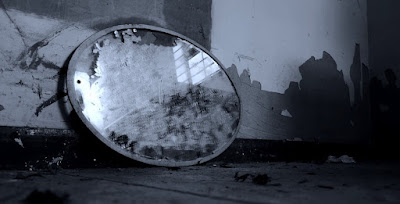
To do otherwise is to damage our faith. We can only focus on the works of darkness so much before the shadow falls over us, as well. Saruman was corrupted by looking through the Palantir. He did so at first only to gain intelligence about Sauron, to be educated about the enemy's activities; but eventually it bent his mind towards darkness, causing his fall.
Consider now what media you consume, whether secular or Catholic. Is it always focused on exposing some evil somewhere? Is it ever dwelling on the deeds of malicious agents? Is it scandal-mongering, ever purporting to be doing the dirty-work of chronicling the train of abuses and perverse deviations of the modern Church? There is certainly a place for this sort of reporting, but does the media outlet exist only to peddle scandal? And is this all you consume? Is this the entirety of your spiritual diet?
While it is important to be "wise as serpents" about the goings-on in the Church and world, existing primarily on this sort of diet is harmful in the long run. Like Saruman gazing into the Palantir, it warps your ability to see things properly—to see things as God would have us to see. It can make us skeptical, jaded, and cynical, ultimately causing our love to grow cold. The epistle from the Traditional Latin Mass today tells us, "Be ye of one mind, having compassion one of another, being lovers of the brotherhood" (1 Pet. 3:8). The brotherhood, of course, is the Church. Do you love the brotherhood? Do you love the Church? That is, when you think of the Catholic Church—not as you wish it to be in some golden past, but as it actually exists today—is it an object of desire? Is it something attractive that moves the will? Despite the problems, despite the warts and sores, do you possess a deep and abiding affection for your first love?
I am not naïve about the Church; I know that the Church does a lot to push people away. It is undergoing some kind of catastrophe, and seeing it is like watching helplessly while one's own mother goes through a slutty, drunken, embarrassing midlife crisis. I do not suggest the Church isn't culpable for a great many things. But, that being the case, why on earth would you want the scope of your vision darkened further by drinking even more deeply of the sludge? Yes, the air is poisoned, but the poisoned air means that we must build up our immunities that much more. To do anything else is to gamble with our faith.
Remember, people who lose faith don't just stop believing. They stop loving. Then, their love having grown cold, the hope that keeps them anchored unravels, and hope being dissolved, faith dies. This is why St. Paul urges us to meditate on that which is good and pure and wholesome. It is the spiritual equivalent to eating a balanced, healthy diet. But if you eat dung day in and day out, don't be surprised if you get sick.
Sunday, March 06, 2022
The Dark Mirror of Faith
The life of faith will bring forth many such struggles, and this is unavoidable. But God wants us to have peace, even in the midst of struggle. "Peace I leave with you; my peace I give to you; not as the world gives do I give to you" (John 14:27). His peace is meant to be an abiding peace; not a peace "as the world gives" that is taken away as soon as conflict emerges. We are meant to have peace, even in the midst of the "wrestling" that is inherent in faith. What kind of peace would Christ offer if we were thrown into turmoil every time we encountered something we couldn't reconcile? Clearly, our Lord means for the peace of our faith to be maintained even in the midst of uncertainty. But how can we accomplish this?
To do this, remember that you do not need to resolve your difficulties in order to maintain faith.
Let's recall a bit about the nature of faith: it is trusting, provisional, and imperfect.
What does this mean concretely?
Now, I can foresee some critiquing this concept by saying that I am suggesting we just believe blindly even though our mind can no longer assent; that I am telling people to just stuff their difficulties and proclaim CREDO! despite their faltering heart. This is not so. Faith is fundamentally an act of trust, and if that trust has been so compromised as to become unsustainable, then faith is impossible, and it would be wrong and cruel to tell someone to simply ignore it. I am, however, suggesting that those of us who have faith give up thinking that we need to cross every jot and tittle; let go of the idea that being a strong believer means working out all the answers intellectually. Learn to rest in not knowing. You will not be denied heaven because you did not have a fully worked out intellectual synthesis of some disputed issue. If you find yourself in those moments of "wrestling," acknowledge the struggle, embrace it, and offer your ignorance to God.
"All I have written is like straw," said Aquinas, after experiencing a vision of the Divine. No matter how brilliant we are, how much we think we know, or how hard we work to educate ourselves, we are all "seeing in a mirror dimly", as St. Paul says. The dimness may be frustrating at times, but it is part of faith. An essential part. We should learn to take comfort in that and embrace the tension. At least I have.
Sunday, November 28, 2021
Discouragement from Habitual Sin
- Acedia (spiritual sloth): "It's inevitable I'm going to commit serious sin sooner or later so there's no point trying to make spiritual progress."
- Distraction: Unhealthy focus or preoccupation with just "that one sin" such that you ignore other important aspects of your spiritual life (see USC, "Distraction of That One Sin").
- Resentment: Simmering bitterness towards God. "It is unfair of God to prohibit something I am unable to restrain myself from doing. It puts me in an impossible position."
- Blindness: Inability to see the working of grace in ones own life.
- Dulling of Conscience: Having accepted the inevitability of certain sins, one's conscience dulls to them; we get used to that sin or at least to the idea of living with the sin.
- More Time Outside of Grace: The lengths of time we perceive ourselves to be in a state of mortal sin grow longer and longer; the times we are disposed to receive Communion grow shorter and fewer, until they are like small islands of grace in a vast sea of sin.
- Loss of charity: A gradual hardening of heart takes over. We become jaded and angry, impatient with ourselves and others. The very ideas of spiritual progress, grace, etc. seem like jokes.
- Loss of Hope: "At the rate this is going, It'll be a miracle if I make Purgatory."
- Despair: "How can I—or anyone—possibly avoid going to Hell? The vast majority of us are simply doomed."
- Loss of Faith: You no longer perceive the issue as your problem, but as a problem with the faith itself. "The Catholic religion doesn't work. It only gives me stress and anxiety. This system simply can't be the truth. I can no longer assent to this."
Do you recognize this pattern in your life? Even if you are not to the point of despair or loss of faith, does any of this sound familiar? It very well may. I've been here for sure. And so have many Catholics, for whom the pattern above is the reality of their spiritual life. Not all will eventually lose faith, of course; people walk spiral down this vortex to varying degrees. Many of us have been (or are on) this path somewhere.
So what's the way out? The real problem is that "Try harder next time" and like advice doesn't seem to help. Most have been struggling every way we know how to free ourselves from habitual sin for years. Some eventually have victory; many don't. Is there a better way?
We ultimately need to reframe how we look at this problem, and it starts with revisiting the idea of "winning" and "losing" against temptation. When we are tempted, we are thrown into a spiritual battle, a battle we can either win or lose. But when do we win or lose—at what point is a particular spiritual conflict won, or conversely, at what point is it lost? Most of us will answer that the battle is won when we pass on without committing the sin, and that it is lost if we commit the sin we are struggling with. How many of us, after fighting with a temptation, fail to persevere and then think, "Well, I lost that battle", or something similar?
While it's true that victory of temptation is a "win", it is not always true that committing the sin is a "loss", at least in a certain sense. What I mean is this: thinking "I lost that battle" implies that the spiritual battle is over once you have committed the sin. Nothing could be further from the truth. What happens after we sin is just as important. The battle isn't just whether you will sin; it is how you will respond to the victory or failure. If you have victory, will you become complacent and idle? If you are defeated, will you become discouraged, fall into a slump, and go down the slope described above? The battle after the sin is pivotal, as it determines whether you will be solidified in a certain spiritual "trajectory."
Therefore, when you commit a habitual sin, rather than thinking, "I've lost again", or "I blew it", or "There's no point in praying or trying now that I'm already in a state of sin", instead think, "The battle is not over. I am moving into a new stage of the battle. I can still win." Even if you have sinned, your prayers still matter. God is still just as invested in helping you. You don't need to throw in the towel. You don't need to beat yourself up; focusing excessively on your own failures is itself a trap of pride. The battle has not ended; I can have victory at any time if I choose God now in this moment. The moment of grace was not at some place in the past when you were struggling between light and darkness; the moment of grace is now; it is always now. All you have to do is strike now and you win. Every time. The victories will be varied and the journey will be bumpy, but you'll get to where you want to go. Where you are heading is more important than whether the road you are on has potholes. It's not so much whether you hit potholes; it's whether the potholes eventually cause you to give up and turn around.
Maybe this is nothing new. I am certainly not promising any breakthroughs. But I am sharing something that has been extremely helpful to me in my own spiritual life. Realizing that the battle does not end if I sin, that the moment of grace is now, and that as long as I seek God in any given moment I always win have been transformational principles. Perhaps they will be of some help to you as well.
Happy Advent brethren
Related: "Christ Will Give You Victory" (Jan. 2019, USC)
Wednesday, November 10, 2021
Crises of Faith: The Operation of Grace
Furthermore, when Christians fail to respond with grace in sensitive situations, it stings. Hard. Too often Christians, who should be the most reassuring, respond with coldness or astonishing hubris. I seldom speak of my own life on here, but I want to share some of my own experiences in this regard: I am a divorced Catholic and have been so for several years. When this happened, I received virtually no support from my Catholic friends whatsoever. I'm not talking about institutional support from the Church; I don't care about that. I'm talking about Catholic friends reaching out and saying, "Hey, how are you doing?" Or saying, "Wanna go out and do something?" Nobody started a sign-up to bring me any dinners. Invitations to social events dropped off; I stopped getting invited to weddings. They quietly stopped interacting with me online. Even my kids stopped getting invited on play dates and stuff like that. People stopped chit-chatting with me after Mass or at Sunday coffee and donuts. It's not that people were expressing outright judgment towards me; its just that they weren't...anything. It was so disappointing. I ended up having to make a whole new set of Catholic friends (by and large people I met online).
But...guess who was right there for me? My secular or non-Catholic friends were right there. They wanted to take me out for drinks to soothe my wounds. They texted me "Hey how are you feeling?" They were right there to say, "Aw shit happens man, I'm sorry." They did good to me without any expectation or sense of obligation. May God reward them.
Life is hard, and even with grace it is still a struggle. God knows I have let people down, too. I have had friends call me in need, and I blew them off because their need was inconvenient to me at the time. I've looked the other way. I've sinned by omission. I've been arrogant. But that doesn't mean grace hasn't been working in my life; when I look at where I've come from and where I am now, my entire life is a miracle of grace. I know I have a long way to go still, but that's just because I am a work in progress, and "it hath not yet appeared what we shall be" (1 John 3:2). But this is ultimately a journey and we are all pilgrims. If I am walking from Detroit to Los Angeles, the fact that I have not arrived at Los Angeles is no argument that I never left Detroit. A traveler must not only consider where he needs to go but how far he has come. And thus it is with grace. So, I've come to the conclusion that it's impossible for me to judge how and to what degree grace works in peoples' lives. I simply don't know where people are on their individual journeys. I rejoice when I see moments of grace, but I cannot use these moments to make any sort of judgment on a person's overall state.


