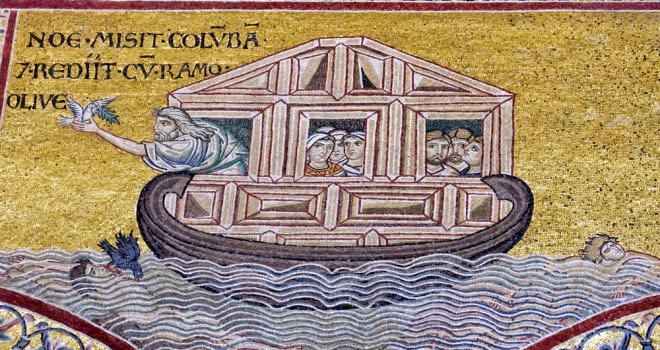
Greetings friends! My mind has been crowded lately with a lot of different subjects, many of which I will likely never get around to blogging about. So, time to clear my thoughts with a miscellany of half-formed ruminations. I might develop these into future posts, or not...who knows. Enjoy my brain dump!
Showing posts with label Sin. Show all posts
Tuesday, June 18, 2024
Sunday, November 28, 2021
Discouragement from Habitual Sin
Do you struggle with discouragement from habitual sin? For many Catholics this is a huge problem. There is a pattern we tend to fall into: we do well for a while, but when faced with temptation we give in and sin. The sin brings apathy, a sense of "Well, I already blew it, what's the use in trying?" So you go into a slump—your prayer life suffers, you keep committing the same sin over again (because you already messed up, so what does it matter?), and you get apathetic. Maybe a week goes by. Maybe a month. You feel like a slob, spiritually and in other respects. Eventually you are so unhappy and angry with your life that you rouse yourself; you say, "I have to get right with God." You go to confession and lay your soul bare before a confessor. He gives you some good advice, you repent tearfully, receive absolution, and go out rejoicing, resolved to do better this time. You are grateful for God's mercy and kindness at giving you another shot and things go well for you spiritually. Things continue this way for a time—maybe a few weeks, maybe a few months—until you get complacent, get tempted, and fall again. Then the cycle repeats. Year after year after year. Maybe decade after decade.
This can be frustrating in the short term, but the long term consequences are more dire. Repetition of this pattern over many years can lead us down a dark path, the steps of which include:
- Acedia (spiritual sloth): "It's inevitable I'm going to commit serious sin sooner or later so there's no point trying to make spiritual progress."
- Distraction: Unhealthy focus or preoccupation with just "that one sin" such that you ignore other important aspects of your spiritual life (see USC, "Distraction of That One Sin").
- Resentment: Simmering bitterness towards God. "It is unfair of God to prohibit something I am unable to restrain myself from doing. It puts me in an impossible position."
- Blindness: Inability to see the working of grace in ones own life.
- Dulling of Conscience: Having accepted the inevitability of certain sins, one's conscience dulls to them; we get used to that sin or at least to the idea of living with the sin.
- More Time Outside of Grace: The lengths of time we perceive ourselves to be in a state of mortal sin grow longer and longer; the times we are disposed to receive Communion grow shorter and fewer, until they are like small islands of grace in a vast sea of sin.
- Loss of charity: A gradual hardening of heart takes over. We become jaded and angry, impatient with ourselves and others. The very ideas of spiritual progress, grace, etc. seem like jokes.
- Loss of Hope: "At the rate this is going, It'll be a miracle if I make Purgatory."
- Despair: "How can I—or anyone—possibly avoid going to Hell? The vast majority of us are simply doomed."
- Loss of Faith: You no longer perceive the issue as your problem, but as a problem with the faith itself. "The Catholic religion doesn't work. It only gives me stress and anxiety. This system simply can't be the truth. I can no longer assent to this."
As we can see, discouragement at habitual sin can create a slow decline that ultimately leads to loss of faith. It is good to recall that Satan is in this for the long haul; while individual sins certainly matter, the devil aiming bigger than that; he is trying to create an overall trajectory in our life that leads us away from God. He is attacking us tactically, while we tend to get bogged down in the bushes, unable to see the forest for the trees.
Do you recognize this pattern in your life? Even if you are not to the point of despair or loss of faith, does any of this sound familiar? It very well may. I've been here for sure. And so have many Catholics, for whom the pattern above is the reality of their spiritual life. Not all will eventually lose faith, of course; people walk spiral down this vortex to varying degrees. Many of us have been (or are on) this path somewhere.
So what's the way out? The real problem is that "Try harder next time" and like advice doesn't seem to help. Most have been struggling every way we know how to free ourselves from habitual sin for years. Some eventually have victory; many don't. Is there a better way?
We ultimately need to reframe how we look at this problem, and it starts with revisiting the idea of "winning" and "losing" against temptation. When we are tempted, we are thrown into a spiritual battle, a battle we can either win or lose. But when do we win or lose—at what point is a particular spiritual conflict won, or conversely, at what point is it lost? Most of us will answer that the battle is won when we pass on without committing the sin, and that it is lost if we commit the sin we are struggling with. How many of us, after fighting with a temptation, fail to persevere and then think, "Well, I lost that battle", or something similar?
While it's true that victory of temptation is a "win", it is not always true that committing the sin is a "loss", at least in a certain sense. What I mean is this: thinking "I lost that battle" implies that the spiritual battle is over once you have committed the sin. Nothing could be further from the truth. What happens after we sin is just as important. The battle isn't just whether you will sin; it is how you will respond to the victory or failure. If you have victory, will you become complacent and idle? If you are defeated, will you become discouraged, fall into a slump, and go down the slope described above? The battle after the sin is pivotal, as it determines whether you will be solidified in a certain spiritual "trajectory."
Therefore, when you commit a habitual sin, rather than thinking, "I've lost again", or "I blew it", or "There's no point in praying or trying now that I'm already in a state of sin", instead think, "The battle is not over. I am moving into a new stage of the battle. I can still win." Even if you have sinned, your prayers still matter. God is still just as invested in helping you. You don't need to throw in the towel. You don't need to beat yourself up; focusing excessively on your own failures is itself a trap of pride. The battle has not ended; I can have victory at any time if I choose God now in this moment. The moment of grace was not at some place in the past when you were struggling between light and darkness; the moment of grace is now; it is always now. All you have to do is strike now and you win. Every time. The victories will be varied and the journey will be bumpy, but you'll get to where you want to go. Where you are heading is more important than whether the road you are on has potholes. It's not so much whether you hit potholes; it's whether the potholes eventually cause you to give up and turn around.
Maybe this is nothing new. I am certainly not promising any breakthroughs. But I am sharing something that has been extremely helpful to me in my own spiritual life. Realizing that the battle does not end if I sin, that the moment of grace is now, and that as long as I seek God in any given moment I always win have been transformational principles. Perhaps they will be of some help to you as well.
Happy Advent brethren
Related: "Christ Will Give You Victory" (Jan. 2019, USC)
Do you recognize this pattern in your life? Even if you are not to the point of despair or loss of faith, does any of this sound familiar? It very well may. I've been here for sure. And so have many Catholics, for whom the pattern above is the reality of their spiritual life. Not all will eventually lose faith, of course; people walk spiral down this vortex to varying degrees. Many of us have been (or are on) this path somewhere.
So what's the way out? The real problem is that "Try harder next time" and like advice doesn't seem to help. Most have been struggling every way we know how to free ourselves from habitual sin for years. Some eventually have victory; many don't. Is there a better way?
We ultimately need to reframe how we look at this problem, and it starts with revisiting the idea of "winning" and "losing" against temptation. When we are tempted, we are thrown into a spiritual battle, a battle we can either win or lose. But when do we win or lose—at what point is a particular spiritual conflict won, or conversely, at what point is it lost? Most of us will answer that the battle is won when we pass on without committing the sin, and that it is lost if we commit the sin we are struggling with. How many of us, after fighting with a temptation, fail to persevere and then think, "Well, I lost that battle", or something similar?
While it's true that victory of temptation is a "win", it is not always true that committing the sin is a "loss", at least in a certain sense. What I mean is this: thinking "I lost that battle" implies that the spiritual battle is over once you have committed the sin. Nothing could be further from the truth. What happens after we sin is just as important. The battle isn't just whether you will sin; it is how you will respond to the victory or failure. If you have victory, will you become complacent and idle? If you are defeated, will you become discouraged, fall into a slump, and go down the slope described above? The battle after the sin is pivotal, as it determines whether you will be solidified in a certain spiritual "trajectory."
Therefore, when you commit a habitual sin, rather than thinking, "I've lost again", or "I blew it", or "There's no point in praying or trying now that I'm already in a state of sin", instead think, "The battle is not over. I am moving into a new stage of the battle. I can still win." Even if you have sinned, your prayers still matter. God is still just as invested in helping you. You don't need to throw in the towel. You don't need to beat yourself up; focusing excessively on your own failures is itself a trap of pride. The battle has not ended; I can have victory at any time if I choose God now in this moment. The moment of grace was not at some place in the past when you were struggling between light and darkness; the moment of grace is now; it is always now. All you have to do is strike now and you win. Every time. The victories will be varied and the journey will be bumpy, but you'll get to where you want to go. Where you are heading is more important than whether the road you are on has potholes. It's not so much whether you hit potholes; it's whether the potholes eventually cause you to give up and turn around.
Maybe this is nothing new. I am certainly not promising any breakthroughs. But I am sharing something that has been extremely helpful to me in my own spiritual life. Realizing that the battle does not end if I sin, that the moment of grace is now, and that as long as I seek God in any given moment I always win have been transformational principles. Perhaps they will be of some help to you as well.
Happy Advent brethren
Related: "Christ Will Give You Victory" (Jan. 2019, USC)
Sunday, February 07, 2021
Leniency and Severity
Have you ever reflected on how your judgment of whether you are harsh or lenient with a particular sin is colored by your own experience?
We tend to assume that everyone starts on a level playing field—that when it comes to virtue and vice, we are all a blank slate. Perhaps this is true in the sense that nobody is born having committed any actual sin, nor with any particular virtue. But we must not forget that we all have certain natural dispositions inherent in our personality. These dispositions not only make us more or less susceptible to certain kinds of vices and virtues, but affect our culpability or merit respectively.
For example, a certain person by nature has an extremely gregarious personality: extroverted, talkative, sociable. Because of his gregarious nature, he is susceptible to the sin of gossip and falls easily into it. But another man by nature is reserved and solemn, not given to much talk in general let alone the sin of gossip in particular. The former can scarcely go a few days without gossiping, while the latter has probably never committed the sin in his life.
Now, the silent, reserved man might look at the chatterbox and feel irritated and judgmental about the latter's proclivity to gossip. From his perspective, it is not a difficult thing to refrain from gossip and he is annoyed that the other cannot exercise the restraint that he himself exhibits. He has no problems refraining from gossip, why can't the other?
What this man does not realize is that it is not his great virtue that restrains him from gossiping—he merely has a personality that is not disposed to it. Because he is not disposed to it, there is no struggle for him in refraining from it. Because he experiences no struggle, he can't understand that other people do. Because he can't understand this, he can't empathize. Because he can't empathize, he judges the other for his sin. And his assessment of his own virtue is distorted.
But what of his own sin? He may not be disposed to gossip, but he is certainly disposed to other sins. Perhaps because he is withdrawn he is often lonely, and turns to pornography now and then in vain hopes of consoling his loneliness. This is a struggle for him. He is deeply embarrassed by it. He understands the temptation and the difficulty surrounding this sin. Because it's hard, he wants empathy—and he easily gives empathy to others struggling with pornography as well. He is much less likely to judge himself or others for this sin. He is much more likely to feel like, "Nobody's perfect. I know I've got my faults, but I'm trying." He is more lenient.
In general, we are most critical of those sins we are not naturally disposed to commit anyway, while we are most lenient towards those sins we ourselves struggle with. Our own experience tends to be the lens through which we apportion severity or leniency to a particular sin. We think we are being fair, we think we are being level-headed, but really we are just justifying ourselves.
Of course, certain sins are objectively worse than others. Murder is worse than cheating on an exam, and I would argue pornography is worse than gossiping. But how much virtue we exercise in overcoming a particular sin is very relative to our own strengths and weaknesses. A man who struggles with a porn habit and, through prayer and much effort, manages to go three weeks without relapse may have exercised more virtue in this regard than a man who is not easily disposed to temptations of the flesh and has never looked at porn in his life. The man who, through grace-filled effort, manages to restrain himself from gossiping throughout Lent has exercised more fortitude than the man who isn't disposed to gossip to begin with.
This is because virtue is not merely doing the right thing—it is doing the right thing habitually, because you have disciplined yourself to do so. A person who who has learned to be unperturbed through discipline has acquired the virtue of patience. A person who is naturally chill and unperturbed by things has considerably less patience, considered as a virtue.
Through the gift of wisdom, may we see with God's eyes and truly focus on removing the plank from our own eye.
Friday, July 31, 2020
Examining "Love the Sinner, Hate the Sin"
Throughout Church history the maxim "Love the Sinner, Hate the Sin" has served as a general principle from which to understand the Christian's obligation to love people while detesting the sins those people may commit. Many erroneously think the quote is from the Bible; in fact, it comes from a letter of St. Augustine of Hippo in which he says "Cum dilectione hominum et odio vitiorum", which literally means "With love for mankind and hatred of sins" (Letter 211).
Even if it is not strictly biblical, the proverb is a more or less accurate summary of biblical teaching. There are many examples we could cite where we are commanded to love sinners. By way of example, let us look at 1 John 1:9-11, which clearly teaches we are to love others:
"He who says he is in the light and hates his brother is in the darkness still. He who loves his brother abides in the light, and in it there is no cause for stumbling. But he who hates his brother is in the darkness and walks in the darkness, and does not know where he is going, because the darkness has blinded his eyes"
And later in 1 John 4:21, it says, "And this commandment we have from him, that he who loves God should love his brother also." So, we are to love one another if we claim to love God. We could cite many other passages that command us to love our neighbor, but I do not think this is necessary. This principle is without dispute.
However, we are also to hate sin. This, too, is indisputable. Ephesians 5:11 tells us, "Take no part in the unfruitful works of darkness, but instead expose them." Sin is to be exposed; it is a corruption and contamination (Tit. 1:15; 2 Cor. 7:1). It separates us from God and grieves the Holy Spirit (Isa. 59:2, Eph. 4:30). This is why we are told to hate it; Psalm 97:10 enjoins us, "Let those who love the Lord hate evil." The Psalms also tell us that God hates the company of sinners (Ps. 26:5). A hatred of sin is a necessary precondition to a healthy reverence for God: 'The fear of the Lord is to hate evil" (Prov. 8:13).
I think, however, the biblical verse which best joins these principles together is Leviticus 19:17, which says:
“You shall not hate your brother in your heart, but you shall reason with your neighbor, lest you bear sin because of him."
Here we see the obligation to love our brother and refrain from hating him, with the corresponding obligation to "reason" with him if we see him sinning, not only because of the obvious reason that sin is destructive, but because there is a real danger that we will bear guilt for that person's sin if we make no effort to turn them from their vice (cf. Ezekiel 33).
Thus, a Christian cannot be supportive or even indifferent to the sins of another. That doesn't mean we must be judgmental or prying—but it does mean our fundamental orientation must always be towards identifying sin, working to overcome it, and helping others do the same. We do not settle with sin. We do not make truces with it. We do not manage it. We work to eliminate it through the grace of God. This is why the traditional Catholic Act of Condition says "I detest all my sins." Sin is to be the object of detestation. It separates us from God and makes true happiness impossible.
Ergo, we hate sin, but we love the sinner.
It seems simple. Perhaps not always easy to practice, but it's not a difficult concept to grasp.
Nevertheless, the principle has come under increasing scrutiny in recent years. If you Google "love the sinner hate the sin", some of the top articles that come up are pieces arguing that the concept is unworkable and that Christians should retire the saying. And in my recent article on the reasons people leave the Church, the persons in question who had left the Church cited "love the sinner, hate the sin" as an unworkable proposition.
For example, this article "Love the Sinner, Hate the Sin? Why Christians Should Retire Their Favorite Phrase." In this piece, the author (apparently some sort of progressive Protestant) argues that the principle "love the sinner, hate the sin" is manipulative and meant to make the "lover" feel morally superior to the sinner by allowing them to express negative judgment whilst maintaining the facade that they are "loving."
The central critique in this article is that the principle is transactional—forgiveness is "exchanged" for amendment of life, which causes love to be viewed as something reserved for those who are "good enough." Love, the article says, must accept uncritically. "To love someone is to strive to accept that person exactly the way he or she is, right here and now.”
He also argues that "love the sinner, hate the sin" can be used to justify judgmentalism "associated with bigotry and intolerance." It enables the "lover" to condemn the "sinner" while still feeling like they are a loving person because their judgmentalism is actually "love."
As we can see, at its core, there is a redefinition of values: "Love" is redefined as uncritical acceptance. And we can see that this concept of love is detached from any notion of the good. It does not consist in willing someone to attain their highest good, but in merely extending uncritical acceptance. It is not fundamentally transformative.
But there is also an essential confusion of terms. He says "Love the sinner, hate the sin" is unworkable and then critiques persons who refuse to extend forgiveness unless someone makes an amendment of life first. These are two radically different ideas. Christians are always enjoined to forgive, and to do so regardless of whether the sinner has repented. This is the example Christ gave us on the cross: "Father, forgive them. They know not what they do" (Luke 23:34). A Christian who refuses to forgive someone on the premise that their penitence isn't sufficient isn't practicing "Love the sinner, hate the sin"; they are simply not exercising Christian forgiveness. "Love the sinner, hate the sin" is not about forgiveness for past sins; it is about how we exercise ongoing love towards people in our lives who are sinning in the present.
Furthermore, even if the definition of love as uncritical acceptance of a person "exactly the way he or she is, right here and now" is deficient, "uncritical acceptance" is not contrary to "Love the sinner, hate the sin." We can absolutely accept people as they are, right here and now, with full empathy while still hating their sin. Have any of you dealt with an addict close to you? Maybe a brother or sister? You always, always accept and love that person. The more you love them, the more you accept them in their brokenness. But do you love your sister's alcoholism? Do you love your brother's heroin addiction? Do you love your son's gaming addiction that keeps him locked in a basement in front of a screen 17 hours a day?
Of course not. You hate these things. What's more, you hate them to the degree that you love your sibling. Those who have had relatives or close friends suffer through addiction understand this. So ultimately, the article above is creating a straw man by saying, "You must forgive without condition and accept people where they are at" as if that proves anything. All Catholics should agree that we forgive without condition and accept people where they are at. But "Love the sinner, hate the sin" does not preclude us from doing either of those things. It does mean that we have to love the person whilst understanding that that person may struggle with certain vices or behaviors that are inimical to their authentic good. These we must not accept. In fact, to accept them would be to enable that person in their problems, to make them worse...and ultimately not love them.
We will have more to say on this, but I want to look at a second article, this one from Psychology Today entitled "Why Love the Sinner, Hate the Sin Doesn't Work by Dr. Gordon Hodson. Dr. Hodson says that the principle is ultimately about allowing us psychological justification that "enables some people to maintain their negative attitudes without feeling like a prejudiced person." To that end, "Love the sinner, hate the sin" actually is a vehicle of promoting hate, especially towards groups Dr. Hodson defines as "sexual minorities."
This article is full of problems. It reduces the idea of "sin" to focus specifically on so-called "culture war" issues and offers no comment on how the principle applies to, say, gossip, drunkenness, pride, or other such vices. He seems to infer that Christians do not take these sins seriously anyway.
Second, in assuring us that the principle "doesn't work", we might except some definition of what constitutes "working"? How are we judging whether such a principle succeeds or fails? The article assures us that "Love the sinner, hate the sin" fails precisely because it "promotes hate" and engenders a sense of moral superiority. However, when we look at what Dr. Hodson means by "promoting hate", we see that he defines hate as having "negative attitudes" about sexual minorities. Now we can see the real nature of the argument: "Love the sinner, hate the sin" is not problematic because it doesn't help us love the sinner, but because it enjoins we should hate the sin. The only viable solution is "Love the sinner, affirm the sin." The reason it "doesn't work" isn't because it fails as a mechanism to help love people despite their flaws, but because it isn't Woke to view certain behaviors negatively.
So, to wrap this up, I want to turn this on its head. Instead of looking at critiques of "Love the sinner, hate the sin," I want to critique the critiques and demonstrate why they don't hold water:
1. The Sinner is Identified with His Sins
Thus, a Christian cannot be supportive or even indifferent to the sins of another. That doesn't mean we must be judgmental or prying—but it does mean our fundamental orientation must always be towards identifying sin, working to overcome it, and helping others do the same. We do not settle with sin. We do not make truces with it. We do not manage it. We work to eliminate it through the grace of God. This is why the traditional Catholic Act of Condition says "I detest all my sins." Sin is to be the object of detestation. It separates us from God and makes true happiness impossible.
Ergo, we hate sin, but we love the sinner.
It seems simple. Perhaps not always easy to practice, but it's not a difficult concept to grasp.
Nevertheless, the principle has come under increasing scrutiny in recent years. If you Google "love the sinner hate the sin", some of the top articles that come up are pieces arguing that the concept is unworkable and that Christians should retire the saying. And in my recent article on the reasons people leave the Church, the persons in question who had left the Church cited "love the sinner, hate the sin" as an unworkable proposition.
For example, this article "Love the Sinner, Hate the Sin? Why Christians Should Retire Their Favorite Phrase." In this piece, the author (apparently some sort of progressive Protestant) argues that the principle "love the sinner, hate the sin" is manipulative and meant to make the "lover" feel morally superior to the sinner by allowing them to express negative judgment whilst maintaining the facade that they are "loving."
The central critique in this article is that the principle is transactional—forgiveness is "exchanged" for amendment of life, which causes love to be viewed as something reserved for those who are "good enough." Love, the article says, must accept uncritically. "To love someone is to strive to accept that person exactly the way he or she is, right here and now.”
He also argues that "love the sinner, hate the sin" can be used to justify judgmentalism "associated with bigotry and intolerance." It enables the "lover" to condemn the "sinner" while still feeling like they are a loving person because their judgmentalism is actually "love."
As we can see, at its core, there is a redefinition of values: "Love" is redefined as uncritical acceptance. And we can see that this concept of love is detached from any notion of the good. It does not consist in willing someone to attain their highest good, but in merely extending uncritical acceptance. It is not fundamentally transformative.
But there is also an essential confusion of terms. He says "Love the sinner, hate the sin" is unworkable and then critiques persons who refuse to extend forgiveness unless someone makes an amendment of life first. These are two radically different ideas. Christians are always enjoined to forgive, and to do so regardless of whether the sinner has repented. This is the example Christ gave us on the cross: "Father, forgive them. They know not what they do" (Luke 23:34). A Christian who refuses to forgive someone on the premise that their penitence isn't sufficient isn't practicing "Love the sinner, hate the sin"; they are simply not exercising Christian forgiveness. "Love the sinner, hate the sin" is not about forgiveness for past sins; it is about how we exercise ongoing love towards people in our lives who are sinning in the present.
Furthermore, even if the definition of love as uncritical acceptance of a person "exactly the way he or she is, right here and now" is deficient, "uncritical acceptance" is not contrary to "Love the sinner, hate the sin." We can absolutely accept people as they are, right here and now, with full empathy while still hating their sin. Have any of you dealt with an addict close to you? Maybe a brother or sister? You always, always accept and love that person. The more you love them, the more you accept them in their brokenness. But do you love your sister's alcoholism? Do you love your brother's heroin addiction? Do you love your son's gaming addiction that keeps him locked in a basement in front of a screen 17 hours a day?
Of course not. You hate these things. What's more, you hate them to the degree that you love your sibling. Those who have had relatives or close friends suffer through addiction understand this. So ultimately, the article above is creating a straw man by saying, "You must forgive without condition and accept people where they are at" as if that proves anything. All Catholics should agree that we forgive without condition and accept people where they are at. But "Love the sinner, hate the sin" does not preclude us from doing either of those things. It does mean that we have to love the person whilst understanding that that person may struggle with certain vices or behaviors that are inimical to their authentic good. These we must not accept. In fact, to accept them would be to enable that person in their problems, to make them worse...and ultimately not love them.
We will have more to say on this, but I want to look at a second article, this one from Psychology Today entitled "Why Love the Sinner, Hate the Sin Doesn't Work by Dr. Gordon Hodson. Dr. Hodson says that the principle is ultimately about allowing us psychological justification that "enables some people to maintain their negative attitudes without feeling like a prejudiced person." To that end, "Love the sinner, hate the sin" actually is a vehicle of promoting hate, especially towards groups Dr. Hodson defines as "sexual minorities."
This article is full of problems. It reduces the idea of "sin" to focus specifically on so-called "culture war" issues and offers no comment on how the principle applies to, say, gossip, drunkenness, pride, or other such vices. He seems to infer that Christians do not take these sins seriously anyway.
Second, in assuring us that the principle "doesn't work", we might except some definition of what constitutes "working"? How are we judging whether such a principle succeeds or fails? The article assures us that "Love the sinner, hate the sin" fails precisely because it "promotes hate" and engenders a sense of moral superiority. However, when we look at what Dr. Hodson means by "promoting hate", we see that he defines hate as having "negative attitudes" about sexual minorities. Now we can see the real nature of the argument: "Love the sinner, hate the sin" is not problematic because it doesn't help us love the sinner, but because it enjoins we should hate the sin. The only viable solution is "Love the sinner, affirm the sin." The reason it "doesn't work" isn't because it fails as a mechanism to help love people despite their flaws, but because it isn't Woke to view certain behaviors negatively.
So, to wrap this up, I want to turn this on its head. Instead of looking at critiques of "Love the sinner, hate the sin," I want to critique the critiques and demonstrate why they don't hold water:
1. The Sinner is Identified with His Sins
This is honestly the biggest problem with these critiques and is ultimately behind every criticism of "Love the sinner, hate the sin." One of the most revolutionary ideas in Christianity is the notion that a man is not the sum of his sins—a man's worth or value is not determined by the sins he commits, but by the price that was paid for his redemption by the blood of Christ. Every human being has tremendous value as someone redeemed by Christ. God wants to take our sins and throw them behind His back (Isa. 38:17). We are not our sins, we are not defined by our sins, and our sins are not our personhood.
Secular people, however, ultimately define themselves based on their sins. Identity politics has morphed into a broad identitarianism where people are totally identified by their sins—especially the things they do with their genitals. For seculars, what you do with your genitals is who you are. There is no intellectual space for anything like, "I love you even though I disagree with your behavior," because in their mind, if you loved, you would affirm the behavior as well, because the behavior is the person.
Without going down a rabbit-hole on the subject, it is sufficient to say a Christian ought to reject any sort of anthropology that tends to identify people solely by their sins. Obviously we are all sinners; obviously we struggle with specific sins. But to bind up my essential personhood with those sins is an idea is profoundly anti-Christian. Yet all of these critiques presume that the person is essentially the sum of their behaviors, whether they acknowledge them as sinful or not.
Secular people, however, ultimately define themselves based on their sins. Identity politics has morphed into a broad identitarianism where people are totally identified by their sins—especially the things they do with their genitals. For seculars, what you do with your genitals is who you are. There is no intellectual space for anything like, "I love you even though I disagree with your behavior," because in their mind, if you loved, you would affirm the behavior as well, because the behavior is the person.
Without going down a rabbit-hole on the subject, it is sufficient to say a Christian ought to reject any sort of anthropology that tends to identify people solely by their sins. Obviously we are all sinners; obviously we struggle with specific sins. But to bind up my essential personhood with those sins is an idea is profoundly anti-Christian. Yet all of these critiques presume that the person is essentially the sum of their behaviors, whether they acknowledge them as sinful or not.
2. No Concept of the Good
These objections to "Love the sinner, hate the sin" often do by jettisoning the concept of individual good from their considerations. We never see any discussion over whether it is good that so-and-so is living a sinful lifestyle, or what constitutes the highest good for a person struggling with habitual sin. There is seldom any consideration given to "How do I actually help so-and-so overcome this sin?" These sorts of considerations are abandoned in favor of helping the sinner to feel good about about where he is currently at. Good becomes a feeling instead to be experienced here and now rather than an objective state to be strove for. Hence they can never actually deal with objective questions of morality.
3. Affirmation = Love
Speaking of love, those who object to "Love the sinner, hate the sin" generally have a hard time disentangling love from affirmation. Love, in its most general definition, is sincerely willing the good for any person. That may or may not always be affirming, however. Love often requires the telling of "hard truths" or expressing disagreement about a person's decisions. This should never be an excuse for coldness, uncharity, or a lack of empathy—and honestly, I think traditional Catholics can do better in this regard, as there is a tendency to think that so long as we are speaking the truth it doesn't matter how much of an assface we are whilst speaking it.
Even so, there is this idea that love should never be confrontational, that it should never make a person "feel bad." Bad feelings mean one is not being affirmed, and if one is not feeling affirmed then one is not feeling loved, because love is a feeling of affirmation. This idea is so inimical to the Christian faith, I am surprised so many Christians fall for it. The very beginning of conversion is a feeling of discomfort or disquietude with our current condition that reaches a critical point and causes us to cry out to God for change. Why is it always assumed that a person ought never to feel bad about themselves or their situation? Feeling bad about where one is at is the genesis of change.
We also must keep in mind, when we truly love someone, it is possible for them to still feel affirmed in as a person while confronting them about their behavior. Any teacher knows how to do this. Any good parent or boss knows how to do this. It's the technique that is at the heart of "Love the sinner, hate the sin." It's mystifying that some people can't grasp this.
Even so, there is this idea that love should never be confrontational, that it should never make a person "feel bad." Bad feelings mean one is not being affirmed, and if one is not feeling affirmed then one is not feeling loved, because love is a feeling of affirmation. This idea is so inimical to the Christian faith, I am surprised so many Christians fall for it. The very beginning of conversion is a feeling of discomfort or disquietude with our current condition that reaches a critical point and causes us to cry out to God for change. Why is it always assumed that a person ought never to feel bad about themselves or their situation? Feeling bad about where one is at is the genesis of change.
We also must keep in mind, when we truly love someone, it is possible for them to still feel affirmed in as a person while confronting them about their behavior. Any teacher knows how to do this. Any good parent or boss knows how to do this. It's the technique that is at the heart of "Love the sinner, hate the sin." It's mystifying that some people can't grasp this.
4. Doesn't Deal With Actual Bible Verses
We will also notice that these people and articles who disapprove of "Love the Sinner, Hate the Sin" very rarely deal with the actual Bible verses in question. Sure, they might talk about Jesus's dialogue with the woman at the well—and of course "judge not" and "love your neighbor" get trotted out—but they never deal with the plethora of Scripture passages that teach hatred of sin. This is a common problem you run across with people who want to make Christianity a series of platitudes: sketching out very vague, general principles ostensibly based on the Bible while passing entirely over scores of Bible verses that contradict said platitude. It's fine and good to talk about Christians being a force for positive change in the world, but what does the Bible actually say about a Christian's relationship with the world? Or the touchy subject of shunning. "Shunning people is mean and unchristian, mkay?" Alright...but what do the Scriptures actually say about shunning?
These moralizers don't care what the Bible actually says so long as they can take the moral high ground with their obnoxious platitudes. Similarly, people who say "Love the Sinner, Hate the Sin" isn't a Christian response to sin have not sufficiently studied what the Scriptures say on the subject. They simply toss a Gospel story out there and interpret it via some milquetoast hermeneutic without the context of the rest of the Scriptures. As an exercise in biblical exegesis, critiques of "Love the Sinner, Hate the Sin" fail miserably.
As always, there's more we could say. Of course, the most important sin we have to hate is our own. We are called to love ourselves and hate our own sin first of all. Needless to say, our attempts to implement the principle when it comes to our brethren work best when we have mastered it in our own lives.
Drop a comment below if you have anything to add, either in support or critique. Even if I hate your comment, I will still love you anyway.
These moralizers don't care what the Bible actually says so long as they can take the moral high ground with their obnoxious platitudes. Similarly, people who say "Love the Sinner, Hate the Sin" isn't a Christian response to sin have not sufficiently studied what the Scriptures say on the subject. They simply toss a Gospel story out there and interpret it via some milquetoast hermeneutic without the context of the rest of the Scriptures. As an exercise in biblical exegesis, critiques of "Love the Sinner, Hate the Sin" fail miserably.
As always, there's more we could say. Of course, the most important sin we have to hate is our own. We are called to love ourselves and hate our own sin first of all. Needless to say, our attempts to implement the principle when it comes to our brethren work best when we have mastered it in our own lives.
Drop a comment below if you have anything to add, either in support or critique. Even if I hate your comment, I will still love you anyway.
Saturday, June 01, 2019
Show Us Your Indignation
The big news in my home state of Michigan last week was that five Catholic priests in the dioceses of Lansing, Kalamazoo, and Detroit had been arrested for various sex abuse crimes--including a priest I had actually profiled on here eleven years ago for wearing a Detroit Red Wings logo on his chasuble.
This Sunday I went to mass at the parish where one of the priests had been from. Now, to make it clear, this priest was long gone from ministry in the diocese; the charges related to his time at this parish back in the 1980s, so he was not currently involved with the parish. Still, there were still a lot of parishioners around who remembered and loved this priest. The news of his arrest was a bitter reckoning.
The celebrant for the Mass was Fr. Tony Smela. Fr. Tony is an excellent priest int he Diocese of Lansing who has not been ordained too long. He is also a friend of the Traditional Latin Mass; the first EF Mass I attended of his was an All Souls Day Requiem Mass in 2018.
Anyhow, there is a lot of indignation these days about the response of the institutional Church to these clerical abuse scandals. Episcopal responses are usually cold, overly bureaucratic, and concerned more with protecting the hierarchy than addressing justice for the victims or identifying the source of the abuse. "We deeply regret" sorts of apologies feel stale; reforms were too often meaningless gestures, "cover your ass" accountability protocols, new norms that root out the rot entirely.
The reason these responses have left so many Catholics frustrated and demoralized is because there is one vital ingredient lacking: INDIGNATION. I have heard lots of episcopal apologies in my time. Oh, I can tell the bishops are embarrassed by sex abuse. I can tell they are frustrated. I can tell they are concerned. But what I have seldom seen from them in any sense of outrage, of righteous indignation, of disgust. You get the impression that they are trying to "manage" a crisis rather than raise their voices in lamentation with the children of God.
Back to Fr. Tony. Fr. Tony gave what I felt was the ideal response to news of these priests' arrest. When it was time for the homily, he preached unflinchingly on the subject and was very animated. It was clearly visible how upset he was. He was disgusted, and he let it show. He accused the arrested priests of betrayal of the Church and their vocation. He was visibly shaken with indignation. It was evident how hurt and angry this clergyman was, who as a priest, suffers in a unique way whenever the reputation of the priesthood is tarnished. He called out the hierarchy for their failures; he accused the Vatican of failure. The man was angry and not afraid to show it. The righteous indignation that is so often lacking in episcopal apologies was clearly present here.
But he did not leave it with just denunciation and harsh words. He spoke of Christian forgiveness and the healing available in Christ. He left us with the sense that, even though we are rightly horrified, in God's grace and strength we can all move forward.
The result was that instead of thinking "Here comes another lame clerical apology" I felt profoundly that Fr. Tony was one of us. One of the sufferers. I felt solidarity. I felt like he understood. Really understood. And I felt more confident that we would overcome this. I obviously was still deeply saddened by the news, but I left the Mass with a strong sense of healing.
If you are a bishop reading this or someone who works in the communications department of a diocese that crafts statements to the public, please understand this: we want--we need--to see your disgust and indignation. I don't want any more lame "we deeply regret" apologies. I want to see that, as a pastor and a son of the Church, a bishop is personally horrified by this sin. I want to see you cry with desolation at the state of the Church as our Lord wept over Jerusalem.
Also, if you know Fr. Tony and appreciate his response to this and his ministry in general, please let him know.
+AMDG+
This Sunday I went to mass at the parish where one of the priests had been from. Now, to make it clear, this priest was long gone from ministry in the diocese; the charges related to his time at this parish back in the 1980s, so he was not currently involved with the parish. Still, there were still a lot of parishioners around who remembered and loved this priest. The news of his arrest was a bitter reckoning.
The celebrant for the Mass was Fr. Tony Smela. Fr. Tony is an excellent priest int he Diocese of Lansing who has not been ordained too long. He is also a friend of the Traditional Latin Mass; the first EF Mass I attended of his was an All Souls Day Requiem Mass in 2018.
Anyhow, there is a lot of indignation these days about the response of the institutional Church to these clerical abuse scandals. Episcopal responses are usually cold, overly bureaucratic, and concerned more with protecting the hierarchy than addressing justice for the victims or identifying the source of the abuse. "We deeply regret" sorts of apologies feel stale; reforms were too often meaningless gestures, "cover your ass" accountability protocols, new norms that root out the rot entirely.
The reason these responses have left so many Catholics frustrated and demoralized is because there is one vital ingredient lacking: INDIGNATION. I have heard lots of episcopal apologies in my time. Oh, I can tell the bishops are embarrassed by sex abuse. I can tell they are frustrated. I can tell they are concerned. But what I have seldom seen from them in any sense of outrage, of righteous indignation, of disgust. You get the impression that they are trying to "manage" a crisis rather than raise their voices in lamentation with the children of God.
Back to Fr. Tony. Fr. Tony gave what I felt was the ideal response to news of these priests' arrest. When it was time for the homily, he preached unflinchingly on the subject and was very animated. It was clearly visible how upset he was. He was disgusted, and he let it show. He accused the arrested priests of betrayal of the Church and their vocation. He was visibly shaken with indignation. It was evident how hurt and angry this clergyman was, who as a priest, suffers in a unique way whenever the reputation of the priesthood is tarnished. He called out the hierarchy for their failures; he accused the Vatican of failure. The man was angry and not afraid to show it. The righteous indignation that is so often lacking in episcopal apologies was clearly present here.
But he did not leave it with just denunciation and harsh words. He spoke of Christian forgiveness and the healing available in Christ. He left us with the sense that, even though we are rightly horrified, in God's grace and strength we can all move forward.
The result was that instead of thinking "Here comes another lame clerical apology" I felt profoundly that Fr. Tony was one of us. One of the sufferers. I felt solidarity. I felt like he understood. Really understood. And I felt more confident that we would overcome this. I obviously was still deeply saddened by the news, but I left the Mass with a strong sense of healing.
If you are a bishop reading this or someone who works in the communications department of a diocese that crafts statements to the public, please understand this: we want--we need--to see your disgust and indignation. I don't want any more lame "we deeply regret" apologies. I want to see that, as a pastor and a son of the Church, a bishop is personally horrified by this sin. I want to see you cry with desolation at the state of the Church as our Lord wept over Jerusalem.
Also, if you know Fr. Tony and appreciate his response to this and his ministry in general, please let him know.
+AMDG+
Friday, January 25, 2019
Christ Will Give You Victory
This morning I did a very general confession by appointment to a very excellent diocesan priest a few towns over from me. After confession we talked for about an hour, and I had some very helpful insights that I wanted to share. None of this is novel, but even so, revealed to me in the right moment it all proved to be "a word in season" (Prov. 15:23). If you are walking through a dark cloud, perhaps this will help you.
I. Do we spend too much time picking bad fruit off of our tree rather than looking at the root and finding out why it is producing bad fruit to begin with? Confessing the same sins over and over again and beginning to doubt it will ever be different? It's good to recall that God's will for you is not to "manage" your sins; His will is to have total victory over them. Have you sunken into a place where you have given up hope that you will ever have victory over your sins and have begun to settle for just maintaining your current place—treading water while you try to manage your sins? This is not why Christ died for you. His death gives you the power you need to have total victory over your sins and that should be our goal and our hope.
II. We often use a language of "distance" when speaking about our spiritual lives. Saints are "closer" to God; sin puts us "farther" from Him. However, given that God is omnipresent, "not far from each one of us" (Acts 17:27), we have to remember that this language of distance is a metaphor for something else—its a way of quantifying our likeness to him; those who are more transformed by grace are "closer" to God, those who resemble Him less are "further." But really we are only ever as far from God as we put ourselves. When we sin we can feel like God is very distant, like we are prodigals suffering in a distant land. But the truth is, there is a bit of a Wizard of Oz illusion; though we may feel distant, we can go home at any time if he just really will to. The distance is only as great as we think it is. All you need to do is turn your face towards home like the prodigal son and the father will run from the house to meet you where you are.
III. It's easy to reduce grace to merely a legal concept: an abstract state we are either in or out of. That certainly is part of it, but it's not the whole part. What is the point of being "in" grace? I have sometimes prioritized the mere fact of being technically, 'legally' in a state of grace while ignoring the purpose of what is supposed to happen while I am in that state. Grace is not merely an indicator of whether I am in a state of friendship with God or not; it is also a vital force from God whose purpose is to work in my life to transform me. That is to say, grace is not merely adjectival ("state of grace"), but it is a noun. It is a thing; it is like a power or energy that is the very life of God which is lavished on us in order to ennoble us and enable us to love God beyond what our natural limitations would permit. What's the point of being "in a state of grace" if I am not actualizing the growth that being in such a state is supposed to make possible?
* * * * *
My friend, you can have victory over your sins. Begin by believing this, trusting Christ to grant you this triumph, and take things one day at a time.
Even if you feel apathetic or distant from God, whether from sin or just lethargy, remember you can go home if you only will to. The distance between yourself and God is only as great as you let it be.
Don't focus only on being in a state of grace, but once there, on letting grace change the state of your life. Grace is not merely a place to be in, but a vital power God gives us to transform our lives. Be aware of it's work in your life and rejoice in the small victories it wins.
Christ will give you victory.
Wednesday, December 14, 2016
Identity-Based Outreach Ministries Blur the Lines Between Overcoming Sin and Celebrating It
I want you to take a good, hard look at this advertisement for a Jesuit-sponsored retreat in - where else - California:
I have not wasted my time on this, but if I were to contact the organizers and object to this event, I am fairly certain they would respond very charitably with some line about reaching out to the margins, "the Church is a field hospital", Jesus ate with sinners, I have not come to call the just, go to the peripheries, reach out to the lost, and so on and so on and so on.
And this response would be very frustrating because, all those things are true - I would not be able to object to any of those statements individually. But I would still know that this event is very, very wrong.
Over the years I have gone round and round with people who argue in favor of a kind of "identity-based outreach ministries" for persons with same sex attraction. I have consistently argued that this is a bad idea, because it inevitably leads to a situation where a group of people are categorized according to their sins and disorders. And there is a fine line between going out to sinners and affirming sinners. There ought not to be a fine line; it is actually a very easy distinction to make - but our stupid generation makes it a fine line.
And this response would be very frustrating because, all those things are true - I would not be able to object to any of those statements individually. But I would still know that this event is very, very wrong.
Over the years I have gone round and round with people who argue in favor of a kind of "identity-based outreach ministries" for persons with same sex attraction. I have consistently argued that this is a bad idea, because it inevitably leads to a situation where a group of people are categorized according to their sins and disorders. And there is a fine line between going out to sinners and affirming sinners. There ought not to be a fine line; it is actually a very easy distinction to make - but our stupid generation makes it a fine line.
I vehemently disagree with identifying groups of people by their sins - and this is not just true for sexual sins. I have multiple people in my family who have struggled with alcoholism, but I do not think of them as the alcoholic members I my family; they are regular, fallen humans struggling with a particular vice. I think of them as just...my family, my family where everyone has their own problems, just like any other humans.
I've known people who do drugs; I don't define them as "the drug addicts" - they are sons and daughters of Adam whom my Lord died for, who are fighting - sometimes winning, sometimes losing - a war against a painful addiction. But these addictions, vices, and sins do not define who they are. Part of me feels like it would be an insult to the grace of God to allow them to be defined by their failures.
There is always a danger in making more of these sins than what they are, or turning people into little "communities" where one is identified and understood in terms of their vices. That's certainly not to say there is no place in the Church for ministries geared towards people with particular challenges - support groups for divorced, for substance abuse - I know of one young men's group that is organized to provide mutual support for its members to stop masturbation. This is all fine and well. But nobody speaks of the "Divorced community" or the "Masturbators Community", nor would we think of our friends by those identifiers. "Hey, it's Cheryl my divorced friend", or "Look, there's Joe the Masturbator!"
LGBT persons will respond, "Exactly. And I do not want to be identified as Michael the Homosexual or Julie the Lesbian." I agree 100%. But if that is the case, let's stop with this "LGBT community" nonsense. There is no LGBT community just like there is no masturbators community. There are just people struggling with various problems. If LGBT people do not want to be identified by their sexual activities, then stop perpetuating that identity by insisting on the "LGBT community."
I think when the Church starts adopting the identity based assumptions of the secular world, we risk shifting from the traditional Christian view of helping sinners overcome their sins to a more modern sociological view of "celebrating" the "gifts" that each distinct "community" brings. This is very dangerous - not because, say LGBT people don't have gifts, but none of the gifts they have are because they are LGBT. An LGBT person might be intelligent, have a great singing voice, be good with accounting, or whatever, but none of those gifts are grounded in their sexual disorders.
One might object that a sinner can bring a particular insight as a result of struggling with their sin. Perhaps. But if I am a recovering alcoholic, I certainly may be able to speak more eloquently to the struggles of other alcoholics, but this gift of insight comes not from my alcoholism, but from my victory over it. It comes from the virtue developed in successfully overcoming a vice.
On the other hand, if I am not a recovering alcoholic - that is, if I am still down and out and drunk continually - then I have no business being in any ministry at all till I get my life together. Ergo, either one has a gift to share by virtue of overcoming their vice, or if they have not overcome it, they shouldn't be in any "ministry" - but in no case does a "gift" arise from possessing the vice itself.
No authentic "gift" to the Church can come directly from a person's sin or disorder. But if we insist on speaking of how these disorders can "enrich" the Church's experience, we end up with a kind of "affirmative action" approach to things. For example, what qualities do we look for in a lector? Well, he must be articulate, have a pleasant voice, be able to speak loudly and clearly, and read with the proper intonation and stress. If those qualities happen to be possessed by a man who incidentally is a struggling (chastely) with same sex attraction, then of course there is no problem with him serving as a lector. In this case, we want certain gifts and talents suitable to the office and the person who fills them happens to be struggling with homosexual attraction. His struggle is incidental; everyone struggles.
On the other hand, if I am not a recovering alcoholic - that is, if I am still down and out and drunk continually - then I have no business being in any ministry at all till I get my life together. Ergo, either one has a gift to share by virtue of overcoming their vice, or if they have not overcome it, they shouldn't be in any "ministry" - but in no case does a "gift" arise from possessing the vice itself.
No authentic "gift" to the Church can come directly from a person's sin or disorder. But if we insist on speaking of how these disorders can "enrich" the Church's experience, we end up with a kind of "affirmative action" approach to things. For example, what qualities do we look for in a lector? Well, he must be articulate, have a pleasant voice, be able to speak loudly and clearly, and read with the proper intonation and stress. If those qualities happen to be possessed by a man who incidentally is a struggling (chastely) with same sex attraction, then of course there is no problem with him serving as a lector. In this case, we want certain gifts and talents suitable to the office and the person who fills them happens to be struggling with homosexual attraction. His struggle is incidental; everyone struggles.
But suppose we took the approach that there was this LGBT "community" that we needed to reach out to in order to be more "inclusive." Now suppose we need a lector. Instead of looking for the right qualities suitable to the office (voice, projection, etc), we begin with the affirmative action mentality of "This is a great opportunity to showcase how inclusive we are. Let's recruit a gay man to fill this office", and all of the sudden his homosexual tendencies become not incidental, but essential to why he is chosen - because the parish wants to showcase its token homosexual to prove how inclusive they are. In such a case, how can anyone escape the conclusion that the man's same sex attraction is being celebrated, since this is the reason he was invited to lector?
Looking again at the retreat advertised above, do we get the impression that the LGBT persons will be helped to overcome their vices and live chastely? Or do we get the impression that the LGBT identity is being celebrated and mainstreamed?
In my opinion, identity-based ministries that create "communities" centered on a particular sin are counter-productive to helping people overcome that sin because they end up creating "communities" out of these persons where their "gifts" are celebrated, rather than their souls cleansed.
Wednesday, January 20, 2016
Pope Francis and the Sin of Saul
Sorry I have not posted for a while…we are a family of seven and over the past two weeks every single one of us has been sick multiple times. It’s been one of those “barely keeping my head above water” sorts of months.
A lot has been going on, too; the pope’s visit to the Synagogue of Rome, the infamous video about interreligious dialogue that constituted the pope’s January prayer intentions, the revelations that Francis flew into such a rage during the 2015 Synod at the letter of the 13 cardinals that the Swiss Guard had to clear the dining hall of Casa Santa Marta.
Of course, I am not a papal commentator nor a reporter and I feel no obligation to comment on any of this. But I do take myself to be an amateur Scripture scholar (I emphasize amateur); I have studied the Scriptures closely and taught Sacred Scripture at the high school level for eight years. When I read the pope’s rambling sermon against “obstinate rebels” who “resist change”, as reported by Vatican Radio on Monday, January 18th, I could not help but jump in, because there is a serious misuse of Scripture in the pope’s homily.
The pope was commenting on the Old Testament readings from 1 Samuel 15, in which Saul disobeys God in the matter of retaining sheep and oxen from the defeated armies of Amalek for sacrifice. God had commanded Saul to destroy the sheep and cattle of the Amalekites as things devoted to God for destruction. But Saul retains all the cattle for himself, claiming he intends to sacrifice them later. For this sin, God rejects Saul from being King of Israel. First, here is the pope’s commentary on the reading, as well as his insights as to its contemporary application:
“In the first reading, Saul was rejected by God as King of Israel because he disobeyed, preferring to listen to the people rather than the will of God. The people, after a victory in battle, wanted to offer a sacrifice of the best animals to God, because, he said, “It’s always been done that way.” But God, this time, did not want that. The prophet Samuel rebuked Saul: “Does the Lord so delight in burnt offerings and sacrifices as in obedience to the command of the Lord?”
“[This is] the sin of so many Christians who cling to what has always been done and do not allow others to change. And they end up with half a life, [a life that is] patched, mended, meaningless.” The sin, he said, is a “closed heart”, that “does not hear the voice of the Lord, that is not open to the newness of the Lord, to the Spirit that always surprises us.” This rebellion, says Samuel, is “the sin of divination,” and obstinacy is the sin of idolatry.
The text is taken from Vatican Radio. Notice that not all of the above is direct quotes from the pope; as is normal for the pope’s homilies, some pertinent phrases are quoted verbatim while much is paraphrased.
Note the way Francis interprets this passage. Saul has disobeyed God and lost the kingship. What was his disobedience? According to Francis, it was that Saul refuses to obey God by appealing to tradition. “It’s always been done that way”, is how the pope paraphrases Saul. “But God, this time, did not want that.” Saul is portrayed as obstinately clinging to a tradition that is now contrary to the will of God. God is attempting to innovate with a new command. Saul is not open to the “newness of the Lord.” He has closed himself off to the “surprises” of God and taken refuge behind the “meaningless” veil of custom.
So according to Francis' exegesis, God is the innovator and Saul is the one stubbornly resisting change.
The problem is, the Scriptures suggest the exact opposite is true. If we read 1 Samuel 15, we see that Saul never once appeals to some custom of tradition to justify his disobedience. He simply makes up excuses. He says, “The people spared the best of the sheep and of the oxen, to sacrifice to the Lord your God; and the rest we have utterly destroyed” (1 Sam. 15:15); a little later on he repeats his excuse: “I have obeyed the voice of the Lord. I have gone on the mission which the Lord has sent me, I have brought Agag, king of Amalek, and I have utterly destroyed the Amalekites. But the people took the spoil, sheep and oxen, the best of the things devoted to destruction, to sacrifice to the Lord your God in Gilgal” (1 Sam. 15:20-21).
These are the only two justifications Saul offers for his behavior. He does not appeal to tradition, custom, or that “it’s always been done that way.” Thus, the dichotomy the pope attempts to create between Saul the traditionalist and God the innovator is not supported by the text.
But even if Saul does not appeal to any custom of sparing sheep and oxen for sacrifice, did such a custom in fact exist? If we look back to the immediate command Saul receives from God, we see that he is told by Samuel:
“Thus says the Lord of hosts, ‘I will punish what Amalek did to Israel in opposing them on way, when they came out of Egypt. Now go and smite Amalek, and utterly destroy all that they have; do not spare them, but kill both man and woman, infant and suckling, ox and sheep, camel and ass’” (1 Sam. 15:2-3).
The question then becomes, is this command something new? Is this an innovation? A "surprise" of the Holy Spirit? Pope Francis says that God’s command regarding the devoted cattle was a novelty. Remember, he contrasts Saul’s obstinate clinging to tradition with the phrase “But God, this time, did not want that.” This implies that God’s command “this time” in 1 Sam. 15:2-3 to destroy the Amalekites to a man along with their cattle was something fundamentally new – a novel act of “the Spirit that always surprises us.”
Again, this implication simply cannot be borne out by the Scriptures. What God commanded here was not something new, some innovation or “newness.” In fact, God’s command to destroy the Amalekites in totu was part of a long-standing Israelite tradition known as herem warfare.
Herem warfare was the practice of utterly destroying an opposing people along with all their material goods as an offering to the Lord. The act of sacrifice is one of destruction; when a burnt offering is made, the animal is destroyed. In herem warfare, the entire people and all their possessions are “devoted” to the Lord – i.e., dedicated to destruction. It is a kind of holy warfare in the most literal sense, where the defeated people and their entire livelihoods are made into a collective offering to the Lord.
It is not the place here to debate the morality of herem warfare; moderns seem squeamishly troubled by it. I have an entire series of essays on it, beginning here. It is my point, however, to establish that it has a long biblical pedigree. It is instituted by God in Leviticus (Lev. 27:28-29), specifically commanded against the Canaanites in Deuteronomy (Deut. 7:1-6), and reaffirmed and practiced liberally throughout the Book of Joshua. After the fall of Jericho, Achan is put to death for failing to observe the herem by stealing a wedge of Babylonian gold (Josh. 7); herem is carried out in the Book of Judges (Judg. 1:8, 25); indeed, in Judges, the Angel of the Lord even rebukes the Israelites for not practicing herem warfare severely enough; see Judg. 1:28, 2:1-5. And, as we have seen, herem is again commanded in 1 Samuel 15:2-3.
This means the command of the Lord to utterly destroy the Amalekites and devote their cattle to destruction was certainly not something "new"; it was not "surprise" of God. This was a long tradition, going back to the time of the wandering and the giving of the Law. Saul would have certainly been aware of this. God was commanding nothing new in 1 Samuel 15; He was simply instructing Saul to be faithful to the tradition of herem warfare as handed down since the time of Moses.
Not only was herem warfare a tradition in general, but the mandated destruction of the Amalekites in particular. Deuteronomy 25:17-19 reads:
“Remember what Amalek did to you on the way as you came out of Egypt, how he attacked you on the way, when you were faint and weary, and cut off at your rear all who lagged behind you; and he did not fear God. Therefore when the Lord your God has given you rest from all your enemies round about, in the land which the Lord your God gives you for an inheritance to possess, you shall blot out the remembrance of Amalek from under heaven; you shall not forget."
Far from being a "surprise", the command to eradicate the Amalekites was established many decades centuries beforehand.
The implication of this is that Saul's sin is not an obstinate clinging to tradition, but rather an innovation! God had traditionally demanded the destruction of devoted cattle; He did so again in 1 Samuel 15:2-3. Saul was not the traditionalist but the innovator. He disobeyed the tradition of herem warfare by sparing those cattle committed to destruction. Samuel and God rebuke Saul not for stubbornly maintaining a tradition, but for deviating from it. This means Pope Francis actually got it entirely backward.
Given this, the pope's characterization of Saul as blindly clinging to custom makes absolutely no sense. A charitable interpretation of this embarrassing exegetical error would be that the pope innocently confused different stories; after all, the Church Fathers and many saints often quoted the Scripture from memory and frequently got stories confused or reported them incorrectly. That would be the charitable interpretation. The more pessimistic interpretation would be that Pope Francis simply doesn't know the Bible very well. I don't know the pope's mind and I am not going to assert that.
But I asserting that what he said on January 18th was simply incorrect from a textual standpoint and I defy anyone to prove otherwise.
Labels:
Bible,
Pope,
Sin,
Stupid Stupid Stupid,
Tradition
Sunday, July 12, 2015
Homosexualtiy and Tactical Accommodation
Since the infamous gay marriage ruling of June 26th, 2015, I have noticed a very troubling trend in the Catholic world. I'm not sure what to call it exactly, but I think I will say it is a sort of "tactical accommodation." What is this tactical accommodation? It is a degree of measured accommodation to homosexuality that, while stopping short of actually affirming it, allows a certain amount of legitimacy of some of the points of the homo-fascist crowd, thus giving the appearance of compromise to one side while maintaining fidelity to Catholic teaching on the other. I believe the purpose of this accommodation is to save some face with the other side.
In practice, this looks something like, "I believe in traditional marriage, but I also believe that conservative Catholics have generally failed at loving homosexuals adequately."
Or perhaps, "I know we should not encourage people to define themselves by their sins, but Christians should not be so dismissive of the concept of homosexual identity."
Or another favorite, "The Church's teaching has not changed; but at the same time, I think the Church needs to more fully utilize the unique gifts and that homosexuals can bring."
And so on.
It's as if the Supreme Court ruling is being used as an occasion for self-reflection; not a reflection on the corrupt morals of the world or the need for a stronger defense of Church teaching, mind you, but an occasion to reflect on how we can be more accommodating to homosexuality.
Even so, the message is clear: The Church is the problem. It is Catholics who have been intolerant. Homosexuals are the victims who have not been sufficiently appreciated. It is the faithful who need to change their approach to homosexuality, not homosexuals who need to conform their lives to the truth.
My friends, while this might make some of us feel good and believe we look more respectable in the "dialogue" with the world, it all mere nonsense.
This sort of waffling about the evils of the age is how the Church shifted massively to the left after Vatican II: Catholics ceded ground to the progressives, such that what was once merely Catholicism was redefined as "integralism." This horrid lie has Catholics believing that our perennial Tradition is "radical Traditionalism" while what goes on at your typical Catholic parish is "Catholicism."
Similarly, the Church's traditional, uncompromising approach to homosexuality will increasingly be seen as "rigid" and "unmerciful" as Catholics, pressured by society, cede ground to the homo-fascists by making the sorts of wrist-wringing, self-condemnatory statements mentioned above. Traditional Catholic disgust at such acts - which are sins crying to heaven for vengeance - will be seen as an "extreme" position, which will be contrasted to the other "extreme" of homosexual acceptance. The new middle, the new orthodoxy, will be a kind of Kasperian dichotomy that still affirms the inadmissibility of homosexual relations while steadfastly refusing to say anything even remotely "negative" about them. And this new center will be put forward as "the Church's teaching."
Black is white. White is black.
But what of the objections themselves? Have conservative Catholics been "unloving"? Do we need to make room for a homosexual "identity"? Do homosexual Catholics, by virtue of their homosexuality, have some special gifts or insights for the Church? Well, I of course deny all three, but I am not arguing these points here, merely noting that this sort of waffling compromise is being floated and seems especially prevalent among the "new evangelization" crowd.
To see how far we have fallen in our kiddie-gloves approach to this topic, look at the language of St. John Chrysostom, the great preacher and Bishop of Constantinople:
“All passions are dishonorable, for the soul is even more prejudiced and degraded by sin than is the body by disease; but the worst of all passions is lust between men…. The sins against nature are more difficult and less rewarding, since true pleasure is only the one according to nature. But when God abandons a man, everything is turned upside down! Therefore, not only are their passions [of the homosexuals] satanic, but their lives are diabolic…So I say to you that these are even worse than murderers, and that it would be better to die than to live in such dishonor. A murderer only separates the soul from the body, whereas these destroy the soul inside the body….. There is nothing, absolutely nothing more mad or damaging than this perversity.” (St. John Chrysostom, In Epistulam ad Romanos IV)
Was St. John Chrysostom insufficiently loving of homosexuals? Did he not adequately grasp the gifts they had to offer?
This is how Catholicism has always approached homosexuality. The leaders of today's Church need to take their cue from saints like Chrysostom and others who were unflinching in their attitude towards this evil. Bishops, priests, man up! Sound off like you've got a pair! We need clarity and power in the Holy Spirit, not tactical accommodation.
Thursday, July 03, 2014
The Lost Practice of Christian Shunning
While certainly affirming our Lord's teaching to go out into the highways and by-ways to seek the lost and of being a light to the world, have you ever run across a situation where you simply cannot put yourself in the presence of a particular individual(s) because of the lifestyle they choose to live? People whose manifest and unrepentant sins are so scandalous that you believe it would be spiritually damaging for you or your family to engage with them in any way? People whom you basically shun or shut out of your daily life intentionally?
We all have these people - and maybe you feel a little bit bad about your approach to them? Maybe you feel conflicted. After all, you remember the "sinners and tax collectors" stuff from the New Testament and the "who is my neighbor?" stuff and you wonder whether it is really just to simply exclude a person from your life because of their sins. After all, you were a sinner and God did not exclude you.
My friends, this is not a happy-clappy blog, and I am not going to go into a moralizing lesson on how we ought not to shun these people. In fact, I am going to suggest the opposite: that your guilt is misplaced and that you are right to shun or shut out manifest certain sinners from your life. In fact, the Sacred Scriptures not only allow for such shunning, but positively command it in certain circumstances. Let us take a look and the long-neglected practice of Christian "shunning".
First, let us recall Matthew 10:12-15:
"And when you come into the house, salute it, saying: Peace be to this house. And if that house be worthy, your peace shall come upon it; but if it be not worthy, your peace shall return to you. And whosoever shall not receive you, nor hear your words: going forth out of that house or city shake off the dust from your feet. Amen I say to you, it shall be more tolerable for the land of Sodom and Gomorrha in the day of judgment, than for that city."
The only sin or evil that is mentioned here is the refusal of a person or persons to listen to the Gospel or be willing to receive a Christian in order to hear the Gospel. If this occurs, Jesus commands the disciples to "shake the dust from your feet"; in New Testament era jargon, this reflects a demonstration of repudiation or separation. Pious Jews used to do this after passing through a Gentile city to demonstrate their repudiation of the Gentile customs they had to endure whilst in a city on business. The command of Christ to do this signifies that the believer repudiates the unbelief of the infidel. But not only is the unbelief repudiated, but the believer must physically separate himself from the presence of the obstinate infidel by "going forth out of that house or city"; St. Paul and Barnabas do just this in Acts 13:50-51 after meeting hostility in Pisidia. They shake the dust off their feet and move on to another city, leaving the unbelievers to themselves.
Note also our Lord not only commands repudiation and physical separation, but pronounces a woeful judgment on the unbelievers.
This is not shunning in the positive sense of a believer refusing to see a scandalous sinner; rather, it is the believer removing himself from the presence of obstinate unbelievers. But the principle is introduced that a physical separation from an obstinate infidel - and that word obstinate is key - is sometimes necessary.
Jesus also discusses shunning in Matthew 18:15-17:
"If your brother sins against you, go and tell him his fault, between you and him alone. If he listens to you, you have gained your brother.But if he does not listen, take one or two others along with you, that every word may be confirmed by the evidence of two or three witnesses. If he refuses to listen to them, tell it to the church; and if he refuses to listen even to the church, let him be to you as a Gentile and a tax collector."
First, note that this is applied to "your brother"; i.e., another member of the Church. That this is evident is denoted by Christ's reference to "the Church" as the authority the two brethren can take their problem to. If the errant brother was not also a member of the Church, why would the Church have jurisdiction to hear the case? So Christ applies this teaching to other Christians, not unbelievers in general.
Second, the obstinacy of the brother who refuses to listen "even to the Church" merits shunning. "Let him be to you as a Gentile and a tax collector" means shun him; it is common knowledge that pious Jews shunned the company and homes of Gentiles and tax collectors, and Jesus' admonition is that one remaining obstinate in his sins is to be shunned by the Church.
Let us go on to 1 Corinthians, where we see St. Paul has taken the concept of physical separation in cases of obstinate refusal to listen and applied it to cases of sexual immorality within the Church:
1 Corinthians 5:19-13
"I wrote to you in my letter not to associate with sexually immoral persons— not at all meaning the immoral of this world, or the greedy and robbers, or idolaters, since you would then need to go out of the world. But now I am writing to you not to associate with anyone who bears the name of brother or sister who is sexually immoral or greedy, or is an idolater, reviler, drunkard, or robber. Do not even eat with such a one. For what have I to do with judging those outside? Is it not those who are inside that you are to judge? God will judge those outside. “Drive out the wicked person from among you.”
Like in Matthew 18, we see the practice of shunning being invoked to deal with cases of obstinate sin within the Church. And in case Jesus' teaching was not clear enough, St. Paul goes to lengths to explain that he is not suggesting that Christians separate from the sinners of the world - for to do that, one would need to leave the world! On the contrary, it is those who call themselves Christian yet persist in sin who must be shunned. Notice also that, contrary to the conventional wisdom of the world, St. Paul assumes that Christians are discerning, judgmental people: "Is it not those who are inside that you are to judge?"
But why do believers in obstinate sin -sexual immorality in this case - deserve to be shunned? Why not extend this to unbelievers as well? After all, sin is sin and scandal is scandal, right?
Well, not really. Adultery is always scandalous, but when adultery occurs in the case of a Christian it is especially scandalous because the Christian ought to know better. This is why St. Peter admonishes, "let none of you suffer as a murderer, a thief, a criminal, or even as a mischief maker" (1 Pet. 4:15), and also why Jesus warns that a Christian who falls into grave sin is in a much worse state than a sinner who was never in a state of grace to begin with (cf. Luke 11:23-26). In other words, there is particular scandal about obstinate sin or unbelief when one should know better. "If your eye is unsound, your whole body will be full of darkness. If then the very light in you is darkened, how dense is that darkness! (Matt. 6:23).
Note that Paul recommends a very strict separation in the case of these obstinate sinners. We are not to "associate" with these people - and as if to make sure we understand how serious Paul is, he specifies that we are not even to eat with such people. He goes on to quote Deut. 17:7, which says "purge the evil from the midst of you" and has reference to the execution of the death sentence against Israelites guilty of worshiping other gods. Given this, it would be difficult to argue in context that Paul's admonition to shun sexually immoral Christians is not meant to be taken literally. This also demonstrates that Paul is not referring to a juridical excommunication - although excommunication is a kind of formal shunning on the part of the whole Church. Rather, he is referring to the way individual Christians are to treat other individual Christians who are habitually sexually immoral.
Finally, let us turn to 2 John 1:7-11 for the next development of the practice. Christ has given us the principle that obstinate unbelievers ought to be separated from, as well as members of the Church who are obstinate sinners; St. Paul uses the example of habitual sexual immorality among Christians as an practical example of Christ's precept and goes to great lengths to state that the separation should be total - we should neither "associate" nor "eat with" such person.
St. John the Apostle applies this to not only immoral Christians, but heretical Christians as well. Let us turn to 2 John 1:7-11:
"Many deceivers have gone out into the world, those who do not confess that Jesus Christ has come in the flesh; any such person is the deceiver and the antichrist! Be on your guard, so that you do not lose what we have worked for, but may receive a full reward. Everyone who does not abide in the teaching of Christ, but goes beyond it, does not have God; whoever abides in the teaching has both the Father and the Son. Do not receive into the house or welcome anyone who comes to you and does not bring this teaching; for to welcome is to participate in the evil deeds of such a person."
St. John is speaking clearly of doctrinal deviations, for he references anyone who "does not bring this teaching." In other words, heretics, those who obstinately refuse to "abide in the teaching of Christ". We are to neither welcome these people nor even let them into our houses. Like St. Paul, St. John advocates a total shunning of the heretic. But unlike Paul, John gives the rationale: "To welcome is to participate in the evil deeds of such a person."
This is an important point. Even if we personally disagree with homosexual acts, if we welcome a practicing homosexual who professes to be a Christian into our homes, we are in fact affirming his wicked lifestyle and thus sharing in his evil deeds. Remember, one of the traditional ways of partaking in the sin of another is by silence. Receiving one into the house signifies a kind of silence regarding the person's errors; unless of course you are visiting with the person for the express purpose of calling them to repentance - the correct context in which to understand Christ's eating with tax collectors and sinners, by the way - but the problem is too many people fraternize with heretical or immoral Christians whilst simultaneously keeping silent about their immoral lifestyles. They thus refuse to perform a spiritual work of mercy while affirming the sinner and thus sharing the guilt of their sins.
On the contrary, shunning is a type of admonition of the sinner, a kind of call to repentance by avoidance of physical communion - symbolizing that the obstinate sinner has broken communion with God and the Church. It is like a personal-social boycott against sin, and as such is actually a spiritual work of mercy.
By the way, St. John does not say this practice applies only to really bad heretics, but to "everyone" who does not abide in the teaching of Christ.
In St. John, we see the kernel of the traditional understanding of the relationship between "heresy" and "obstinacy"; heresy is defined as a kind of obstinate, inflexible refusal to believe or "abide" in sound teaching. The heretic and the habitually immoral Christian are to be shunned because their obstinacy is a scandal and to continue to commune and associate with them as if nothing were wrong would be to make us complicit in their sins. This is why St. Athanasius refused to receive communion with Arius and why St. John the Apostle removed himself from a public building when he learned a notable heretic was inside (St. Irenaeus, Adv. Haer. III.3.4).
So what sorts of practical conclusions can we draw here?
First, there are appropriate situations for actively shunning the company of other people. Who? According to the New Testament, other Christians who are obstinately living in sin, especially sexual immorality, as well as heretics. We do not go out of our way to avoid the sinners of the world - those folks are targets for conversion and anyhow its impossible to get away from them ultimately. But we do expect a certain degree of behavior and fidelity "on the inside" of the Church, to use St. Paul's language. Those Christians who obstinately refuse to maintain it ought to be avoided. What sorts of people in your life fit this description?
Second, that this shunning is physical and total - refusal to associate with, eat with, or even greet these people. How would this look in your life were it put into practice?
Third, that refusal to do so in fact makes us guilty of these people's sins. It is not an act of Christian charity to invite your lesbian niece and her girlfriend over for Christmas dinner while not saying anything to them about their sin. In fact, to do so would make you guilty of sharing in their sin. Examine your conscience here.
Fourth, in all these cases, Christ, St. Paul and St. John are all more interested in preserving the integrity and sanctity of the faithful believer than worrying about the feelings of the obstinate sinner being shunned. So should we.
Fifth, we need to keep this teaching in proper perspective. After a person repents, we are to welcome them back joyfully (cf. Luke 15:7, 2 Cor. 2:6-11, Luke 15:22-24). Furthermore, this cannot be used as an excuse to avoid evangelism. As we said above, this teaching clearly applies to those called by the name of Christ, not unbelievers in need of Christ.
Finally, it is not arrogant judgmentalism or Pharisaism. St. Paul himself affirms that it is our business to judge those "on the inside." Still, such judgments should be made in humility, not out of a sense of superiority.
So do not feel guilty that you did not invite your lesbian niece and her girlfriend to the family party. Put away your nagging questions about whether you ought to attend the third marriage of your Uncle Gary. You are doing the correct thing by shunning these people. To do otherwise is to affirm their evil deeds and partake in them. There is a place for shunning in Catholicism, and if we weren't so paralyzed by seeming judgmental or harsh, we would realize it.
"So shall you purge the evil from your midst." ~Deut. 17:7
Fifth, we need to keep this teaching in proper perspective. After a person repents, we are to welcome them back joyfully (cf. Luke 15:7, 2 Cor. 2:6-11, Luke 15:22-24). Furthermore, this cannot be used as an excuse to avoid evangelism. As we said above, this teaching clearly applies to those called by the name of Christ, not unbelievers in need of Christ.
Finally, it is not arrogant judgmentalism or Pharisaism. St. Paul himself affirms that it is our business to judge those "on the inside." Still, such judgments should be made in humility, not out of a sense of superiority.
So do not feel guilty that you did not invite your lesbian niece and her girlfriend to the family party. Put away your nagging questions about whether you ought to attend the third marriage of your Uncle Gary. You are doing the correct thing by shunning these people. To do otherwise is to affirm their evil deeds and partake in them. There is a place for shunning in Catholicism, and if we weren't so paralyzed by seeming judgmental or harsh, we would realize it.
"So shall you purge the evil from your midst." ~Deut. 17:7
Saturday, March 15, 2014
God is not Impressed by Numbers
In the time of Noah, humanity had grown so wicked in its sins that God, in His great justice, decided to make an entire end of the entire human race. Thus came the Great Flood and took them all away, save for the eight souls who were saved on the Ark of Noah. This is one of many instances in the Bible when God displays His preference for working through 'remnants', that is, through small groups of people who are faithful to God despite massive apostasy going on around them.
We see the same story again and again in Scripture: God has called for fidelity, but when the majority refuses to heed God's command, he wipes them away and continues with a very small minority - in Noah's case, a single family. Let us look at some of these 'remnant' scenarios in Scripture and then draw some practical conclusions from them.
After the story of Noah, we see this principle in the time of Moses. After going up to receive the Law on Mount Sinai, the Israelites rebel and worship the golden calf. Angered at this, God is ready to consume the entire Israelite nation. Let us examine the passage:
"And the Lord spoke to Moses, saying: "Go, get thee down: thy people, which thou hast brought out of the land of Egypt, hath sinned. They have quickly strayed from the way which thou didst shew them: and they have made to themselves a molten calf, and have adored it, and sacrificing victims to it, have said: 'These are thy gods, O Israel, that have brought thee out of the land of Egypt.'" And again the Lord said to Moses: "See that this people is stiffnecked: Let me alone, that my wrath may be kindled against them, and that I may destroy them, and I will make of thee a great nation."
But Moses besought the Lord his God, saying: "Why, O Lord, is thy indignation kindled against thy people, whom thou hast brought out of the land of Egypt, with great power, and with a mighty hand? Let not the Egyptians say, I beseech thee: 'He craftily brought them out, that he might kill them in the mountains, and destroy them from the earth': let thy anger cease, and be appeased upon the wickedness of thy people. Remember Abraham, Isaac, and Israel, thy servants, to whom thou swore by thy own self, saying: I will multiply your seed as the stars of heaven: and this whole land that I have spoken of, I will give to you seed, and you shall possess it for ever. And the Lord was appeased from doing the evil which he had spoken against his people" (Ex. 32:7-14).
Here we see God was about to wipe out all the Israelites and begin again with Moses alone. Moses' intercession saved them—an intercession, we ought to note, based not on pleas for mercy for the people but on an appeal to God's own reputation and glory.
After the sins of the Kingdom of Israel, who followed in the idolatry introduced by Jeroboam, son of Nebat, God wipes away the ten northern tribes and allows only the two southern tribes of Judah and Benjamin to remain in the land. Then later, when King Manasseh of Judah outrages God by sacrificing children to Moloch in he Valley of Hinnom (2 Ch. 33:6), God swears to destroy Jerusalem as well, saying of His holy city: "I will wipe away the people of Jerusalem as one wipes a dish and turns it" (2 Ki. 21:13). How frightening a thing it is when God says of His own city, the home of His own temple, that he intends to wipe it away as one wipes a dish!
Nevertheless, He promised a small remnant would remain faithful and return to the land. In the prophet Isaiah, God says:
"And it shall come to pass in that day, that the remnant of Israel, and they that shall escape of the house of Jacob, shall lean no more upon him that striketh them: but they shall lean upon the Lord the Holy One of Israel, in truth. The remnant shall be converted, the remnant, I say, of Jacob, to the mighty God. For if thy people, O Israel, shall be as the sand of the sea, a remnant of them shall be converted, the consumption abridged shall overflow with justice" (Isa. 10:20-22).
God's promise to Israel will come to pass, despite their infidelity, but it will be fulfilled by means of a faithful remnant. Further prophecies about this remnant can be found in Isaiah 11:11, 11:16, 37:31-32, as well as Jeremiah 23:3, which says, "And I will gather the remnant of my flock out of all countries whither I have driven them, and will bring them again to their folds; and they shall be fruitful and increase."
The small remnant does return, as narrated in Ezra-Nehemiah. Of that small remnant that is brought back to Jerusalem, only a tiny remnant of that remnant accepts the teaching of our Lord Jesus when He appears on this earth, a "remnant saved by grace", as St. Paul says in Romans 11:5. Our Lord, as well, affirms that God works through remnants when He says, "Many are called but few are chosen" (Matt. 22:14). When our Lord delivered His hard sayings on His Real Presence in the Eucharist and the multitudes and many disciples began abandoning Him, He did not try to prevent their leaving; He merely asked if the Twelve also intended to go away. He was concerned with His remnant.
The lesson of all this is that God is not impressed by numbers. Yes, our Lord wants all men to be saved. But they will be saved on His terms, and if they will not heed Him on His own terms, He is willing to wipe them away and start all over again. He has delivered His truth and His commands, and if people are not willing to keep them, He will blot them out - even if He has to blot out an entire nation or even a race and start all over again from scratch. In none of these historical examples does God ever suggest that He will mitigate His law, relax His discipline, or soften His demands just because a large—sometimes very large—portion of His people are living in disobedience. He would rather wipe out the huge amount of dissenters and start fresh than relax even a single point of His commands on their behalf.
This is extremely relevant given current discussions about mitigating the Church's long standing discipline of denying communion to people living in adulterous "second marriages." The contemporary wisdom, exemplified by Cardinal Kasper, suggests that because there are so many Catholics living in this state who cannot receive communion, there is an "abyss" between Church practice and the real experience of couples in concrete circumstances. If the Church were to continue to deny these people communion, we might lose a lot of people. Therefore, we need to accommodate their rebellion by softening our discipline.
This is not the way God works. God is not impressed by the number of people living in "second marriages", nor is God afraid to lose them all and work again from a remnant. Reflect again on that passage from Exodus; God had done wonders to bring these people out of Egypt and had given them the Law in a manifestation of divine glory unsurpassed in the Old Testament. According to the census at the time of the Exodus, Moses led 603,550 men out of Egypt (Num. 1:46); a massive throng of humanity! Even so, when they all rebelled, He was prepared to destroy them all and start all over again with a single man—essentially, go back to the starting point he had established with Abraham centuries before. He was not impressed with the numbers of the rebels; no angels made the argument that an abyss existed between God's demands and the concrete pastoral circumstances of the Israelites that needed to be bridged; they held no committee meetings on the "problems" of Israelite religion. "Let me alone that I may consume them." God was ready to destroy them all and start over again with a single man. And note that it was not by pleas of mercy for the Israelites that Moses' intercession saved them, but by appealing to God's glory and His own word.
You see, God is not afraid of working through a remnant. Cardinal Kasper is.
When God saw that the vast majority of Israelites were worshiping the golden calf of Jeroboam, He did not decide look for a new pastoral solution to the "problem" of Israelite idolatry by applying the medicine of mercy to idolatrous Israelites in concrete pastoral situations. God was not scared by the prospect of losing ten out of twelve of the tribes, which, by the way, works out to be 83% of His chosen people. When a progressive prelate sees 83% of Catholics are contracepting, he frets about how we can soften discipline and retain those 83%. When God sees 83% of the Israelites committing idolatry, He says, "Oh well. I still have 17% left to work with."
Again, if Jesus sees the majority of His followers deserting Him, He does not wring His hands and talk about the disconnect between His teaching and the experience of His followers, nor posit that the problem is with His message. He merely turns to the disciples, the faithful remnant, and asks what their plans are.
Let us remember, too, the Catholic Church in the days of Pope Clement VII was willing to lose the entire Kingdom of England, and create an innumerable host of martyrs in the process, rather than compromise on one point of doctrine. The Church in that day did not care about the "abyss" between Henry VIII and the Church's teaching; if an abyss existed, it was created by the sins of those who valued their own lusts above the teaching of our Lord.
To return to Scripture, let us recall the instance when Elijah had to flee from Ahab and Jezebel to Mount Horeb. There, alone in the cave, he lamented to God. The tale is told in 1 Kings 19:
Elijah is mourning the almost universal apostasy in Israel; following the example of the evil monarchs Ahab and Jezebel, the Israelite people have forsaken God and served the Baals. God responds by commanding Elijah to anoint a new king and a new prophet and then says that He will pass judgment on the house of Ahab. But if all Israel has apostasized, who would be left to execute this judgment? God says:
Again, a small, faithful remnant. Seven thousand men who had not corrupted themselves with Baal worship; and not only has God reserved this remnant, but He plans to use it to judge the unfaithful mass! By the way, this is the very passage St. Paul cites in Romans 11 when explaining why so few Jews have accepted the Savior: because in cases of mass apostasy and infidelity, God works through remnants.
Our Lord Himself hints that, in the end, the masses will fall away and only through a remnant will faith be preserved:
The constant focus of God's action, in the Old and New Testaments, is on the remnant. When all Israel is ready to apostasize and stone Moses, it is Moses God is concerned with; He is ready to consume the unfaithful. When ten of the twelve tribes go after foreign gods, God sends them away into oblivion. When Jerusalem sins, God wipes them away like one wipes a dish but encourages the small remnant who remains to be faithful. It is the remnant that must be encouraged, the remnant that must be strengthened, the good of the remnant which must be preserved. It is the remnant which will fulfill God's will; it always has, whether that remnant was 7,000 men, as in the case of Elijah, or a single man, in the case of Moses.
The modern Church is fundamentally afraid of entering into a remnant scenario; petrified of a circumstance when the world scoffs and laughs at her, in which she loses all relevance. And therefore she tries everything to postpone or avoid this state of affairs, even to the point of compromising very basic Catholic disciplines and inventing ingenious ways around doctrine. Ultimately, it is because they do not trust God. They care about numbers; "What are we going to do about declining Mass attendance?" "What about these abysmal baptismal statistics?" God doesn't care about your numbers; He cares about truth. Just preach the truth. Let God worry about the numbers. If hearts are soft, they will repent and come back by the preaching of the truth. If not, the truth will serve as a sword against them, and they shall go forth, and God will wipe them away as one wipes a dish, and the 7,000 who have not bowed the knee to Baal will rise up in judgment against them, and the Lord will start over again if He needs to, working out His mysterious providence through the remnant that He has chosen by grace.
God works through remnants. And He doesn't care about the numbers. He will wipe everything out and start over if He has to. He's done it before. It's the way He operates.
FOLLOW THIS BLOG ON FACEBOOK!
The small remnant does return, as narrated in Ezra-Nehemiah. Of that small remnant that is brought back to Jerusalem, only a tiny remnant of that remnant accepts the teaching of our Lord Jesus when He appears on this earth, a "remnant saved by grace", as St. Paul says in Romans 11:5. Our Lord, as well, affirms that God works through remnants when He says, "Many are called but few are chosen" (Matt. 22:14). When our Lord delivered His hard sayings on His Real Presence in the Eucharist and the multitudes and many disciples began abandoning Him, He did not try to prevent their leaving; He merely asked if the Twelve also intended to go away. He was concerned with His remnant.
The lesson of all this is that God is not impressed by numbers. Yes, our Lord wants all men to be saved. But they will be saved on His terms, and if they will not heed Him on His own terms, He is willing to wipe them away and start all over again. He has delivered His truth and His commands, and if people are not willing to keep them, He will blot them out - even if He has to blot out an entire nation or even a race and start all over again from scratch. In none of these historical examples does God ever suggest that He will mitigate His law, relax His discipline, or soften His demands just because a large—sometimes very large—portion of His people are living in disobedience. He would rather wipe out the huge amount of dissenters and start fresh than relax even a single point of His commands on their behalf.
This is extremely relevant given current discussions about mitigating the Church's long standing discipline of denying communion to people living in adulterous "second marriages." The contemporary wisdom, exemplified by Cardinal Kasper, suggests that because there are so many Catholics living in this state who cannot receive communion, there is an "abyss" between Church practice and the real experience of couples in concrete circumstances. If the Church were to continue to deny these people communion, we might lose a lot of people. Therefore, we need to accommodate their rebellion by softening our discipline.
This is not the way God works. God is not impressed by the number of people living in "second marriages", nor is God afraid to lose them all and work again from a remnant. Reflect again on that passage from Exodus; God had done wonders to bring these people out of Egypt and had given them the Law in a manifestation of divine glory unsurpassed in the Old Testament. According to the census at the time of the Exodus, Moses led 603,550 men out of Egypt (Num. 1:46); a massive throng of humanity! Even so, when they all rebelled, He was prepared to destroy them all and start all over again with a single man—essentially, go back to the starting point he had established with Abraham centuries before. He was not impressed with the numbers of the rebels; no angels made the argument that an abyss existed between God's demands and the concrete pastoral circumstances of the Israelites that needed to be bridged; they held no committee meetings on the "problems" of Israelite religion. "Let me alone that I may consume them." God was ready to destroy them all and start over again with a single man. And note that it was not by pleas of mercy for the Israelites that Moses' intercession saved them, but by appealing to God's glory and His own word.
You see, God is not afraid of working through a remnant. Cardinal Kasper is.
When God saw that the vast majority of Israelites were worshiping the golden calf of Jeroboam, He did not decide look for a new pastoral solution to the "problem" of Israelite idolatry by applying the medicine of mercy to idolatrous Israelites in concrete pastoral situations. God was not scared by the prospect of losing ten out of twelve of the tribes, which, by the way, works out to be 83% of His chosen people. When a progressive prelate sees 83% of Catholics are contracepting, he frets about how we can soften discipline and retain those 83%. When God sees 83% of the Israelites committing idolatry, He says, "Oh well. I still have 17% left to work with."
Again, if Jesus sees the majority of His followers deserting Him, He does not wring His hands and talk about the disconnect between His teaching and the experience of His followers, nor posit that the problem is with His message. He merely turns to the disciples, the faithful remnant, and asks what their plans are.
Let us remember, too, the Catholic Church in the days of Pope Clement VII was willing to lose the entire Kingdom of England, and create an innumerable host of martyrs in the process, rather than compromise on one point of doctrine. The Church in that day did not care about the "abyss" between Henry VIII and the Church's teaching; if an abyss existed, it was created by the sins of those who valued their own lusts above the teaching of our Lord.
To return to Scripture, let us recall the instance when Elijah had to flee from Ahab and Jezebel to Mount Horeb. There, alone in the cave, he lamented to God. The tale is told in 1 Kings 19:
"Then there came a voice to him that said, “What are you doing here, Elijah?” He answered, “I have been very zealous for the Lord, the God of hosts; for the Israelites have forsaken your covenant, thrown down your altars, and killed your prophets with the sword. I alone am left, and they are seeking my life, to take it away.” (1 Ki. 19:13-14).
Elijah is mourning the almost universal apostasy in Israel; following the example of the evil monarchs Ahab and Jezebel, the Israelite people have forsaken God and served the Baals. God responds by commanding Elijah to anoint a new king and a new prophet and then says that He will pass judgment on the house of Ahab. But if all Israel has apostasized, who would be left to execute this judgment? God says:
"Yet I have reserved seven thousand in Israel, all the knees that have not bowed to Baal, and every mouth that has not kissed him.” (1 Ki. 19:18).
Again, a small, faithful remnant. Seven thousand men who had not corrupted themselves with Baal worship; and not only has God reserved this remnant, but He plans to use it to judge the unfaithful mass! By the way, this is the very passage St. Paul cites in Romans 11 when explaining why so few Jews have accepted the Savior: because in cases of mass apostasy and infidelity, God works through remnants.
Our Lord Himself hints that, in the end, the masses will fall away and only through a remnant will faith be preserved:
"Many are called, but few are chosen." -Matt. 22:14 "Enter through the narrow gate; for the gate is wide and the road is easy that leads to destruction, and there are many who take it. For the gate is narrow and the road is hard that leads to life, and there are few who find it." -Matt. 7:13-14 "And because iniquity hath abounded, the charity of many shall grow cold." -Matt. 24:12 For there will rise up false Christs and false prophets, and they shall shew signs and wonders, and even the elect will be deceived, if it were possible." -Mark 13:22 "But when the Son of Man comes, will He find faith on the earth?" -Luke 18:8
The constant focus of God's action, in the Old and New Testaments, is on the remnant. When all Israel is ready to apostasize and stone Moses, it is Moses God is concerned with; He is ready to consume the unfaithful. When ten of the twelve tribes go after foreign gods, God sends them away into oblivion. When Jerusalem sins, God wipes them away like one wipes a dish but encourages the small remnant who remains to be faithful. It is the remnant that must be encouraged, the remnant that must be strengthened, the good of the remnant which must be preserved. It is the remnant which will fulfill God's will; it always has, whether that remnant was 7,000 men, as in the case of Elijah, or a single man, in the case of Moses.
The modern Church is fundamentally afraid of entering into a remnant scenario; petrified of a circumstance when the world scoffs and laughs at her, in which she loses all relevance. And therefore she tries everything to postpone or avoid this state of affairs, even to the point of compromising very basic Catholic disciplines and inventing ingenious ways around doctrine. Ultimately, it is because they do not trust God. They care about numbers; "What are we going to do about declining Mass attendance?" "What about these abysmal baptismal statistics?" God doesn't care about your numbers; He cares about truth. Just preach the truth. Let God worry about the numbers. If hearts are soft, they will repent and come back by the preaching of the truth. If not, the truth will serve as a sword against them, and they shall go forth, and God will wipe them away as one wipes a dish, and the 7,000 who have not bowed the knee to Baal will rise up in judgment against them, and the Lord will start over again if He needs to, working out His mysterious providence through the remnant that He has chosen by grace.
God works through remnants. And He doesn't care about the numbers. He will wipe everything out and start over if He has to. He's done it before. It's the way He operates.
FOLLOW THIS BLOG ON FACEBOOK!
Subscribe to:
Posts (Atom)